
Credit Score Impact Simulator
Current Score
700
Impact
Projected Score
700
Here is how FICO scoring models weight different factors. Notice that "New Credit" (inquiries) is only 10%, while Payment History and Utilization are much larger.
You’re staring at three different credit cards is a financial tool that allows users to borrow money up to a set limit and repay it over time., each promising lower interest rates or better rewards. You want the best deal, but you’ve heard rumors that looking at options too closely might tank your credit score is a numerical expression based on a level of creditworthiness calculated from the data in an individual's credit file.. So, does simply comparing offers actually hurt you?
The short answer is no. Just reading brochures, checking websites, or asking about pre-qualification usually doesn’t touch your score. But there is a fine line between “looking” and “applying,” and crossing it can leave a mark on your report for two years. Understanding this distinction saves you from unnecessary anxiety and helps you make smarter financial moves.
Key Takeaways
- Soft inquiries do not affect your credit score and are used when you check your own credit or get pre-approved.
- Hard inquiries lower your score by a few points temporarily but are necessary to get a new credit card.
- Multiple hard inquiries within a 14-day window often count as one for scoring purposes.
- Your credit utilization is the ratio of your current credit balance to your total credit limit. has a much bigger impact on your score than a single hard inquiry.
- Always check if a lender performs a soft or hard pull before submitting your details.
Soft vs. Hard Inquiries: The Critical Difference
To understand why comparing cards is safe, you need to know how lenders access your history. There are two types of credit checks, and they work very differently.
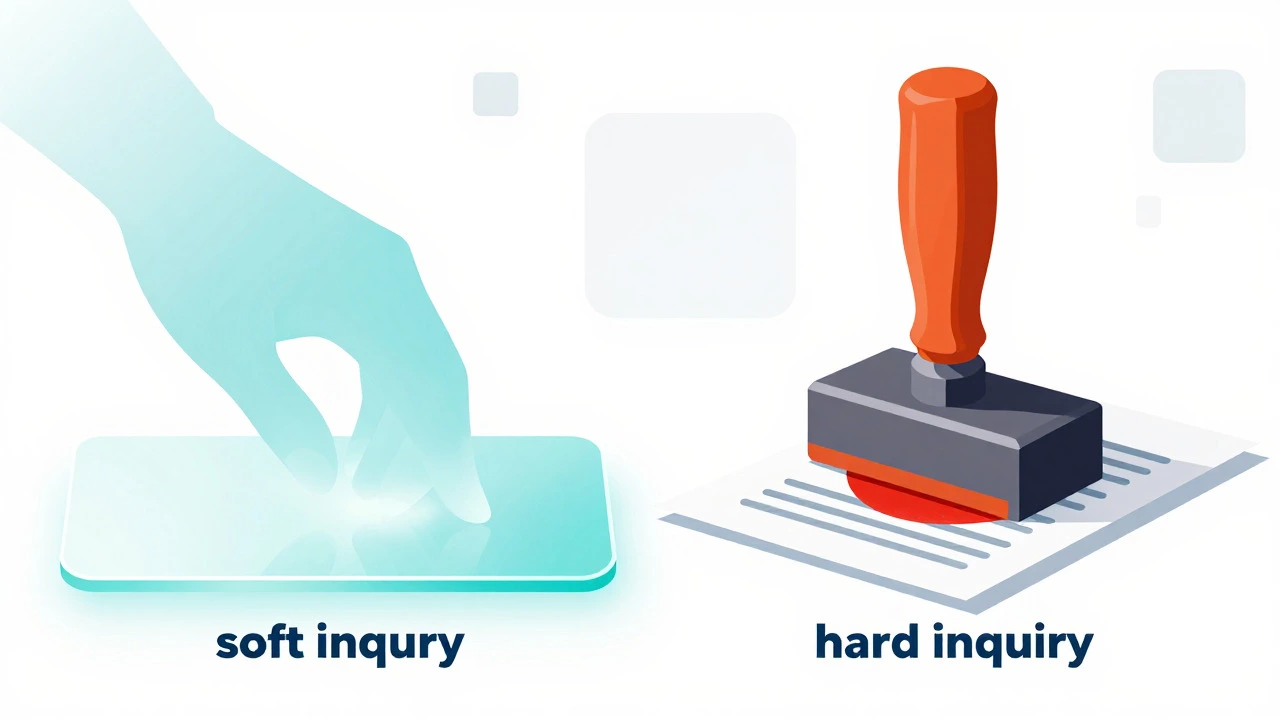
A soft inquiry is a type of credit check that does not appear on your public credit report and does not affect your credit score. happens when you look at your own credit report, apply for a job, or ask a bank if you’re pre-qualified for a card. Think of it like peeking into a room without opening the door loudly; nobody notices, and nothing changes. If you use a comparison site to see which cards you might qualify for without entering your full personal details, it’s likely a soft pull.
A hard inquiry is a credit check initiated by a lender when you apply for new credit, which may temporarily lower your credit score. occurs when you actually submit an application. This is when the bank digs deep into your payment history, debt levels, and credit mix. A hard inquiry typically drops your score by five to ten points. It sounds scary, but remember: this drop is temporary. Most scores bounce back within a few months if you keep paying bills on time.
| Feature | Soft Inquiry | Hard Inquiry |
|---|---|---|
| Impact on Score | No impact | Drops score by 5-10 points |
| Visibility | Only visible to you | Visible to future lenders |
| Duration on Report | N/A (Not recorded publicly) | 2 years |
| Common Triggers | Self-checks, Pre-qualification | New credit applications |
How Comparison Sites Work Without Hurting You
Most online comparison tools rely on soft inquiries to show you personalized results. When you enter your age, location, and rough income range, the algorithm matches you with cards you’re likely to be approved for. This process uses third-party data or basic eligibility rules rather than pulling your full credit report is a detailed record of your borrowing history, including loans, credit cards, and payment performance. from the major bureaus like Equifax or Experian.
However, watch out for the wording. If a site says "Check your rate" or "See if you're eligible," it’s usually safe. If it says "Apply now" or "Get your decision," you’re probably triggering a hard pull. Always read the fine print. Some banks offer "pre-approval" which involves a soft pull, while others use the term loosely to mean they will run a hard check immediately upon submission.
The Myth of Multiple Applications
Here’s where it gets interesting. Suppose you decide to shop around for the best card during a specific period. You apply for Card A, then Card B, and finally Card C within two weeks. Does that mean three separate hits to your score?
Not necessarily. Modern scoring models, like FICO and VantageScore, have a feature called "inquiry shopping." They recognize that you’re trying to find the best deal. If multiple hard inquiries for the same type of credit (like credit cards) happen within a 14-to-45-day window, they often count as a single inquiry for scoring purposes. This protects consumers who are genuinely shopping for the best terms.
But don’t take it too far. If you apply for a card today, wait three months, and then apply for another, those are two distinct events. Each one will register separately. So, if you’re going to compare and apply, do it in a focused burst rather than dragging it out over months.
Factors That Matter More Than Inquiries
While a hard inquiry stings a little, other factors weigh heavily on your credit score is a numerical expression based on a level of creditworthiness calculated from the data in an individual's credit file.. Let’s put things in perspective.
- Payment History (35%): Missing a payment hurts far more than applying for a new card. One late payment can stay on your report for seven years.
- Credit Utilization (30%): Using 90% of your available credit looks risky. Keeping it below 30% is ideal. Adding a new card increases your total limit, which can actually lower your utilization ratio and boost your score, provided you manage it well.
- Length of Credit History (15%): Closing old accounts to simplify your life can shorten your average account age, slightly lowering your score.
- Credit Mix (10%): Having both revolving credit (cards) and installment loans (auto, mortgage) shows you can handle different types of debt.
- New Credit (10%): This is where inquiries live. It’s the smallest component.
So, if you have a solid payment history and low utilization, one or two hard inquiries from comparing cards won’t ruin your chances of getting a mortgage next year. The long-term health of your accounts matters infinitely more.

Strategies for Safe Credit Card Comparison
Want to get the best card without stressing about your score? Follow these practical steps.
- Check Your Own Report First: Go to a bureau website and pull your report. This is always a soft inquiry. Make sure there are no errors before you start applying.
- Use Pre-Qualification Tools: Look for banks that explicitly state "soft pull" or "no impact on credit score" during the initial check phase.
- Bundle Your Applications: If you’re shopping for cards, try to submit all applications within a two-week window. This maximizes the chance they count as one event.
- Watch Your Utilization: After getting a new card, resist the urge to max it out. Keep your combined balance across all cards under 30% of the total limit.
- Wait Before Applying Again: If you just got denied or applied recently, wait at least 60 days before hitting the apply button again. This gives your score time to recover from any previous hard pulls.
When Comparing Cards Actually Helps Your Score
It’s counterintuitive, but getting a new credit card can improve your score in the long run. By adding a new account, you increase your total available credit. If you maintain the same spending habits, your utilization percentage drops. For example, if you had $1,000 in debt on a $1,000 limit (100% utilization), and you open a new card with a $2,000 limit, your total limit becomes $3,000. Your utilization drops to 33%, which is a significant positive signal to lenders.
Additionally, having a longer credit history helps. As long as you keep the new card open and use it occasionally, it adds to the depth of your credit profile. Just remember, the benefit only materializes if you pay on time. A new card with a late payment is worse than no new card at all.
Frequently Asked Questions
Does checking my credit score affect it?
No. Checking your own credit score through any service provider is considered a soft inquiry. It does not change your score and is not visible to lenders.
How long does a hard inquiry stay on my report?
A hard inquiry remains on your credit report for two years. However, its impact on your score usually fades after 12 months. Most scoring models ignore inquiries older than one year when calculating your score.
Can I apply for multiple credit cards at once?
Yes, but be strategic. Applying for several cards within a 14-day window may count as a single inquiry for scoring purposes. Spreading applications over several months will result in multiple separate hard inquiries.
What is a safer alternative to applying for a new card?
If you already have a credit card, ask your issuer for a limit increase. This often triggers a soft inquiry instead of a hard one, and it boosts your available credit without adding a new account.
Does a denied application hurt my credit score?
The denial itself doesn't hurt your score, but the hard inquiry associated with the application does. Also, if the denial was due to high debt or missed payments, those underlying issues are what affect your score, not the rejection letter.