
Inflation Risk Calculator
See how much buying power you actually keep after accounting for rising prices.
Results After
Comparison Breakdown
The Silent Thief: Why Your Savings Might Be Shrinking
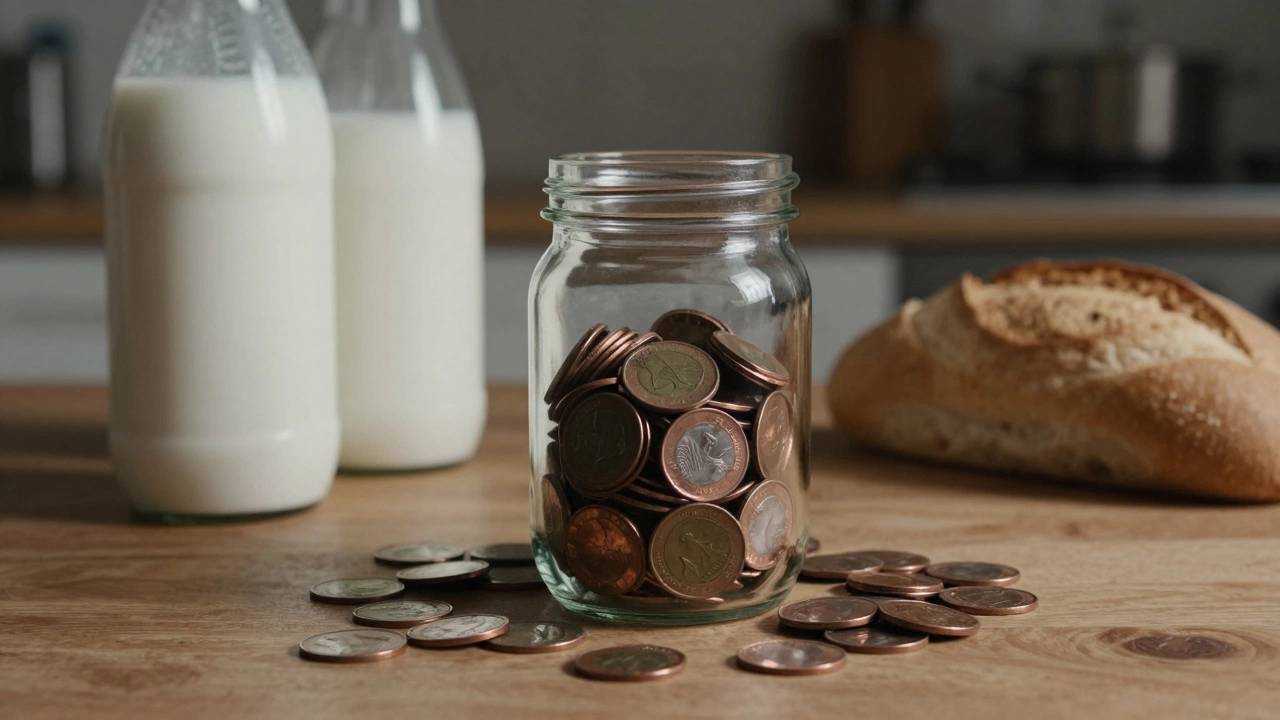
You put your hard-earned cash into a savings account is a bank deposit account that earns interest while keeping funds accessible and insured. It feels safe. It’s secure. You sleep better knowing your money isn’t tied up in volatile stocks or risky crypto schemes. But there’s a catch-one that doesn’t show up on your monthly statement until it’s too late.
The biggest disadvantage of putting money in a savings account? Inflation.
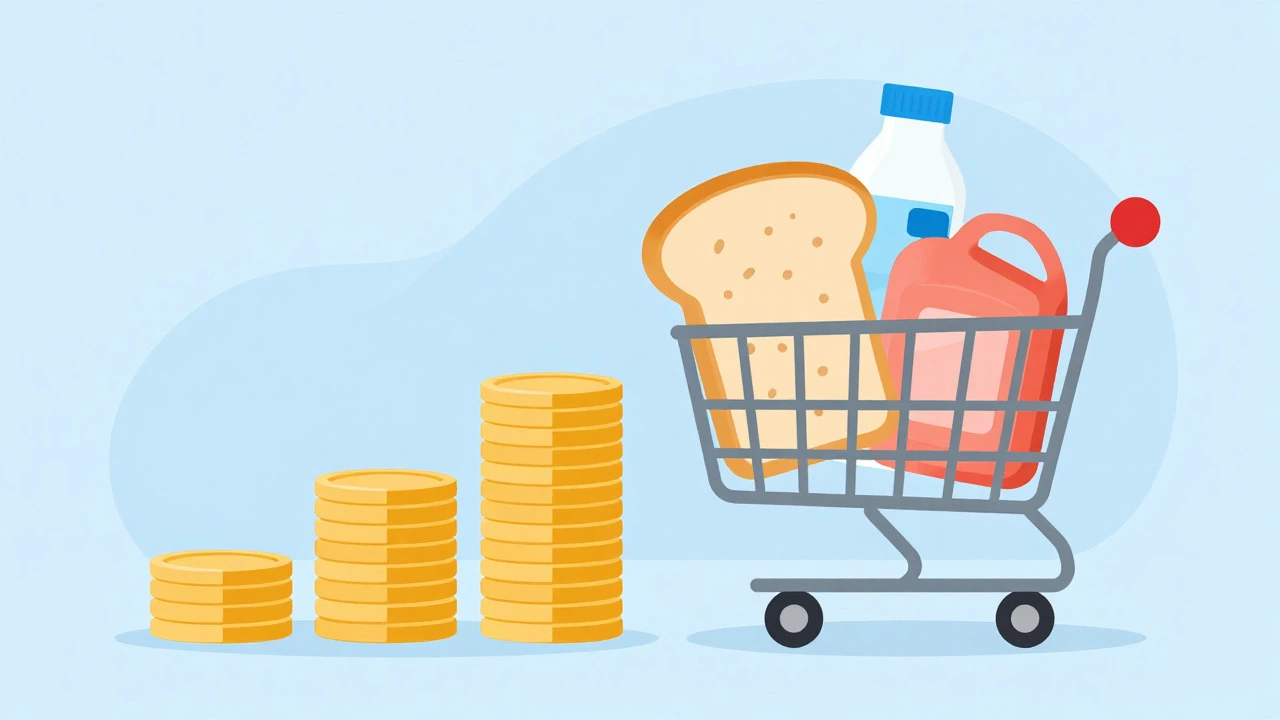
Yes, you’re earning interest. But if that interest rate is lower than the current inflation rate, your purchasing power is quietly eroding. In August 2026, Australia’s Consumer Price Index (CPI) hovers around 3.5% annually. If your savings account pays only 1.5%, you’re effectively losing 2% of your buying power every year. That $10,000 today will buy what $9,800 bought last year-and less next year.
This isn’t theoretical. It’s happening right now to millions of Australians who treat savings accounts as long-term wealth builders instead of short-term parking spots.
How Inflation Eats Away at Your Real Returns
Let’s break down what “real return” means. It’s not just the nominal interest rate your bank advertises. It’s that rate minus inflation. Here’s how it works:
- Nominal Interest Rate: What the bank says you’ll earn (e.g., 2.0%).
- Inflation Rate: How fast prices rise (e.g., 3.5% in Australia).
- Real Return: Nominal rate minus inflation = -1.5%. You’re losing value.
Even if your bank offers a slightly higher rate-say 3.0%-you’re still barely breaking even. And remember, banks often adjust rates downward when the Reserve Bank of Australia cuts its cash rate. So that 3.0% might become 2.5% tomorrow.
Here’s a real-world example: Imagine you save $50,000 for a house deposit over five years. At 2% annual interest, you’d have about $55,204 by year five. But if inflation averages 3.5% during that time, those $55,204 will only buy what $47,000 could buy today. You didn’t lose money-you lost purchasing power.
| Scenario | Initial Amount | Interest Rate | Inflation Rate | Final Balance | Purchasing Power Equivalent |
|---|---|---|---|---|---|
| Low-Yield Savings | $50,000 | 1.5% | 3.5% | $53,887 | $45,700 |
| High-Yield Savings | $50,000 | 3.0% | 3.5% | $57,963 | $49,100 |
| Index-Linked Investment | $50,000 | 7.0% | 3.5% | $70,127 | $59,200 |
Notice how even the high-yield savings account barely keeps pace with inflation. Meanwhile, an index-linked investment-which carries more risk but historically delivers higher returns-more than doubles your purchasing power.
Other Hidden Costs of Traditional Savings Accounts
Inflation isn’t the only downside. There are other structural disadvantages that most people overlook:
- Tax Drag: Interest earned in standard Australian savings accounts is taxed as ordinary income. If you’re in the 32.5% tax bracket, you keep only 67.5 cents of every dollar earned. No capital gains discounts here.
- Liquidity Temptation: Easy access sounds great-until you start treating your emergency fund like a slush fund. Behavioral finance shows us that frictionless access leads to impulse spending.
- Opportunity Cost: Every dollar sitting idle in a low-interest account is a dollar not working harder elsewhere. Even modest investments in diversified ETFs or term deposits can outperform over time.
- Bank Fee Creep: Some banks charge monthly maintenance fees unless you meet minimum balance requirements. These small charges add up quickly and further reduce net returns.
Take Sarah, a teacher in Brisbane. She kept $20,000 in her everyday transaction account because she thought it was “safe.” After two years, she realized she’d paid $120 in hidden fees and earned less than $400 in interest. Her real loss? About $1,400 in purchasing power due to inflation plus taxes.
When Savings Accounts Still Make Sense
Don’t get me wrong-savings accounts aren’t useless. They serve critical roles in personal finance:
- Emergency Funds: Keep 3-6 months’ worth of living expenses readily available. Safety trumps growth here.
- Short-Term Goals: Saving for a holiday next year? A car down payment in six months? Use a high-yield savings account to avoid market volatility.
- Risk-Averse Investors: Not everyone wants to watch their portfolio swing wildly. For retirees or conservative investors, stability matters more than maximum returns.
The key is intentionality. Don’t let money sit passively in a generic savings account without purpose. Match the tool to the timeline and goal.
Better Alternatives for Long-Term Wealth Building
If your horizon stretches beyond three years, consider shifting some funds toward instruments designed to beat inflation:
- Term Deposits: Lock in fixed rates for set periods. Often offer better yields than regular savings accounts, especially in rising rate environments.
- Government Bonds: Australian government bonds provide predictable income with minimal credit risk. Ideal for medium-term goals.
- Exchange-Traded Funds (ETFs): Broad-market ETFs track indices like the S&P/ASX 200. Historically, they’ve returned 7-9% annually before inflation.
- Property Trusts: REITs offer exposure to real estate without owning physical property. Dividends tend to grow with inflation.
Of course, these come with trade-offs. Higher potential returns mean higher volatility. Diversification helps manage that risk. The point isn’t to abandon savings entirely-it’s to use them strategically alongside other tools.

How to Protect Your Purchasing Power Today
Start by auditing where your money lives. Are large balances sitting in accounts paying below-inflation interest? If so, take action:
- Open a High-Yield Savings Account: Look for institutions offering competitive variable rates. Compare APYs across multiple providers.
- Automate Transfers: Set up automatic transfers from checking to savings. Out of sight, out of mind-but still growing.
- Rebalance Annually: Review your allocation once a year. Shift excess savings into longer-term vehicles as goals approach.
- Consider Tax-Advantaged Options: Superannuation contributions may reduce taxable income while building retirement wealth.
Remember: protecting against inflation isn’t about chasing the highest possible return. It’s about preserving what you’ve worked for.
Frequently Asked Questions
Is it bad to keep all my money in a savings account?
Not necessarily-but it depends on your goals. For short-term needs or emergencies, yes. For long-term wealth building, no. Keeping everything in a savings account exposes you to inflation risk and missed opportunities for higher returns through diversified investments.
What happens if inflation goes above my savings interest rate?
Your real purchasing power declines. Even though your account balance grows numerically, each dollar buys less goods and services than before. This is called negative real return.
Are high-yield savings accounts safer than regular ones?
Safety depends on whether the institution is covered by the Financial Claims Scheme (FCS). Both traditional and high-yield accounts are equally safe up to $250,000 per depositor per authorized deposit-taking institution (ADI), provided they’re FCS-compliant.
Should I move my emergency fund to invest instead?
No. Emergency funds should remain liquid and stable. Their job is to cover unexpected expenses-not generate returns. Invest surplus funds after securing your safety net.
How do I calculate the real return on my savings?
Subtract the current inflation rate from your nominal interest rate. Example: If your account earns 2.5% and inflation is 3.5%, your real return is -1.0%. You’re losing value annually.
Can I earn tax-free interest in Australia?
Generally no-interest from standard savings accounts is taxable. However, certain structures like self-managed super funds (SMSFs) allow tax-deferred growth. Consult a licensed financial advisor for personalized strategies.
What’s the best way to fight inflation with savings?
Diversify beyond traditional savings. Combine high-yield savings for liquidity with term deposits, bonds, and broad-market ETFs for growth. Rebalance regularly to maintain alignment with your risk tolerance and timelines.
Do big banks pay worse rates than smaller ones?
Often yes. Smaller digital-only banks and regional lenders frequently offer higher interest rates to attract customers. Always compare actual APYs rather than relying on brand reputation alone.
Is compound interest enough to overcome inflation?
Only if the compounding rate exceeds inflation. With typical savings rates under 3%, compound interest rarely offsets modern inflation levels. Larger principal amounts help, but strategy matters more than math alone.
When should I stop using savings accounts entirely?
Never completely eliminate them-they’re essential for liquidity. But gradually shift non-emergency funds into growth-oriented assets as your financial situation stabilizes and time horizons extend.