Mortgage Eligibility Calculator
Calculate your debt-to-income ratio after debt consolidation and see if you meet lender requirements for a home loan.
Your Mortgage Eligibility
Enter your information above to see your debt-to-income ratio.
Key Requirements
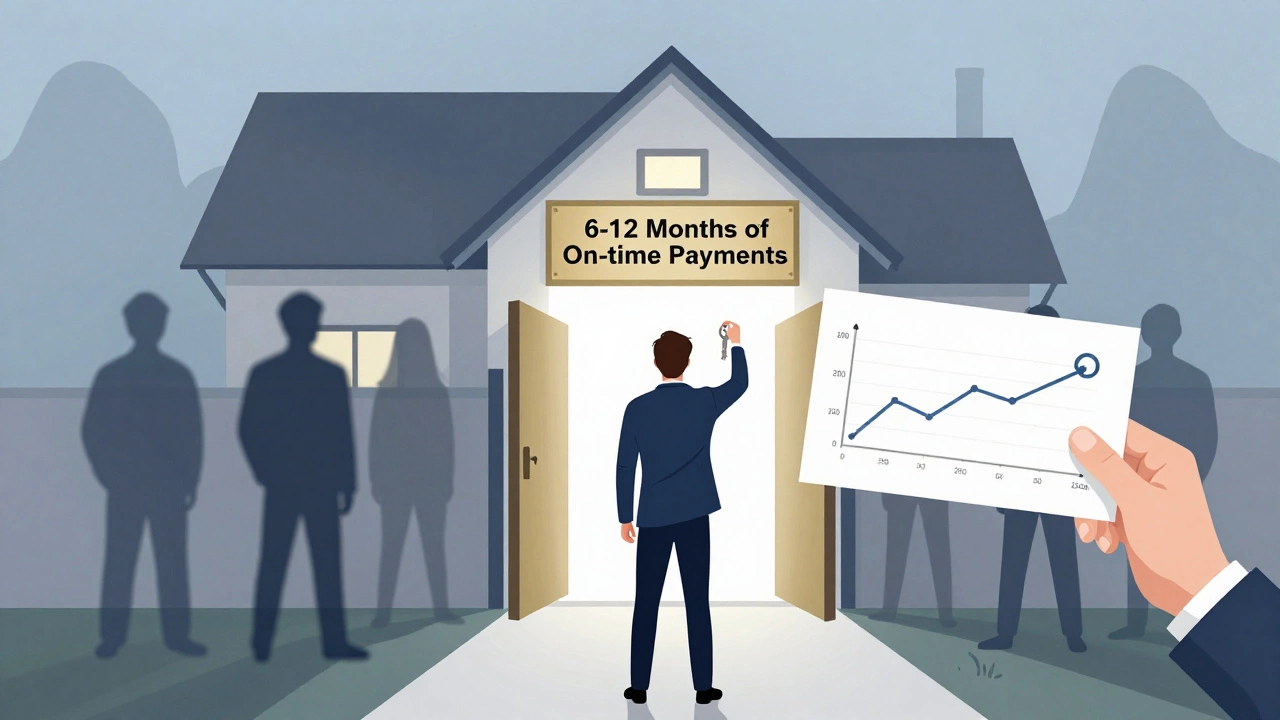
- 6-12 months Lenders typically want 6-12 months of on-time payments on your consolidation loan.
- 20% deposit A 20% deposit gives you more options and better rates, though 10% is the minimum.
- Credit score > 650 Aim for above 650 for better loan options after consolidation.
- Low ongoing debt Keep your debt-to-income ratio under 40%.
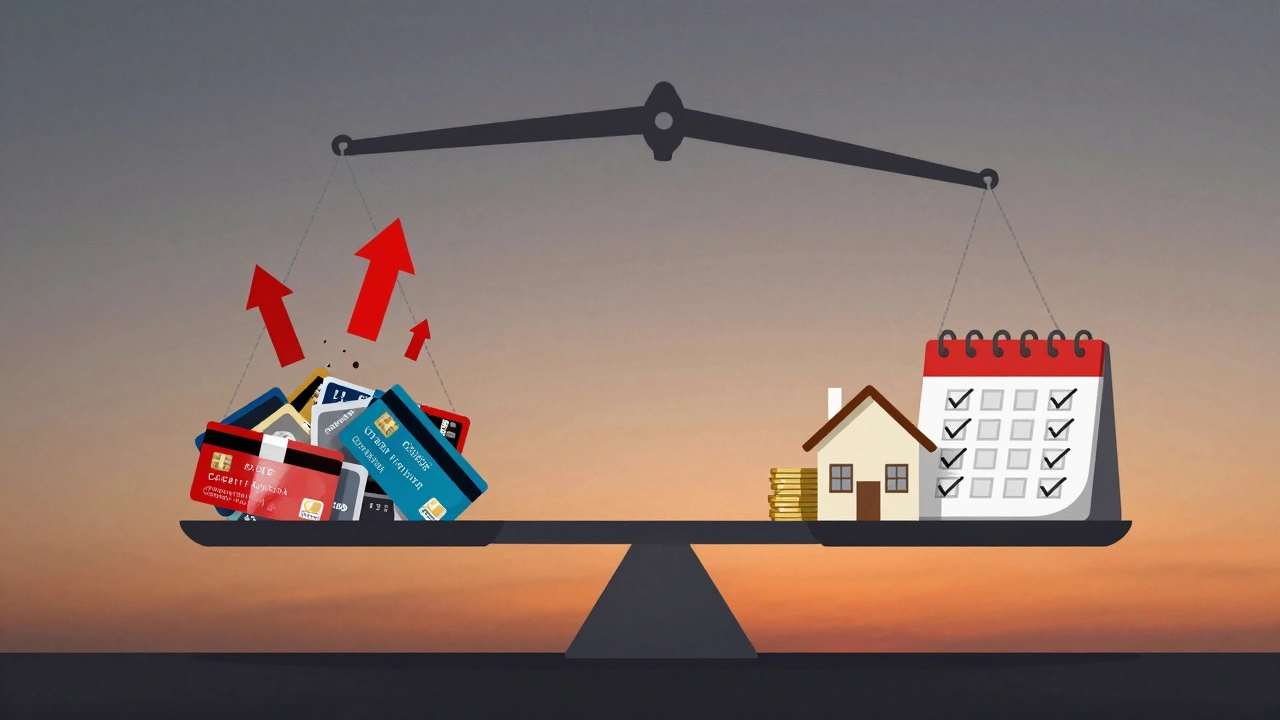
Buying a house after debt consolidation isn’t impossible-but it’s not automatic either. Many people think paying off debt with a consolidation loan clears their path to homeownership. That’s not always true. Lenders don’t just look at whether you’re debt-free. They look at how you got there, how long it took, and what your finances look like today.
What lenders see when you apply for a mortgage after debt consolidation
When you apply for a home loan, lenders don’t just check your credit score. They dig into your credit report like a detective. They want to know: Did you consolidate because you were drowning in debt? Or did you use it as a smart financial reset?
Debt consolidation loans show up on your credit report as a new loan. If you closed out several credit cards or personal loans and replaced them with one larger loan, that’s normal. But if your report shows you paid off $40,000 in credit card debt with a $45,000 consolidation loan-and you still have $15,000 in credit card balances open-that’s a red flag. Lenders worry you’ll rack up more debt again.
They also look at your debt-to-income ratio (DTI). That’s your monthly debt payments divided by your gross monthly income. Most Australian lenders want your DTI under 40%. If your consolidation loan adds $800 a month to your payments and you earn $6,000 a month, your DTI is 13%. That’s solid. But if your income dropped after you consolidated, or you’re still paying other debts, your DTI could be too high-even if you’re technically "debt-free" on paper.
How debt consolidation affects your credit score
Many people assume paying off debt boosts their credit score instantly. It doesn’t. In fact, your score might dip at first. Here’s why:
- Opening a new loan creates a hard inquiry, which can knock off 5-10 points.
- Closing old credit accounts reduces your credit history length, which can hurt your score.
- If your consolidation loan has a high balance compared to its limit (even if it’s a personal loan), it can look like you’re maxed out.
But here’s the good news: if you make every payment on time for the next 6-12 months, your score will climb back up-and often higher than before. That’s because you’re proving you can handle a structured payment plan. Lenders love that.
In Australia, most lenders require a minimum credit score of 620 for a standard home loan. After consolidation, you’ll want to be above 650 to have real options. Some lenders, like credit unions or specialist mortgage brokers, will work with scores as low as 580-if you have a 20% deposit and stable income.
How long to wait after debt consolidation to buy a house
There’s no official waiting period. But timing matters. Most lenders prefer to see at least 6-12 months of clean payment history after your consolidation loan starts. Why? Because they need proof you didn’t just trade one problem for another.
If you consolidated three months ago and immediately apply for a mortgage, you’ll likely get rejected-or offered a much higher interest rate. But if you’ve made 10 on-time payments, kept your credit card balances low, and saved a deposit? That’s a different story.
One client I worked with in Brisbane consolidated $32,000 in credit card debt in January 2025. She didn’t apply for a home loan until October. By then, her credit score had jumped from 590 to 710. She had a 15% deposit saved. She got approved for a 30-year loan at 5.8%. That’s a 1.2% lower rate than someone who applied right after consolidation.
What you need to prove to get approved
Lenders need four things from you after debt consolidation:
- Stable income - Pay slips for the last 3 months, or tax returns if you’re self-employed. No gaps, no layoffs.
- A deposit - At least 10% is the minimum, but 20% gives you way more options. If you’re using a first home buyer grant, make sure it’s been approved before applying.
- Low ongoing debt - Your consolidation loan is fine. But if you’re still paying child support, car loans, or HECS-HELP, they’ll count it in your DTI.
- Proof you’re not going back to old habits - This is the quiet one. Lenders don’t ask for it directly, but they’ll look at your bank statements. If you’re spending $2,000 a month on dining out or shopping, they’ll assume you’ll do the same after you buy the house.
One smart move? Close all your old credit cards after consolidation. Not because you need to-but because it removes temptation. Lenders see fewer open credit lines as lower risk.
What lenders don’t tell you (but you need to know)
Most banks won’t approve you if you used a debt consolidation company that’s not licensed by ASIC. If you went through a debt management plan (DMP) or a debt agreement under Part IX of the Bankruptcy Act, that stays on your credit file for 5 years. That doesn’t mean you can’t buy a house-but it limits your options.
You’ll need to work with a specialist lender or mortgage broker who understands non-standard credit histories. Big banks like NAB or Commonwealth Bank might say no. But smaller lenders like Liberty, Pepper, or even some credit unions will consider you if you’ve got a solid income and deposit.
Also, don’t assume your consolidation loan is gone just because you paid it off. It stays on your credit report for 7 years. But after 2 years, it stops hurting your score as much. The key is showing you’ve rebuilt responsibly.
Real examples from people who did it
Here’s what worked for three people in Queensland:
- Mark, 34 - Consolidated $28,000 in credit card and personal loan debt in April 2024. He cut up his cards, started budgeting with a free app, and saved $500 a month. By June 2025, he had a 17% deposit and a 702 credit score. Got approved for a $580,000 home in Logan.
- Sarah, 29 - Used a debt agreement after losing her job. Her credit score dropped to 520. She worked part-time for 18 months, rebuilt her income, and got a guarantor loan from her parents. She bought a unit in Toowoomba for $310,000 in November 2025.
- James, 41 - Consolidated with a low-interest personal loan from his bank. He kept one credit card open with a $500 limit and paid it off in full every month. His credit score rose to 740 in 10 months. He bought a house in Ipswich with a 12% deposit and a 5.6% rate.
They all had one thing in common: they didn’t rush. They gave themselves space to prove they’d changed.
What to do next
If you’re thinking about buying a house after debt consolidation, here’s your action plan:
- Check your credit report for free via Equifax or Experian. Fix any errors.
- Calculate your debt-to-income ratio. If it’s above 40%, focus on paying down other debts first.
- Save your deposit. Even 10% helps-but 20% gives you breathing room.
- Don’t open new credit accounts. No new credit cards, no car loans, no personal loans.
- Wait 6-12 months after your consolidation loan starts. Make every payment on time.
- Work with a mortgage broker who specializes in non-standard credit. They know which lenders will say yes.
Debt consolidation isn’t the finish line. It’s the starting line. The real work begins after you sign the papers.
Can I get a home loan immediately after debt consolidation?
Technically yes, but practically, no. Most lenders want to see at least 6-12 months of on-time payments on your consolidation loan. Applying too soon can lead to rejection or higher interest rates because you haven’t proven you’ve changed your financial habits.
Will debt consolidation hurt my credit score?
It might dip slightly at first due to a new loan and closed accounts. But if you make all payments on time for the next year, your score will likely improve. The key is consistency-not speed.
How much deposit do I need after debt consolidation?
At least 10% is the minimum, but 20% gives you access to better rates and more lenders. If you’re using a government grant like the First Home Owner Grant, make sure it’s approved before applying. A larger deposit also reduces your debt-to-income ratio, which helps approval.
Can I buy a house if I had a debt agreement?
Yes, but it’s harder. A debt agreement stays on your credit file for 5 years. You’ll need to work with a specialist lender or broker who handles non-standard credit. You’ll also need a strong income, a 20% deposit, and proof you’ve rebuilt your finances since the agreement ended.
Should I close my old credit cards after consolidation?
It’s a smart move. Keeping old cards open can tempt you to spend again. Lenders see fewer open credit lines as lower risk. You can keep one card with a small limit and pay it off monthly to keep your credit history active.
Do I need a mortgage broker after debt consolidation?
Highly recommended. Big banks often have strict rules and may say no automatically. A broker who works with specialist lenders knows which institutions are willing to approve borrowers with past debt issues-and they can help you present your case in the best light.
Final thought: It’s not about the past-it’s about the present
Lenders don’t care that you had $50,000 in debt last year. They care that you’ve paid it off, stopped spending recklessly, and now have a plan. Your past doesn’t lock you out of homeownership. Your current actions do.
If you’ve done the work, stayed disciplined, and saved even a little, you’re closer than you think. The house isn’t out of reach. You just need to wait long enough to prove you’re ready.