
$3,000 Loan Payment Calculator
Estimated Monthly Payment
$0.00
Total Interest Paid
$0.00
Total Cost of Loan
$0.00
You need cash fast. Maybe your car broke down, or you have an unexpected medical bill, and you're looking at a $3,000 loan to bridge the gap. But before you sign anything, you need to know exactly what this will do to your bank account every single month. It’s not just about getting the money; it’s about surviving the repayment without drowning in interest.
Here is the hard truth: there is no single answer for "how much." Your monthly payment depends entirely on two things: how long you take to pay it back and the interest rate you qualify for. A $3,000 loan could cost you as little as $50 a month if you stretch it over five years, or nearly $1,000 a month if you try to clear it in three months. Let's break down the real numbers so you can choose the right path for your budget.
The Key Takeaways
- Short terms mean high payments: Paying off a $3,000 loan in 6 months often requires ~$520/month, while 5 years drops it to ~$60/month but costs more in total interest.
- Interest rates vary wildly: Prime borrowers might see 8-10% APR, while those with lower credit scores could face 25-36% APR, significantly changing the monthly burden.
- Total cost matters more than monthly payment: A lower monthly payment often hides a higher total price tag due to accrued interest over time.
- Fees are the hidden killer: Origination fees (often 1-8%) can reduce the actual cash you receive, effectively raising your interest rate.
Why Your Monthly Payment Varies So Much
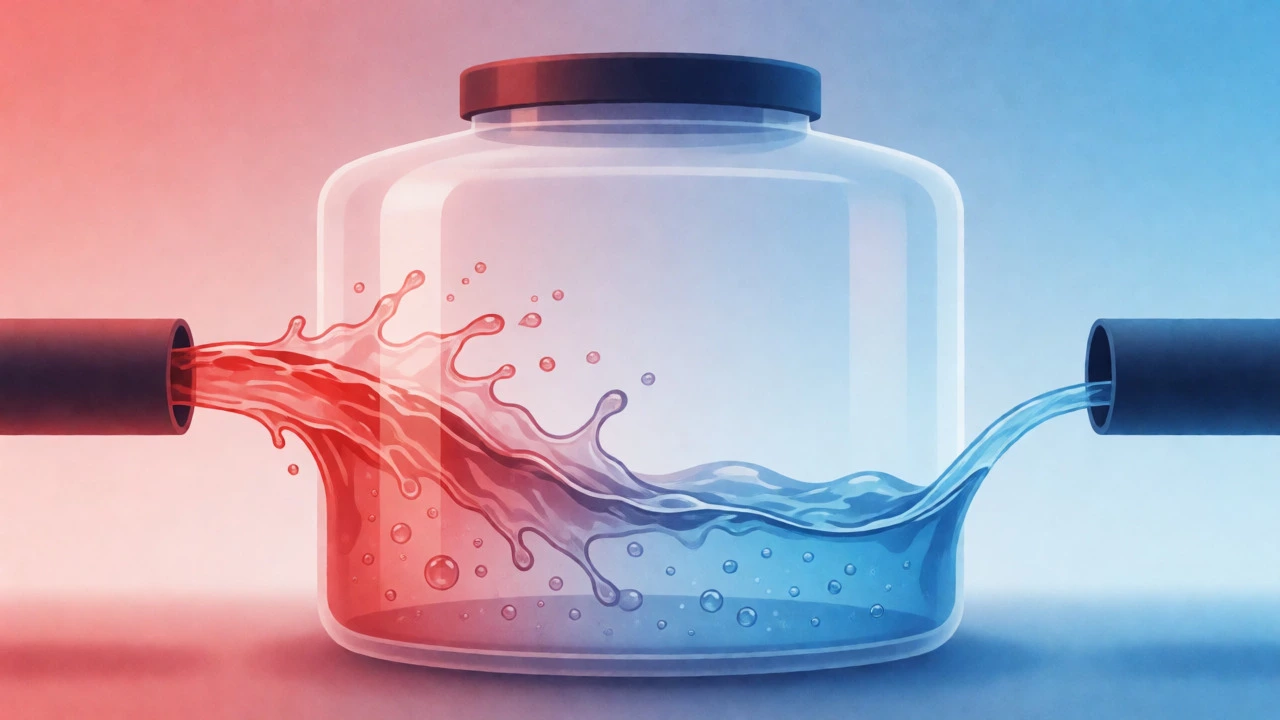
Think of a loan like a water tank. The size of the hole at the bottom determines how fast it drains (your monthly payment). If you make the hole big (short term), the water rushes out quickly-high payments, low total interest. If you make the hole small (long term), the water trickles out slowly-low payments, but it stays in the tank longer, meaning you pay interest for more time.
When you borrow a fixed amount of money, typically used for personal expenses like debt consolidation or emergency repairs, known as a personal loan, lenders calculate your payment using an amortization formula. This formula balances the principal (the $3,000) and the interest (the cost of borrowing) over your chosen term. The most common terms for small loans range from 6 months to 5 years. Anything shorter than 6 months is usually considered a payday loan or cash advance, which comes with different risks we'll discuss later.
Real-World Scenarios: What You Might Actually Pay
Let's look at concrete examples. We will assume standard annual percentage rates (APR) based on current market conditions for borrowers with varying credit profiles. Note that these calculations exclude origination fees for simplicity, but keep them in mind.
| Loan Term | Good Credit (10% APR) | Fair Credit (18% APR) | Poor Credit (28% APR) |
|---|---|---|---|
| 6 Months | $514 | $529 | $546 |
| 12 Months | $263 | $274 | $289 |
| 24 Months | $138 | $149 | $164 |
| 36 Months | $97 | $108 | $123 |
| 60 Months | $64 | $75 | $90 |
Notice the jump between the 6-month and 12-month options. If you can afford $263 a month, you save hundreds compared to dragging it out for five years. However, if $263 breaks your budget, the 36-month option at $97 is manageable for many people, even if it costs more in the long run.
The Hidden Costs: Fees and Insurance
The advertised interest rate isn't the whole story. Most online lenders charge an origination fee. This is an upfront cost deducted from the loan proceeds. For a $3,000 loan, a 5% fee means you only receive $2,850, but you still owe $3,000 plus interest.
This effectively raises your true cost of borrowing. If you need exactly $3,000 in hand to cover a repair, you might need to borrow slightly more to cover the fee. Always ask: "What is the net payout?" Some lenders also offer optional loan protection insurance. While it sounds safe, these policies often add 1-2% to your effective interest rate. Unless you have zero emergency savings, skipping this insurance usually saves you money.
Short-Term vs. Long-Term: Which Fits Your Life?
Choosing the term is a trade-off between cash flow and total cost. Here is how to decide:
- Choose Short Terms (6-12 Months) if: You have stable income and disposable cash. You want to avoid paying extra interest. You are confident the expense was a one-time blip. For example, paying $274/month for a year is painful but clears the debt fast.
- Choose Medium Terms (24-36 Months) if: You need to consolidate higher-interest debt, like credit cards. You want a predictable, lower payment that fits easily into your monthly budget. This is often the sweet spot for balancing affordability and cost.
- Choose Long Terms (48-60 Months) if: You are tight on cash flow right now. You plan to pay extra when possible. Be careful here: stretching a small loan too long can trap you in debt cycles because the interest accrues slowly but persistently.
A common mistake is taking a 5-year term for a $3,000 loan just to get the lowest monthly number. Sure, $64 looks easy. But over five years, you might pay nearly $800 in interest alone. That’s almost another $3,000 loan’s worth of value lost to the lender.
Impact of Credit Score on Your Rate
Your credit score acts as the gatekeeper for your interest rate. Lenders use models like FICO or VantageScore to assess risk. The difference between a "good" and "poor" rating is massive on a small loan.
For instance, moving from a 10% APR to a 28% APR doesn't just double your interest; it changes the psychological weight of the debt. At 28%, a large portion of your early payments goes strictly toward interest, barely touching the principal. This is why checking your pre-qualification offers (which don't hurt your credit score) is crucial. Don't apply blindly. Compare at least three lenders.

Alternatives to Traditional Personal Loans
If a traditional bank rejects you or the rates are too high, consider these options:
- Credit Card Cash Advance: Fast, but expensive. Interest starts accruing immediately, often at 25%+ APR, with no grace period.
- Buy Now, Pay Later (BNPL): Services like Afterpay or Klarna work well for specific purchases under $3,000. They often offer 0% interest if paid within 6-12 weeks. Watch out for late fees.
- Home Equity Line of Credit (HELOC): If you own a home, tapping into equity might offer lower rates, but it puts your house at risk if you default.
- Payday Loans: Avoid these if possible. They promise quick cash but often carry APRs exceeding 300%. A $3,000 payday loan is rarely available; they usually cap at $500-$1,000 per cycle, leading to dangerous rollovers.
How to Lower Your Monthly Payment
You can't always control the interest rate, but you can control the structure of the loan. Here are three tactics to reduce your monthly burden:
- Extend the Term: As shown in the table, doubling the term roughly halves the payment. Do this only if you commit to making extra payments when possible.
- Add a Co-signer: If your credit is thin, adding a co-signer with strong credit can unlock lower rates. Just remember, they are equally liable if you miss a payment.
- Borrow Less: Can you split the $3,000 need? Maybe borrow $2,000 and save $1,000 from your paycheck? Reducing the principal directly lowers both the monthly payment and total interest.
Final Checklist Before Signing
Before you hit "submit," verify these points:
- Is the APR fixed or variable? Fixed rates protect you from rising markets.
- Are there prepayment penalties? Ideally, you want a loan that lets you pay off early with no fees.
- Does the lender report to all three major credit bureaus? This helps build your credit history if you pay on time.
- Have you read the fine print on autopay discounts? Many lenders offer 0.25%-0.50% off for setting up automatic payments. That saves you money and prevents missed payments.
Taking out a $3,000 loan is a serious financial move. It solves an immediate problem but creates a future obligation. By understanding how the term length and interest rate interact, you can pick a plan that keeps your head above water. Don't just look at the monthly number; look at the total cost and your ability to sustain that payment through tough months.
Can I pay off my $3,000 loan early?
Yes, most reputable personal lenders allow early payoff without penalties. Check your loan agreement for "prepayment penalty" clauses. Paying early saves you significant interest, especially on longer terms. For example, paying off a 36-month loan after 12 months can save you hundreds of dollars in future interest charges.
Does a $3,000 loan affect my credit score?
Applying causes a temporary hard inquiry dip. Once approved, the new account may initially lower your average account age. However, consistent on-time payments boost your payment history, which is the largest factor in your credit score. Over time, managing this loan responsibly should improve your overall credit profile.
What happens if I miss a payment?
Late fees usually apply, ranging from $15 to $40 depending on the lender. More importantly, a missed payment reported to credit bureaus can drop your score by 50-100 points. If you anticipate missing a payment, contact your lender immediately. Many offer hardship programs or deferment options if you communicate proactively.
Is it better to use a credit card or a personal loan?
A personal loan is generally better for fixed expenses like repairs or weddings because it has a set end date and fixed payments. Credit cards are flexible but risky if you carry a balance at 20%+ APR. If you can pay off the credit card balance within 3-6 months, the card might be cheaper due to 0% intro APR offers. Otherwise, the personal loan provides structure and discipline.
Do I need collateral for a $3,000 loan?
No. Most $3,000 personal loans are unsecured, meaning they do not require collateral like a car or house. Approval relies primarily on your credit score, income, and debt-to-income ratio. Secured loans exist but are rare for this amount unless you have poor credit and are willing to pledge an asset to secure a lower rate.