Savings Account Interest Calculator
Calculate Your Potential Earnings
See how much $1000 could earn in a year across different Australian savings accounts based on current rates (as of early 2026).
Results
After 1 year with $1,000 deposit at 4.50% interest, you'll earn:
$45.00
Total balance: $1,045.00
Standard Account Comparison
Earning at 0.35%: $3.50 (0.35% of $1000)
This is the average rate for basic accounts - less than a daily coffee
High-Interest Account Comparison
Earning at 4.5%: $45.00 (12.86x more than standard)
Achievable with leading online banks like UBank and ING
Important: This calculator assumes monthly compounding and no withdrawals. Actual earnings may vary based on account conditions and market rates.
If you put $1000 into a savings account today, how much extra money will you have in a year? It’s not as simple as it sounds. The answer depends on the bank, the type of account, and whether you’re chasing a bonus rate or stuck with the standard one. In Australia in 2026, you could earn anywhere from $1 to $50-or more-on that $1000. Let’s break down exactly what you’re likely to see.
What’s the average interest rate on savings accounts in Australia right now?
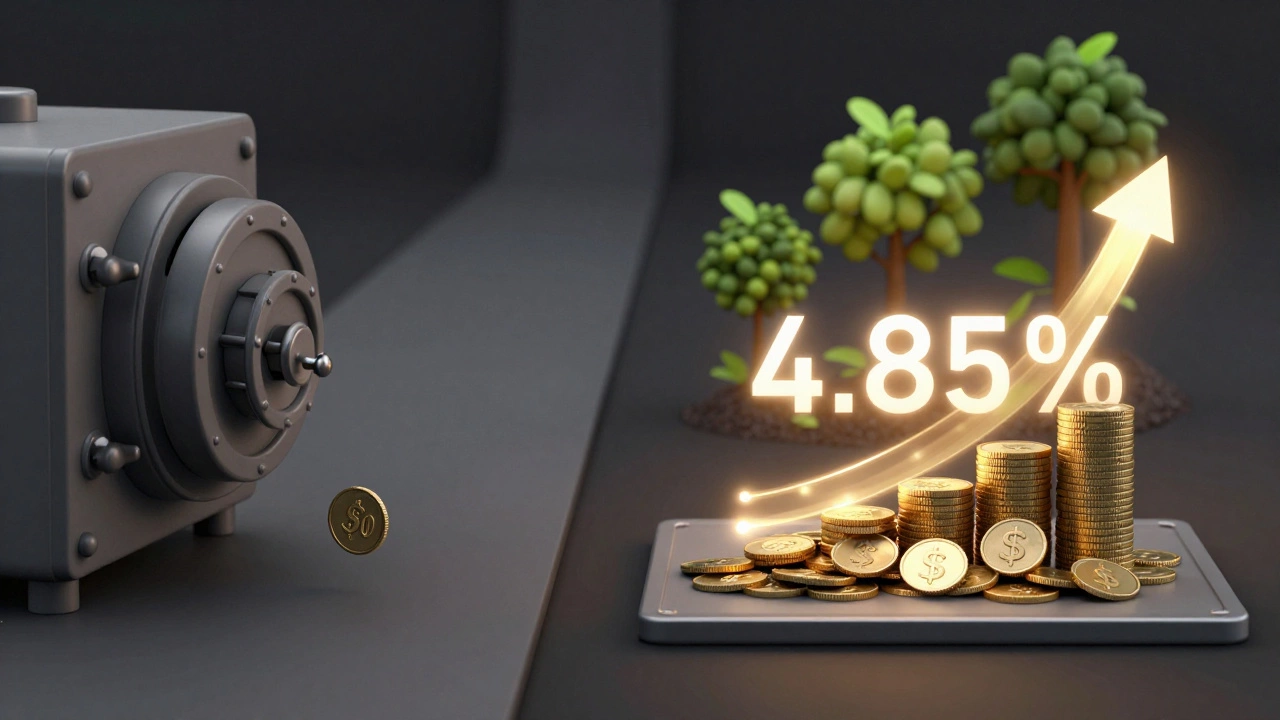
As of early 2026, the average standard variable rate for a basic savings account in Australia is around 0.35% per year. That’s the rate most people get if they don’t shop around. If you leave $1000 in one of those accounts, you’ll earn $3.50 in interest after 12 months. That’s less than the cost of a coffee every month.
But here’s the thing: that average is dragged down by old, low-rate accounts. Many big banks still offer these because they assume customers won’t move. If you’re willing to switch, you can find accounts paying 4.5% or even higher.
High-interest savings accounts: What’s really possible?
Online-only banks and neobanks are fighting hard for your money. In 2026, several providers offer introductory rates of 5.5% for the first 3 to 6 months. After that, the rate usually drops to 2.5% or 3%. So if you deposit $1000 and get 5.5% for six months, then 3% for the next six, here’s what happens:
- First 6 months: $1000 × 5.5% ÷ 2 = $27.50
- Next 6 months: $1000 × 3% ÷ 2 = $15.00
- Total after 12 months: $42.50
That’s more than 12 times what you’d make in a standard account. And you didn’t do anything fancy-just opened a new account.
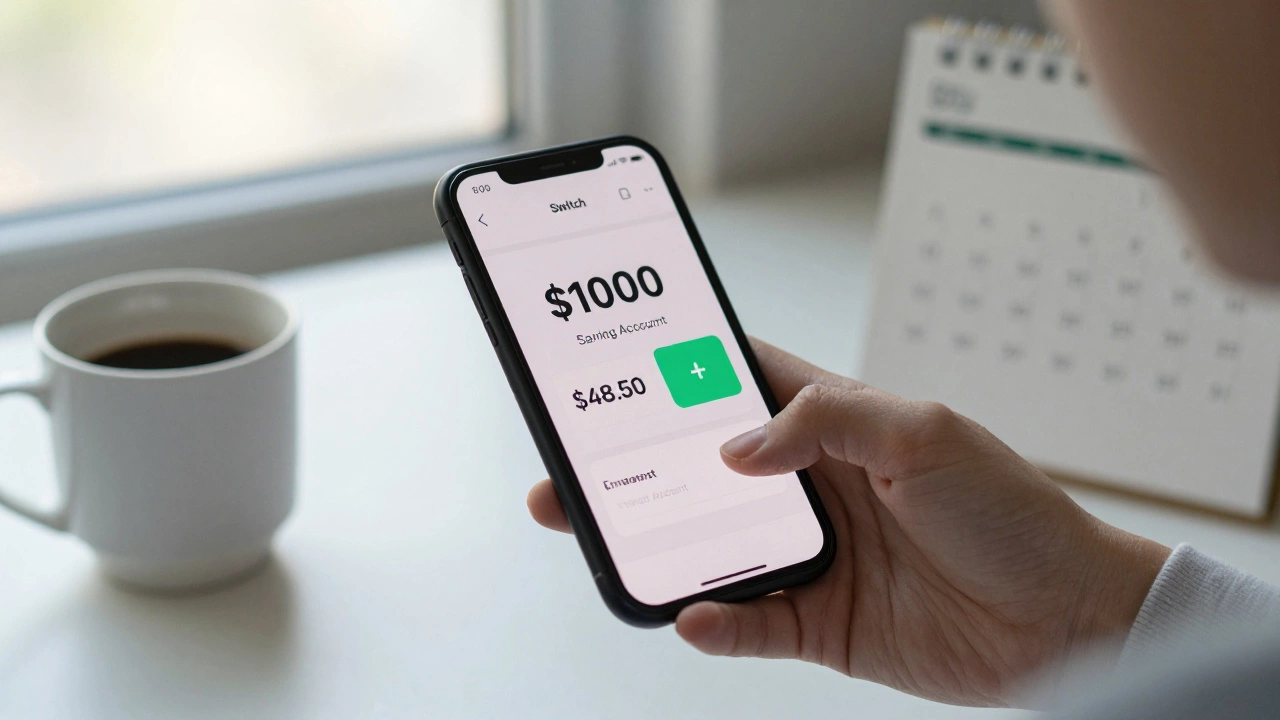
Some accounts even offer bonus interest if you deposit at least $50 each month and don’t withdraw. For example, the ING Orange Savings Account pays 4.85% if you meet those conditions. On $1000, that’s $48.50 a year. And if you add $50 monthly, you’re not just earning interest on your original $1000-you’re earning on $1300 over the year.
Why do some accounts pay so much more?
It’s not magic. It’s competition. Big banks like ANZ, NAB, and Commonwealth Bank have high overheads: branches, ATMs, staff. Online banks like ME, UBank, and Macquarie have none of that. They pass the savings on to you.
Also, the Reserve Bank of Australia’s cash rate is still around 4.35% in early 2026. That’s the rate banks pay each other to borrow money. When that’s high, the best savings accounts follow close behind. If you see a savings account paying 5%, it’s because the bank can afford to pay you-and wants you to deposit more.
What about bonus rates? Are they worth it?
Bonus rates are great-until they expire. Many accounts offer 6% for the first 3 months, then drop to 1.5%. That sounds tempting, but if you don’t switch accounts again, you’ll end up worse off.
Here’s a real example: Sarah opened an account with a 6% bonus rate for 3 months. She earned $15. Then the rate dropped to 1.75%. She forgot to check again. After 12 months, she made $19.50 total. Meanwhile, her friend Mark switched to a 4% account right away and earned $40. The bonus rate didn’t help Sarah-it tricked her into staying put.
Only chase bonus rates if you’re ready to move again. Set a calendar reminder. Or better yet, pick an account with a solid ongoing rate.
How compound interest works (and why it matters)
Most savings accounts pay interest monthly, not yearly. That means you earn a little interest on your interest. It’s called compounding. On $1000 at 4% annual interest, compounded monthly, you actually earn $40.74 over 12 months-not just $40.
It’s not a huge difference on $1000, but it adds up over time. If you leave $1000 in a 4% account for 10 years, you’ll end up with $1,490.80. Without compounding, you’d only have $1,400. That extra $90.80? That’s the power of time.
So always check: does the account pay monthly? If yes, you’re getting a tiny edge.
What’s the catch? Fees and conditions
Some high-interest accounts charge monthly fees. Others require you to link a transaction account. A few require you to make no withdrawals at all.
For example, the ME Online Saver pays 5.15% but only if you make no withdrawals in the month. If you take out $10 for groceries, you lose the bonus rate for that month. That’s fine if you’re saving for a specific goal-but not if you need flexibility.
Always read the fine print. A 5% rate means nothing if you pay $5 a month in fees. That’s $60 a year. You’d be losing money.
How to get the best rate right now
Here’s a simple 3-step plan:
- Check the current rates on MoneySmart (Australia’s official financial guide). They update weekly.
- Filter for accounts with no fees and monthly compounding.
- Choose one with an ongoing rate of at least 4%-not just a bonus rate.
As of January 2026, these accounts are leading the pack:
| Bank | Ongoing Rate | Monthly Deposit Required? | Withdrawal Restrictions? | Monthly Fee? |
|---|---|---|---|---|
| UBank | 4.85% | Yes ($100) | No | No |
| ING | 4.85% | Yes ($50) | No | No |
| ME Bank | 5.15% | No | Yes (no withdrawals) | No |
| Macquarie | 4.75% | No | No | No |
| HSBC | 4.60% | No | No | No |
UBank and ING are the most popular because they’re easy to use and don’t lock you in. ME Bank gives you the highest rate-but only if you never touch the money. Pick based on your habits.
What if you don’t want to switch banks?
You can still do better. If you’re with a big bank, call them. Say you’re thinking of moving your savings. They often have a retention offer: a 4% rate for 6 months just to keep you. It’s not permanent, but it’s better than 0.35%.
Or open a second account with a different bank just for your savings. Keep your everyday spending in your old account. Move $1000 over. Set up automatic transfers. You don’t need to close anything.
Is a savings account even worth it?
Some people say, “Why bother? Inflation’s at 3.2%. I’m losing money.” That’s true if you’re earning 0.5%. But if you’re earning 4.8%, you’re still ahead. Inflation eats away at your buying power, but a good savings account slows it down.
And savings accounts aren’t for growing wealth. They’re for safety and access. Need money for an emergency? A savings account lets you pull it out in minutes. A term deposit or investment might lock it away for months.
Think of it like insurance: you don’t expect to make money on it. You just don’t want to lose it.
Bottom line: What $1000 can earn in one year
On a basic savings account: $3-$5
On a standard high-interest account: $35-$45
On a top-tier account with conditions: $45-$52
On a bonus-rate trap: $15-$25 (if you forget to move)
So yes, you can make $50 on $1000 in a year. But only if you act. Don’t just leave it where it is. Check your account today. If it’s paying less than 3%, you’re leaving money on the table.
It’s not about being rich. It’s about not being stupid with your money.