
Is 12% APR Too High? Calculate Your True Cost
Loan Details
Analysis Results
Based on your profile, you should be looking for a rate closer to 8%.
Potential Savings: $3,600
You sit at the dealership desk, pen hovering over the contract. The dealer smiles and slides a paper across: 12% APR. Your stomach drops. Is this a rip-off? Is it standard market rate? Or is there a hidden trap you’re missing?
In mid-2026, the answer isn’t a simple yes or no. It depends entirely on your credit profile, the type of vehicle, and whether you’re buying new or used. For some borrowers, 12% is actually a win. For others, it’s a financial anchor that will cost you thousands over the life of the loan.
Let’s cut through the noise. I’ve spent years analyzing lending trends here in Brisbane and across Australia, and I’m going to show you exactly how to judge if that 12% figure is fair-or if you should walk away.
What Does 12% APR Actually Cost You?
Before we judge the rate, let’s look at the damage. Annual Percentage Rate (APR) includes not just the interest but also any fees associated with the loan. This gives you the true cost of borrowing.
Imagine you’re financing a $30,000 car-a decent mid-range sedan or SUV. Here is how much extra you pay in interest alone at different rates over a common five-year term:
| Interest Rate (APR) | Total Interest Paid | Monthly Payment |
|---|---|---|
| 5% (Excellent Credit/New Car) | $4,008 | $567 |
| 8% (Good Credit/Used Car) | $6,576 | $609 |
| 12% | $10,236 | $670 |
| 15% (Subprime/High Risk) | $13,350 | $722 |
See that jump? At 12%, you are paying $10,236 in interest. That’s more than the value of many entry-level cars. If you could have secured 8%, you’d save over $3,600. That’s not pocket change; that’s a holiday or a year of insurance premiums.
The key takeaway: 12% significantly inflates the total price of your vehicle. Whether that inflation is "too high" depends on what alternative options exist for your specific situation.
When Is 12% APR Considered "Normal"?
Lenders don’t set rates randomly. They use risk models. In 2026, with central bank rates having stabilized after the volatile years of 2023-2024, the baseline for "prime" borrowers remains low. However, "subprime" or "non-prime" segments see much higher costs.
A 12% APR might be considered reasonable or even competitive in these scenarios:
- Rebuilding Credit: If you’ve had defaults, missed payments, or a recent bankruptcy, lenders view you as high-risk. They charge a premium to offset the chance you won’t pay. If your credit score is below 600 (on a FICO-like scale), 12% might be the best offer on the table.
- Long Loan Terms: Did you ask for a seven-year loan? Lenders often hike rates for terms longer than six years because the car’s value depreciates faster than the loan balance. You’re underwater for years, increasing the lender’s risk if you default.
- Older Used Vehicles: Financing a 10-year-old hatchback carries more risk than a brand-new electric SUV. If the engine blows in three years, the collateral is worthless. Lenders compensate by charging higher interest.
- Buy-Here-Pay-Here Dealerships: These dealers act as their own banks. They offer convenience and instant approval but charge exorbitant rates. 12% might actually be their "good" rate compared to the 20%+ they often advertise.
If you fall into one of these buckets, 12% isn’t necessarily a scam-it’s the market price for your risk profile. But that doesn’t mean you should accept it without trying to improve it.
When Is 12% APR Definitely Too High?
Now, let’s talk about when you’re being taken for a ride. If you have a solid financial history, 12% is unacceptable in 2026.
You are likely being overcharged if:
- Your Credit Score Is Good or Excellent: If your score is above 700, you should be seeing offers between 4% and 7% for new cars and 6% to 9% for used cars. Accepting 12% with good credit is leaving thousands of dollars on the table.
- You’re Buying a New Car: Manufacturers often subsidize interest rates to move metal. Many brands offer 0.9% to 3.9% promotional rates on new models. A 12% rate on a shiny new car suggests the dealer didn’t bother checking manufacturer incentives or is hiding fees in the APR.
- You Have a Large Deposit: Putting down 20% or more reduces the lender’s risk. If you’re still getting hit with 12%, the lender isn’t adjusting for your equity stake.
- You Pre-Qualified Elsewhere: If you walked in with a pre-approval letter from your bank at 7%, and the dealer counters with 12% claiming "better terms," they are lying. Check the fine print-they may be extending the term to lower the monthly payment while keeping the total interest high.
In these cases, 12% is a red flag. It signals either incompetence on the dealer’s part or predatory behavior.
Hidden Fees: The APR Trap
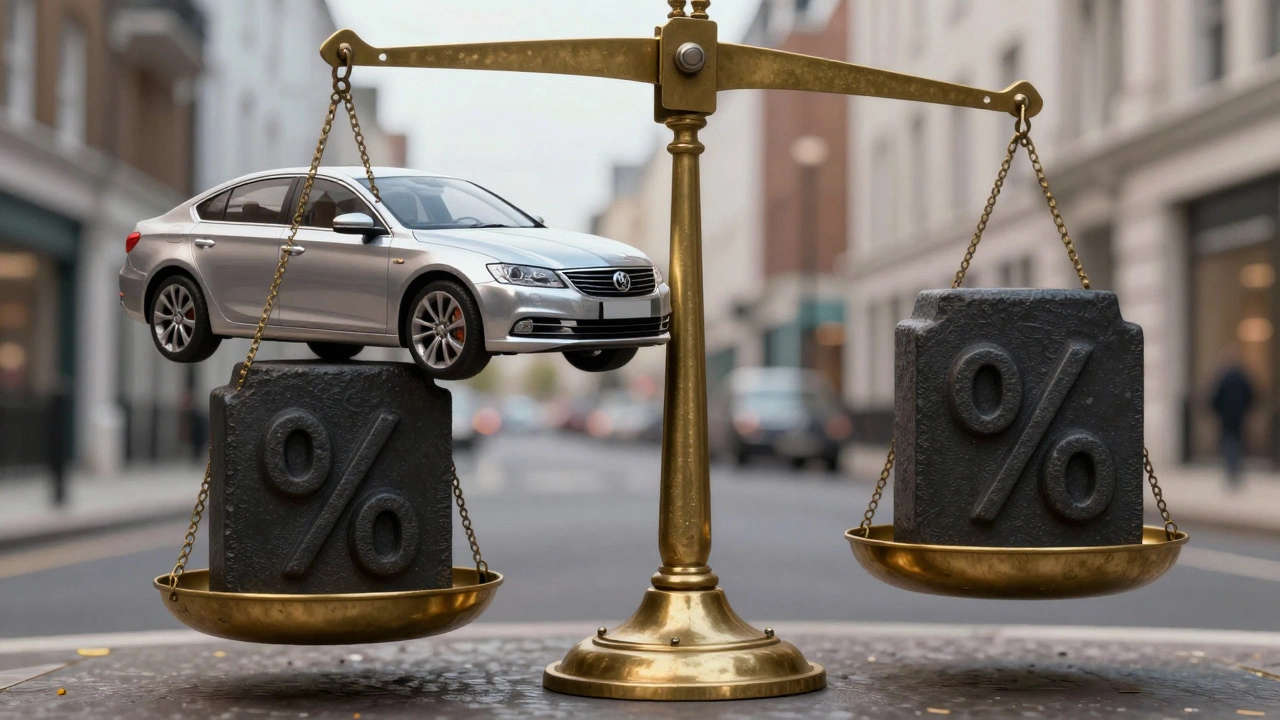
Here’s where it gets tricky. Some lenders quote a low interest rate but bury massive fees in the APR calculation. Others do the opposite: they quote a high APR but waive origination fees.
Always ask for the total cost of credit. Break it down:
- Principal: The amount borrowed.
- Interest: The cost of borrowing over time.
- Fees: Documentation fees, administration charges, GPS tracking fees (common in subprime auto loans).
If the dealer says, "The rate is 12%, but we don’t charge any upfront fees," compare that to a competitor offering 10% with a $500 doc fee. Run the numbers. Often, the lower rate with fees wins out over the long haul. But beware of "packaged products" like extended warranties or gap insurance bundled into the loan. These increase the principal, which increases the interest paid, effectively raising your real APR.
How to Lower Your Rate Below 12%
If 12% feels too heavy, you have leverage. Here’s how to negotiate a better deal:
1. Shop Around Before You Visit the Dealer
Never go to a dealership without knowing your rate. Get pre-approved from a credit union, online lender, or your current bank. In Australia, non-bank lenders and credit unions often beat big banks on personal loans and auto finance. Having a competing offer forces the dealer’s finance manager to match or beat it.
2. Improve Your Credit Score First
If you can wait 3-6 months, focus on boosting your score. Pay down existing credit card balances, correct errors on your credit report, and avoid applying for new credit. A jump from 620 to 680 can drop your rate by several percentage points.
3. Increase Your Down Payment
Cash is king. A larger deposit lowers the loan-to-value (LTV) ratio. If you’re borrowing $20,000 instead of $25,000, the lender takes less risk. Ask explicitly: "If I put down an extra $5,000, can you lower the APR?"
4. Shorten the Loan Term
Ask for a three-year loan instead of five. Rates are typically lower for shorter terms because the asset retains more value relative to the debt. Yes, the monthly payment goes up, but you’ll save massively on interest and build equity faster.
5. Refinance Later
If you’re stuck with 12% today, take the car-but plan to refinance. After 12-18 months of perfect payments, your credit score may improve, and the car’s value will stabilize. You can then refinance with a new lender at a lower rate. Just ensure your loan has no prepayment penalties.
Alternatives to Traditional Auto Loans
If 12% is the best you can get, consider other ways to get wheels:
- Personal Loan: Sometimes unsecured personal loans have lower rates than secured auto loans, especially if you have good credit. You keep the title in your name, and you can shop around freely.
- Leasing: Leases often come with lower money factors (the lease equivalent of interest rates). However, you don’t own the car at the end. Only consider this if you drive under 15,000 km/year and love changing cars every few years.
- Buying Cash for a Cheaper Car: Can you afford a $15,000 car outright? If so, skip the loan entirely. No interest, no fees, no stress. Drive it for ten years, then sell it. The total cost of ownership is often lower than financing a luxury model.
Final Thoughts: Know Your Worth
Is 12% APR too high? For a prime borrower in 2026, absolutely. It’s a sign you haven’t shopped enough or that the dealer is exploiting information asymmetry. For someone rebuilding credit or buying a high-risk used vehicle, it might be the reality of the market.
Don’t let urgency dictate your decision. Cars aren’t perishable goods. If the number doesn’t feel right, walk out. The next dealership down the street might offer 8%. That 4% difference isn’t just a number-it’s freedom from debt.
What is a good APR for a car loan in 2026?
For borrowers with excellent credit (750+), a good APR for a new car is between 3% and 6%. For used cars, expect 5% to 8%. Borrowers with fair credit (650-700) might see rates between 8% and 12%. Anything above 12% is generally considered high unless you have poor credit or limited options.
Can I negotiate the APR on a car loan?
Yes, APR is negotiable. While the base interest rate is set by the lender, dealers often add a "markup" to make a profit. By shopping around and bringing pre-approval offers, you can force the dealer to reduce their markup or match a lower rate from another institution.
Is it better to have a lower monthly payment or a lower APR?
A lower APR is almost always better financially. A lower monthly payment achieved by extending the loan term (e.g., from 5 to 7 years) usually results in paying significantly more interest over time. Focus on the total cost of the loan, not just the monthly cash flow.
How does my credit score affect my car loan interest rate?
Your credit score is the primary factor lenders use to determine risk. Higher scores indicate reliable repayment history, qualifying you for lower rates. A difference of 50-100 points in your score can change your APR by 1-3%, costing or saving you thousands over the life of the loan.
Should I refinance my car loan if I got a high rate initially?
Refinancing can be a smart move if your credit score has improved since you took out the original loan, or if market interest rates have dropped. Aim to refinance after 12-18 months of on-time payments. Ensure there are no prepayment penalties on your current loan before proceeding.