Digital Asset vs. Money Analyzer
Evaluate if your digital asset behaves like a currency or an investment
Can you easily use this asset to buy common goods (coffee, rent, bills) without converting it first?
Do stores list their prices in this asset, and is the price stable day-to-day?
If you hold this for a month, is the purchasing power likely to remain steady?
Analysis Result:
Select the options on the left and click "Analyze" to see the result.
You’ve probably seen a headline about someone buying a luxury villa with Bitcoin or a company accepting Ethereum for services. But if you tried to pay your electricity bill or buy a coffee at a local kiosk with it, you'd likely hit a wall. This creates a weird paradox: your app says you have thousands of dollars in assets, but the cashier says you have nothing they can use. So, is crypto real money, or is it just a high-tech version of trading digital baseball cards?
Quick Takeaways
- Legally, most cryptocurrencies are not "money" (legal tender) but are treated as property or assets.
- Money serves three roles: a medium of exchange, a unit of account, and a store of value. Crypto struggles with the first two.
- The value of crypto comes from market demand and network utility, not government backing.
- Tax authorities usually treat crypto as capital assets, meaning you pay capital gains tax when you sell.
The Three Jobs of Money
To figure out if crypto fits the bill, we have to look at what money actually does. Economists generally agree that for something to be "money," it has to perform three specific jobs. If it fails even one, it's more of an investment than a currency.
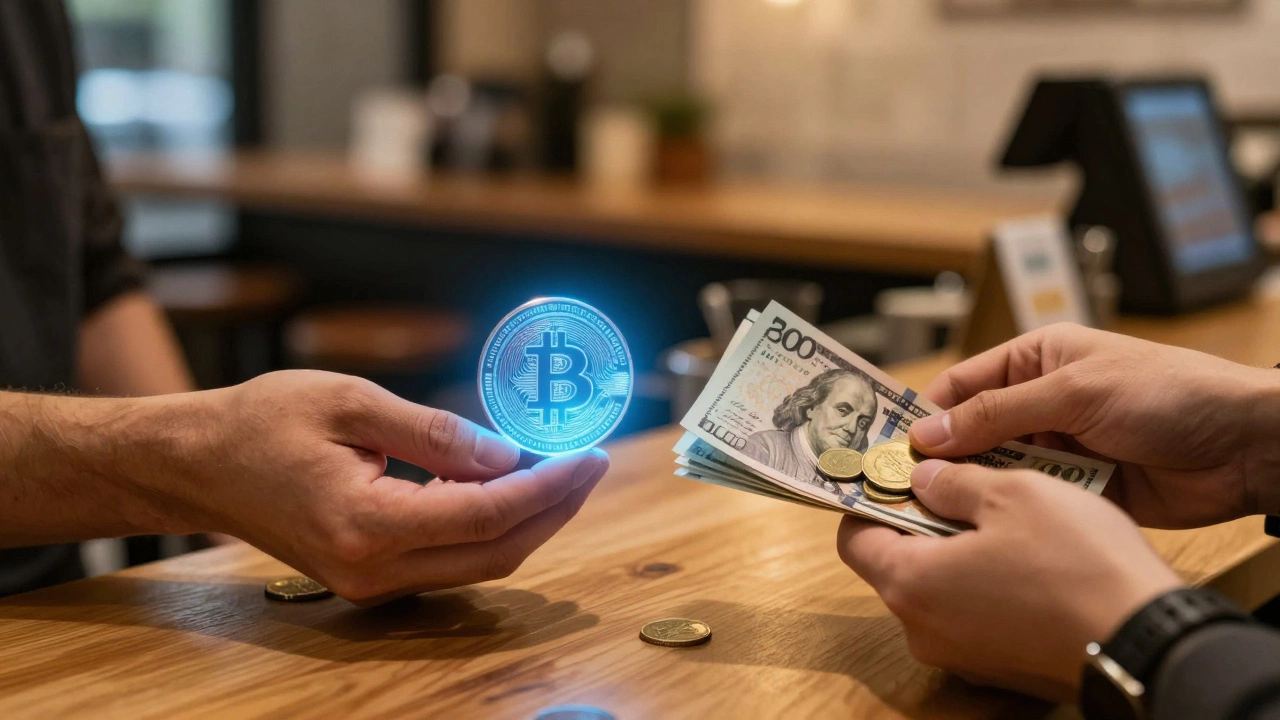
First, it must be a medium of exchange. This means you can trade it for goods and services without a struggle. While some niche stores accept Bitcoin, the vast majority of businesses still require Fiat Currency (government-issued money like the USD or AUD). If you have to convert your crypto back to cash to buy a sandwich, the crypto isn't the money-the cash is.
Second, it needs to be a unit of account. This is a fancy way of saying we use it to price things. You don't see a car listed for 0.0023 BTC because that number changes every ten minutes. Prices are set in stable currencies. When the price of an asset swings 10% in a day, it's a terrible ruler for measuring value.
Third, it should be a store of value. This is where crypto is most debated. While Bitcoin has held value over long periods, the extreme volatility makes it risky for short-term savings. Contrast this with a savings account where $100 is almost certainly still $100 tomorrow.
Legal Tender vs. Digital Assets
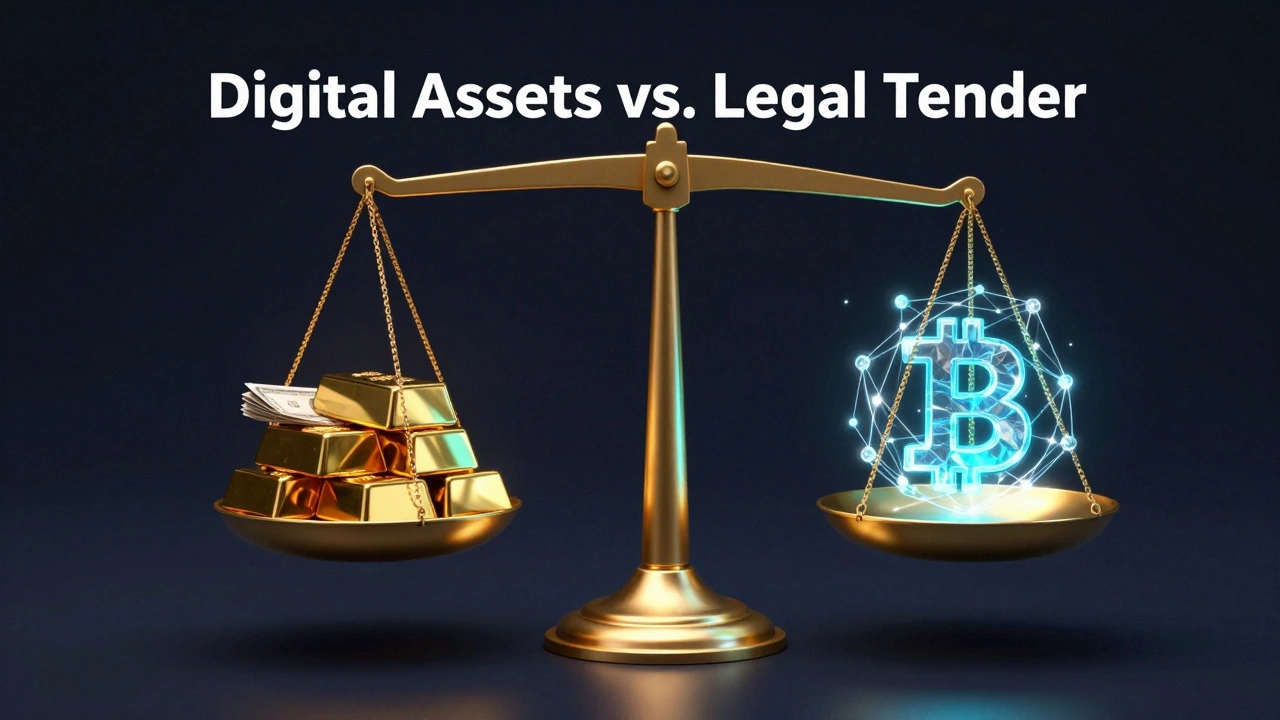
There is a massive legal difference between "money" and "legal tender." Legal Tender is a coin or banknote that must be accepted if offered in payment of a debt. In most countries, the government declares the official currency as legal tender. If you owe a debt in the US, you pay in US Dollars.
Cryptocurrencies, for the most part, are viewed as Digital Assets or commodities. Think of it like gold. Gold is "real" and has immense value, but you can't walk into a grocery store and hand over a gold flake for a carton of milk. You sell the gold for cash, then spend the cash. Crypto works exactly the same way.
| Feature | Fiat Currency (USD, EUR, AUD) | Cryptocurrency (BTC, ETH) |
|---|---|---|
| Issuer | Central Banks / Government | Decentralized Network/Code |
| Legal Status | Legal Tender | Property / Digital Asset |
| Value Source | Government Decree / Trust | Market Demand / Utility |
| Stability | Relatively Stable | Highly Volatile |
| Payment Use | Universal | Limited / Specialized |
The Role of Stablecoins
Because the volatility of Bitcoin makes it hard to use as money, a new breed of asset emerged: Stablecoins. These are tokens designed to stay pegged to a stable asset, usually the US Dollar. Examples like USDT (Tether) or USDC (USD Coin) try to bridge the gap.
Stablecoins act more like "money" because they don't swing wildly in price. They allow traders to move funds across the globe in seconds without exiting the Blockchain ecosystem. However, they still aren't legal tender. They are essentially digital receipts for dollars held in a reserve. If the company issuing the stablecoin fails or the reserve is empty, that "money" can vanish.
Why Some People Call It "Real Money"
If you talk to a crypto enthusiast, they'll tell you that fiat money is actually the "fake" stuff. Their argument is based on inflation. When a central bank prints more money, the purchasing power of each dollar drops. They argue that a capped supply-like Bitcoin's 21 million limit-makes it "hard money," similar to the gold standard of the past.
From this perspective, the "realness" of money isn't about whether a government says so, but about whether it can resist devaluation. If you live in a country with hyperinflation (like Venezuela or Argentina), crypto feels like "real money" because it's a safer place to store wealth than the local currency that loses value every hour.
The Tax Man's Perspective
Regardless of whether you think it's money or a digital collectible, the tax authorities have a very clear view. In the eyes of the Internal Revenue Service (IRS) in the US or the Australian Taxation Office (ATO), cryptocurrency is treated as property.
This is a critical distinction for anyone into cryptocurrency investing. If crypto were "money" in the legal sense, swapping one for another might be a simple currency exchange. Instead, every time you trade Bitcoin for Ethereum, or use Bitcoin to buy a laptop, you are "disposing" of an asset. This triggers a taxable event. You have to calculate the difference between what you paid for the asset and its value at the time of the trade-this is your capital gain or loss.
The Future: CBDCs and the Shift to Digital
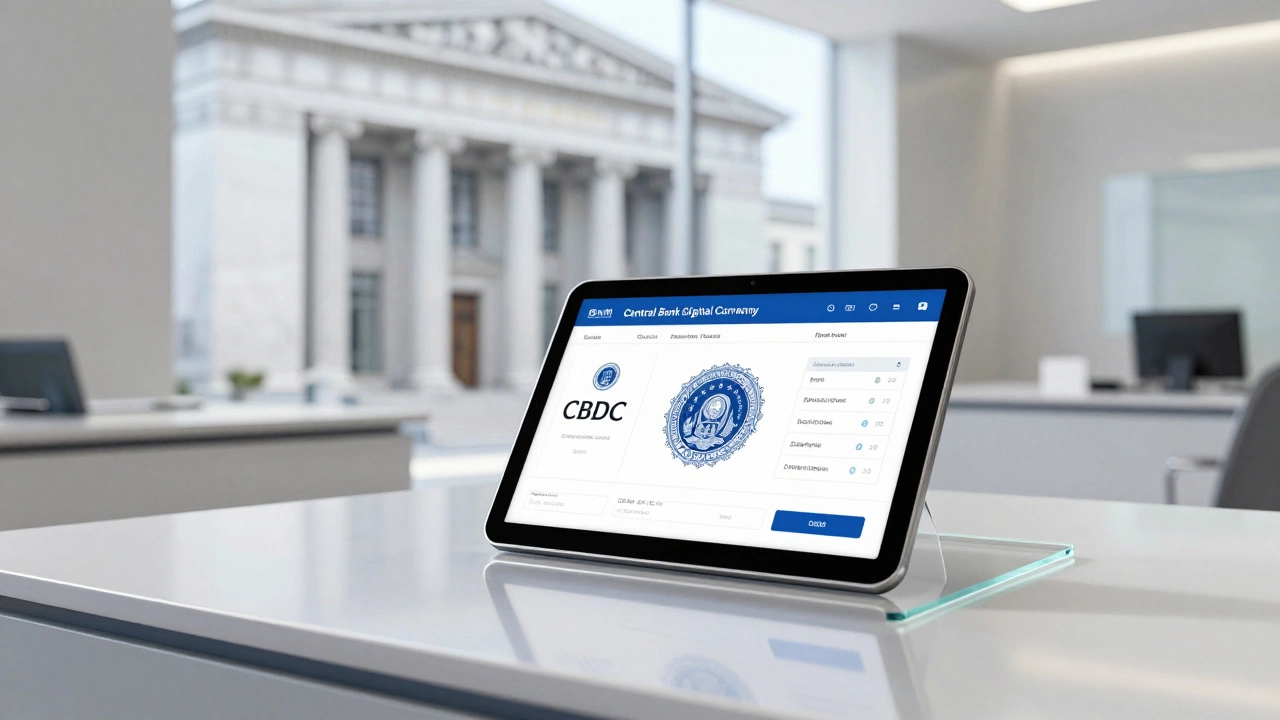
We are currently seeing the birth of a third category: Central Bank Digital Currencies (CBDCs). These are not cryptocurrencies in the sense that they aren't decentralized. They are simply digital versions of a country's official currency, issued and controlled by the central bank.
CBDCs would be actual legal tender in a digital format. Unlike Bitcoin, which is a private asset you own, a CBDC would be a direct liability of the government. This would solve the "real money" problem because it would have the legal backing of the state and the technological efficiency of a blockchain. It effectively removes the need for a commercial bank to act as the middleman for your digital balance.
Can I use crypto to pay taxes?
Generally, no. Most governments require taxes to be paid in their official legal tender. While a few jurisdictions have experimented with it, you typically have to sell your crypto for cash first to pay your tax bill.
Is cryptocurrency safer than a bank account?
It depends on your definition of safe. Bank accounts are often insured by governments (like the FDIC in the US). Crypto is not. If you lose your private keys or a platform is hacked, there is no "forgot password" button or insurance payout to get your funds back.
What happens if a cryptocurrency goes to zero?
Since crypto is a market-driven asset and not backed by a government guarantee, it can indeed lose all its value. This is why it is viewed as a high-risk investment rather than a stable currency.
Does the value of crypto depend on the blockchain?
Yes. The value is derived from the utility and security of the underlying blockchain. If the network is secure, fast, and has many users, the asset associated with that network generally becomes more valuable.
Are stablecoins actually stable?
They are designed to be, but they carry "de-pegging" risk. If the market loses trust in the reserves backing the coin, the price can drop below $1.00, as seen with some algorithmic stablecoins in the past.
Next Steps for New Users
If you're just starting out, don't treat your crypto wallet like a checking account. Because of the tax implications and volatility, it's better to treat it as an investment portfolio. Only move funds into crypto that you are comfortable seeing fluctuate significantly.
For those who want to actually spend their assets, look into crypto-linked debit cards. These services automatically sell your crypto for fiat in the background the moment you swipe the card, giving you the experience of spending "crypto money" while actually using legal tender at the point of sale.