
Crypto Investment Calculator
How Your Investment Could Grow
Calculate your potential crypto returns based on consistent monthly investments. The calculator uses historical growth data from Bitcoin and Ethereum.
Projected Value
Based on 10% annual growth rate - a conservative estimate based on historical data
You'll invest a total of $0 over this period.
Buying your first cryptocurrency can feel like walking into a casino without knowing the rules. You see headlines about people turning $100 into $10,000, but you also hear about scams, lost passwords, and prices crashing overnight. The truth? Cryptocurrency investing isn’t gambling-if you do it right. This guide cuts through the noise and shows you exactly how to start investing in crypto safely, even if you’ve never touched a wallet before.
Understand what cryptocurrency actually is
Cryptocurrency is digital money that runs on a public ledger called a blockchain. Bitcoin, the first one, was created in 2009. Since then, thousands more have appeared-Ethereum, Solana, Cardano, Dogecoin, and others. But not all are equal. Bitcoin and Ethereum make up over 60% of the total crypto market. They’re the most tested, most secure, and most widely accepted. For beginners, sticking to these two is the smartest move.
Unlike bank money, crypto isn’t controlled by governments or banks. It moves peer-to-peer, secured by math and code. That means no middlemen, lower fees, and 24/7 trading. But it also means you’re 100% responsible for your money. If you lose your password or send it to the wrong address, there’s no customer service to fix it.
Start with a clear goal
Why are you investing? Are you trying to grow your savings over 10 years? Are you speculating for short-term gains? Or are you just curious? Your goal changes everything.
If you’re thinking long-term-like 5+ years-crypto can be part of a diversified portfolio. Many people treat it like stocks: buy and hold. The average Bitcoin price has gone up about 180% per year since 2013. That’s not guaranteed, but it shows potential.
If you’re hoping to get rich quick, you’re setting yourself up for disappointment. Crypto markets swing wildly. In 2024, Ethereum dropped 40% in one week after a major upgrade failed to meet expectations. That kind of rollercoaster isn’t for everyone.
Best practice: Only invest money you can afford to lose. Start small. $50 or $100 is enough to learn without risking your rent money.
Choose a trusted exchange
You can’t buy crypto at your bank. You need a crypto exchange. Think of it like an online store for digital money.
For beginners in Australia, these three are the most reliable:
- CoinSpot - Easy to use, supports over 500 coins, and has Australian dollar deposits via bank transfer.
- Swyftx - Low fees, great mobile app, and popular with Aussie users since 2018.
- Independent Reserve - One of the oldest and most secure, regulated by AUSTRAC (Australia’s financial watchdog).
Avoid random apps you find on Google. Stick to exchanges that are licensed in Australia. They follow strict rules to protect your money and ID.
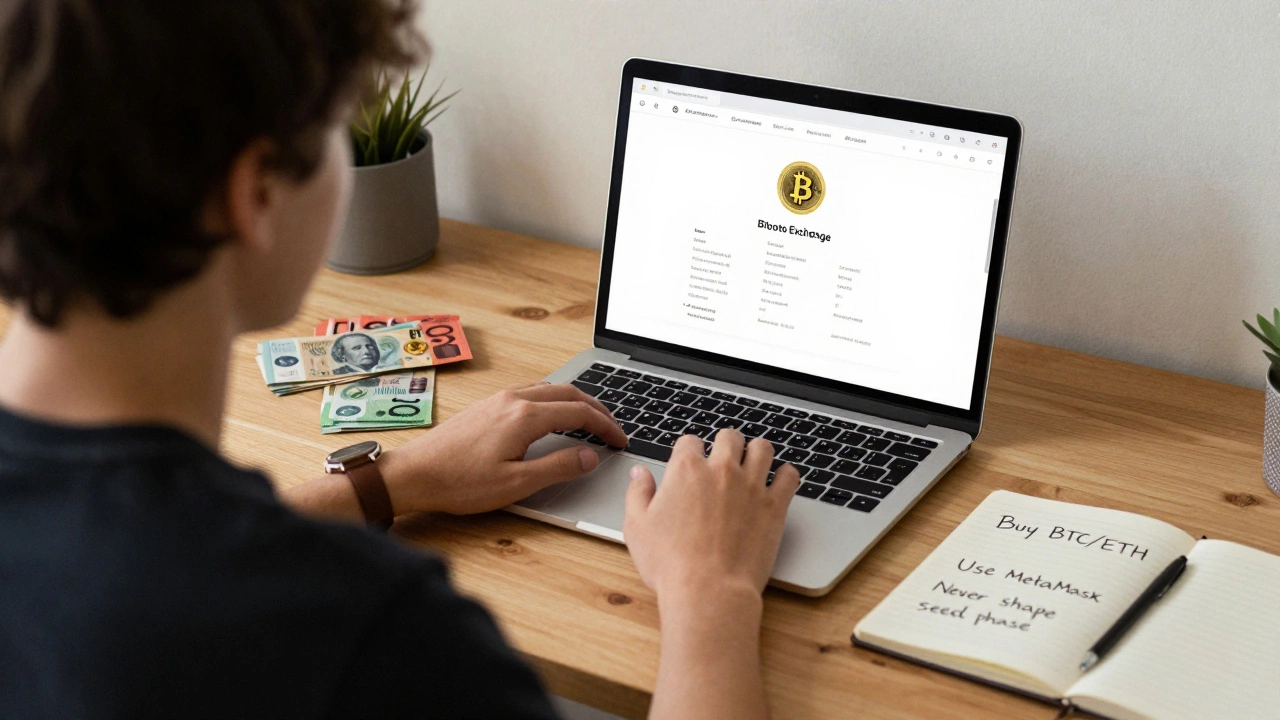
Sign-up takes 10 minutes. You’ll need your driver’s license or passport and a selfie. Once verified, link your bank account. Most exchanges let you deposit AUD instantly via Osko or BPAY.
Buy Bitcoin or Ethereum first
Don’t jump into Shiba Inu or Pepe Coin just because your friend said it’s going to 100x. Those are high-risk gambles. Start with Bitcoin (BTC) and Ethereum (ETH).
Bitcoin is digital gold. It’s the original and most trusted. Ethereum is the engine behind most apps in crypto-DeFi, NFTs, smart contracts. Together, they cover 70% of the market.
Here’s how to buy:
- Log into your exchange.
- Click “Buy” or “Trade”.
- Search for “Bitcoin” or “Ethereum”.
- Enter the amount in AUD-say, $100.
- Click “Buy Now”.
You’ll get a fraction of a coin. You don’t need to buy a whole Bitcoin. One Bitcoin costs around $75,000 AUD in 2025, but you can buy $10 worth and own 0.00013 BTC. That’s still real ownership.
Move your crypto to a private wallet
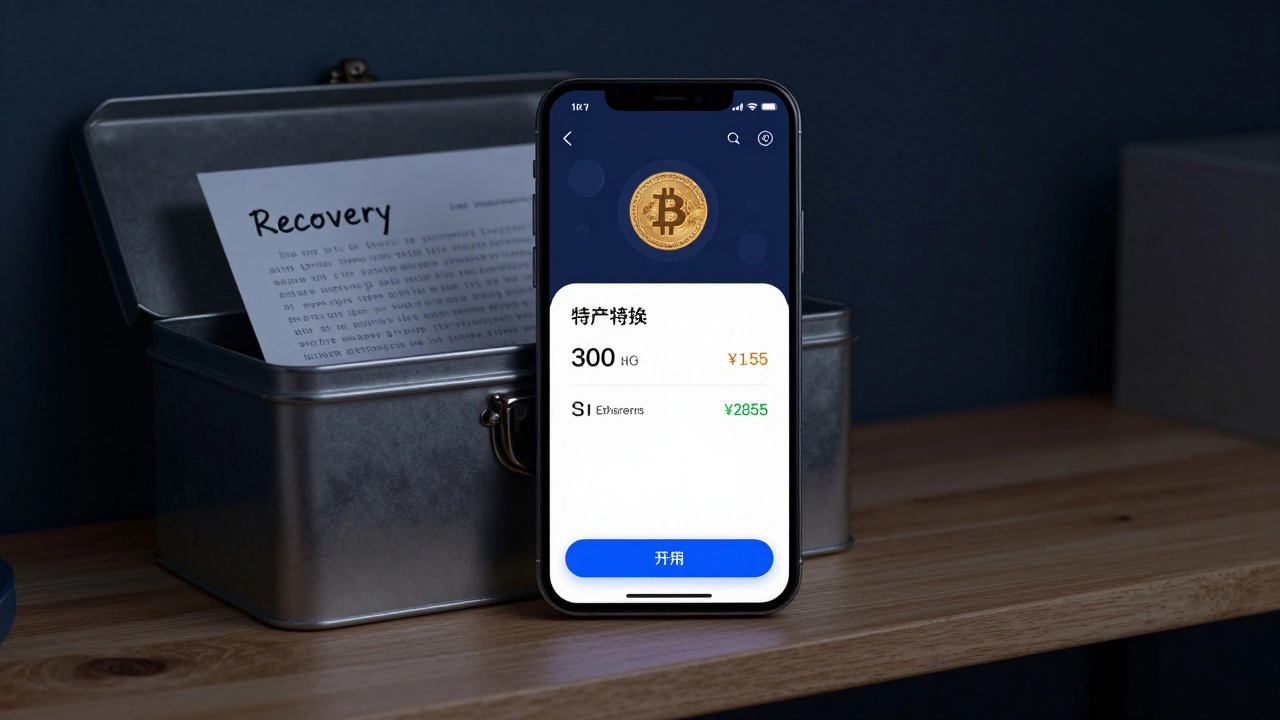
Leaving crypto on an exchange is like leaving cash in a hotel safe. It’s fine for a few days, but not long-term. Exchanges can get hacked, freeze accounts, or shut down.
After buying, transfer your Bitcoin or Ethereum to a non-custodial wallet. That means only you control the keys.
For beginners, use:
- MetaMask - Free browser extension or mobile app. Works with Ethereum and most tokens.
- Trust Wallet - Mobile-only, simple interface, supports Bitcoin and 10,000+ coins.
To move your crypto:
- Open your wallet app and copy your wallet address (a long string of letters and numbers).
- Go back to your exchange.
- Click “Withdraw”.
- Paste the address.
- Enter the amount.
- Double-check the address-mistakes are permanent.
- Confirm and wait 5-15 minutes.
Once it’s in your wallet, you’re in full control. Never share your recovery phrase (12-24 words). Write it on paper. Store it in a safe. If someone gets this, they own your crypto.
Never chase hype or FOMO
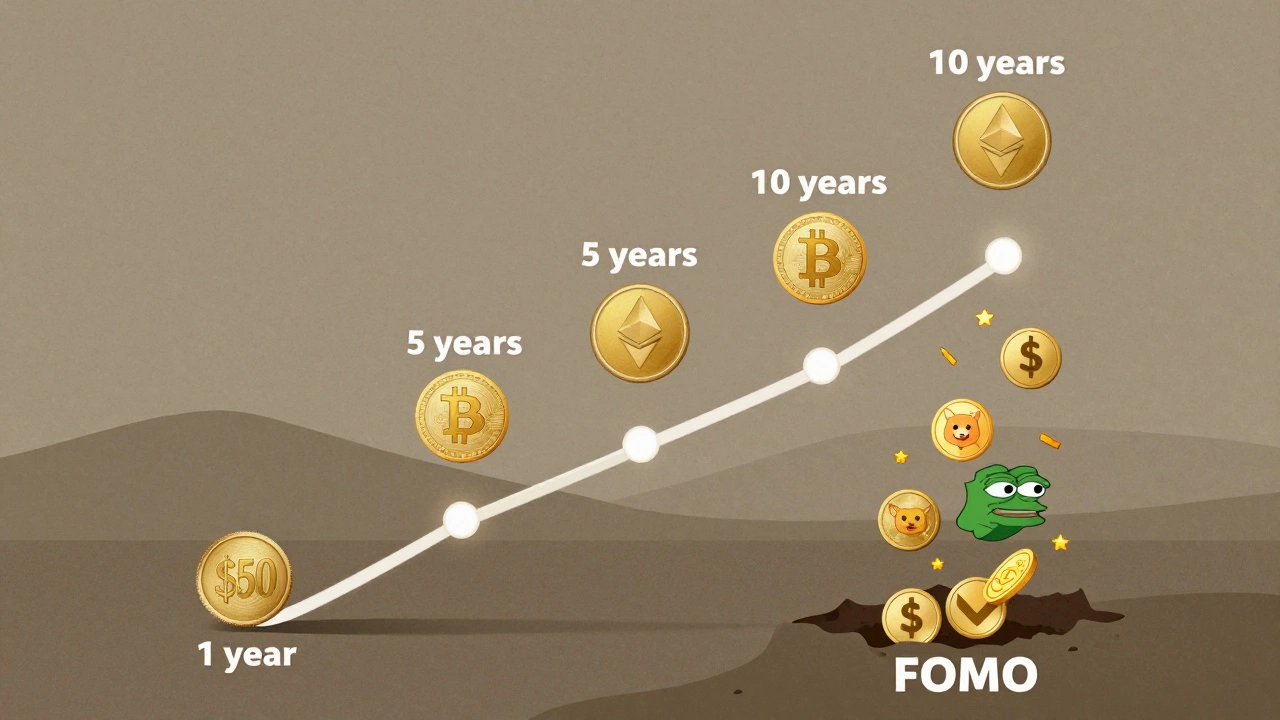
The biggest mistake beginners make? Buying because everyone else is.
In early 2024, Dogecoin jumped 300% in two days after Elon Musk tweeted about it. Thousands rushed in. A week later, it crashed 60%. People who bought at the peak lost money.
Instead, set a plan:
- Decide how much you’ll invest per month-$50? $100?
- Buy on the same day each month, no matter the price. This is called dollar-cost averaging.
- Ignore tweets, TikTok videos, and Reddit threads.
Bitcoin has gone up 10x in the last five years. You don’t need to time the market. Just show up, consistently.
Keep learning, but don’t overcomplicate
You don’t need to understand smart contracts or mining to invest. But you should know the basics:
- What’s a hard fork? (When a blockchain splits-like Bitcoin and Bitcoin Cash.)
- What’s a token? (A digital asset built on another blockchain, like Ethereum.)
- What’s staking? (Earning interest by locking up crypto to help secure a network.)
Stick to trusted sources: CoinMarketCap for prices, CoinGecko for research, and the official websites of Bitcoin and Ethereum. Avoid YouTube gurus selling “secret systems.” If it sounds too good to be true, it is.
Watch out for scams
Crypto scams are everywhere. Here are the top three to avoid:
- Phishing sites - Fake login pages that steal your password. Always type the exchange URL yourself.
- Giveaway scams - “Send 0.1 BTC and get 1 BTC back!” No legitimate company does this.
- Impersonators - Someone pretending to be from Coinbase or Binance on Telegram or WhatsApp. They’ll ask for your recovery phrase. Never give it out.
If you’re unsure, pause. Ask yourself: Would a real company ask me for my private keys? The answer is always no.
Track your investments
Use free tools like Blockfolio or Delta to track your holdings across wallets and exchanges. They show your total value, profit/loss, and price alerts.
Don’t check your portfolio every hour. That’s how panic starts. Check once a week. Let time work for you.
When to sell
There’s no magic rule. But here are two healthy reasons to sell:
- You need the money for something important-like a house deposit or medical bill.
- You’ve doubled or tripled your original investment and want to lock in profits.
Never sell because the price dropped 10%. That’s normal. Crypto is volatile. The key is staying in for the long haul.
If you’re unsure, hold. You can always sell later. But once you sell, you might miss the next big run.
Final checklist before you start
- ✅ I’ve chosen a licensed Australian exchange (CoinSpot, Swyftx, or Independent Reserve).
- ✅ I’m only investing money I can afford to lose.
- ✅ I’m buying Bitcoin or Ethereum first-not meme coins.
- ✅ I’ve set up a private wallet (MetaMask or Trust Wallet).
- ✅ I’ve written down my recovery phrase and stored it safely.
- ✅ I’ve turned off notifications from crypto influencers.
- ✅ I’m planning to buy a fixed amount monthly, no matter the price.
If you’ve checked all these, you’re ahead of 90% of new investors.
Can I invest in crypto with $50?
Yes. You can buy fractions of Bitcoin or Ethereum with as little as $10. Many exchanges let you set up recurring buys for $20 or $50 per week. Starting small is smart-it helps you learn without risk.
Is crypto legal in Australia?
Yes. Crypto is legal in Australia. The Australian Taxation Office (ATO) treats it as property, not currency. You must report profits when you sell or trade. Exchanges like Swyftx and CoinSpot report to the ATO, so keep your records.
What’s the safest crypto to buy as a beginner?
Bitcoin and Ethereum are the safest. They’ve been around for over a decade, have massive networks, and are backed by billions in market value. Avoid new, unknown tokens with no real use case.
Can I lose all my money in crypto?
Yes, if you invest in risky tokens, fall for scams, or lose your private keys. But if you stick to Bitcoin and Ethereum, use a secure wallet, and avoid speculation, your risk is much lower. Most losses come from poor habits-not the technology itself.
How long should I hold crypto?
Five years or more. Crypto is still young. Short-term swings are normal. People who held Bitcoin since 2016 saw 100x returns. Those who traded daily often lost money. Patience pays.
Do I pay tax on crypto in Australia?
Yes. The ATO taxes crypto as an asset. You pay capital gains tax when you sell, trade, or use it to buy something. Keep records of every transaction-buy price, date, and sell price. Most exchanges provide annual reports to help.