Credit Card Trap Calculator
You Save by Choosing Scenario B
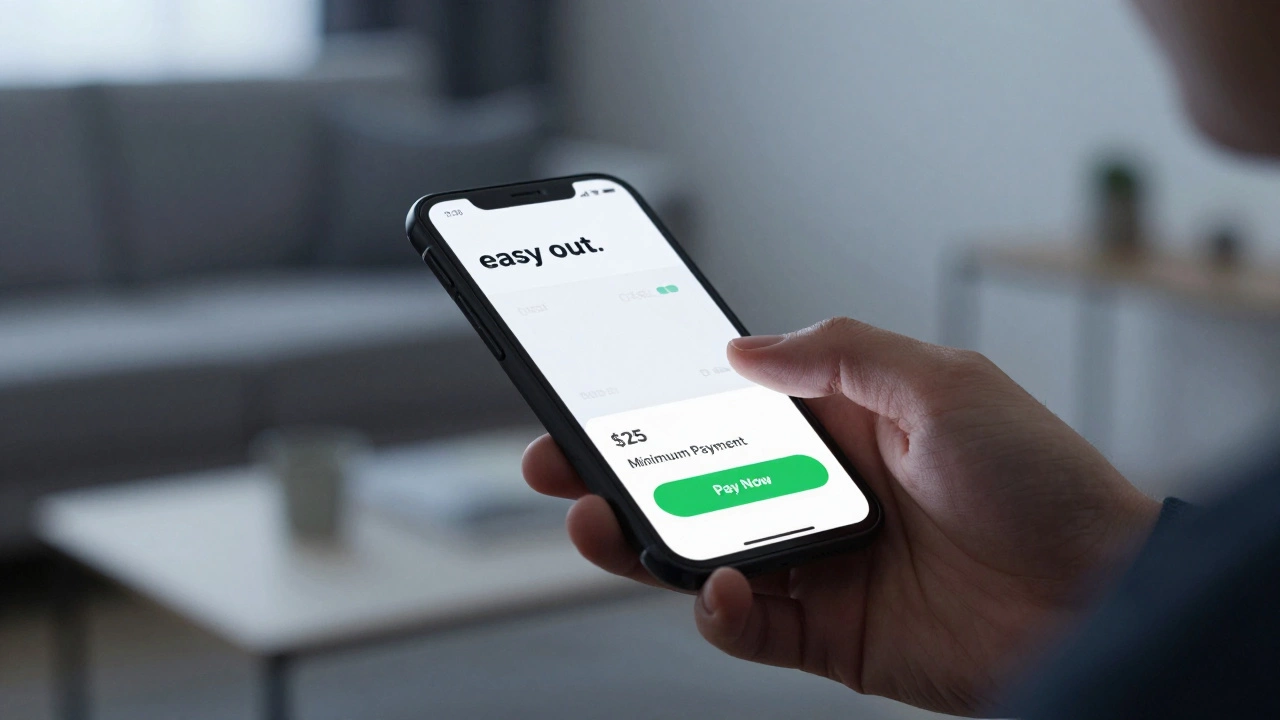
Imagine you buy a $1,000 sofa. You can't pay the full bill this month, so you put it on your credit card. Next month, you get the statement. It says you owe $1,000 plus interest. But there is a smaller number at the bottom: $25. That is your "minimum payment." You pay it. You feel relieved. You think you are handling it.
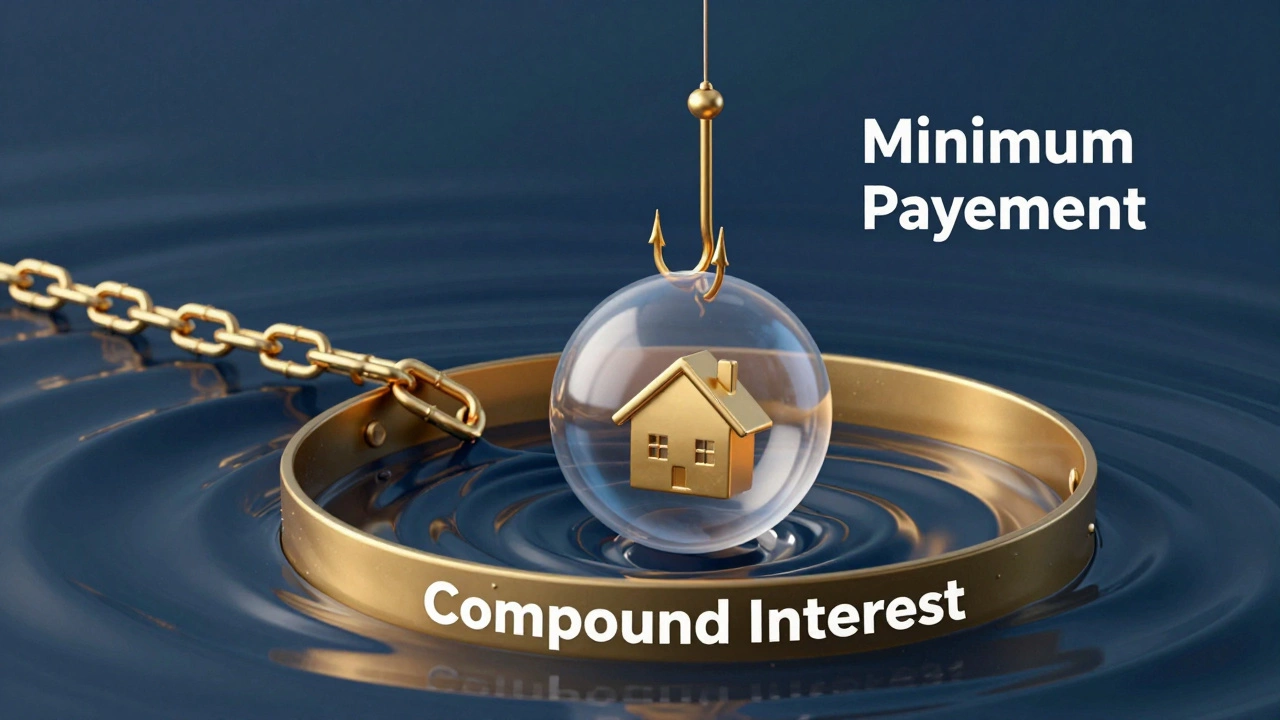
You are wrong. That relief is the bait. The hook is already in you.
The biggest credit card trap for most people isn't buying things they can't afford. It's paying only the minimum balance every month. This single habit turns a manageable purchase into a decades-long debt spiral that costs thousands in interest. While many people blame high prices or low wages, the math of revolving credit is designed to keep you paying forever if you don't break the cycle immediately.
The Math Behind the Minimum Payment Trap
To understand why this is such a dangerous pitfall, we need to look at how credit cards actually work. A credit card is not a loan with a fixed term like a mortgage or a car loan. It is a line of credit. As long as you make the minimum payment, the lender considers you "current." You aren't late. You aren't in default. But you are also not getting closer to freedom.
Credit card interest rates in Australia typically range from 19% to 29% per annum. Let's use a conservative average of 20%. If you have a $1,000 balance and your minimum payment is calculated as 2% of the balance (a common standard), you will pay $20 in the first month.
Here is where the trap snaps shut. Most of that $20 goes toward interest, not principal. At 20% annual interest, the monthly interest rate is roughly 1.67%. On $1,000, that is about $16.67 in interest. So, of your $20 payment, only $3.33 reduces the actual debt. Your new balance is $996.67.
Next month, the interest is calculated on $996.67. It's slightly less, but barely. You pay another ~$20. Again, most of it covers interest. This process repeats. Because the principal pays down so slowly, the interest never drops significantly. You end up paying for years.
| Payment Strategy | Time to Pay Off | Total Interest Paid | Total Cost |
|---|---|---|---|
| Minimum Only (~$20/mo) | ~8 years | $1,200+ | $2,200+ |
| Fixed $50/mo | ~2.5 years | $350 | $1,350 |
| Fixed $100/mo | ~1 year | $110 | $1,110 |
As the table shows, paying the minimum doubles the cost of the sofa. You paid $1,200 just for the privilege of spreading out the payment. That money could have been invested, saved for an emergency, or used to pay off higher-interest debt. Instead, it vanished into the bank's profit margin.
Why Banks Love the Minimum Payer
Banks are not charities. They are businesses. Their goal is to maximize revenue while minimizing risk. Customers who pay their balances in full every month are great for volume, but they generate almost no interest income. These customers are essentially using the bank's money for free during the grace period.
Customers who carry a balance and pay only the minimum are the lifeblood of the credit card industry. They provide steady, predictable cash flow for years. In fact, studies by consumer finance experts suggest that a small percentage of cardholders carry the majority of the outstanding debt. These "revolvers" subsidize the rewards programs, travel insurance, and zero-interest periods offered to everyone else.
This dynamic creates a conflict of interest. The bank has little incentive to help you pay off your debt quickly. Their algorithms are designed to calculate minimum payments that keep you solvent enough to stay active, but indebted enough to keep paying interest. When you see that small, manageable number on your statement, you are seeing a carefully engineered figure meant to delay your financial freedom.
The Psychological Hooks Keeping You Trapped
If the math is so bad, why do millions of people fall into this trap? It's not just ignorance; it's psychology. Credit card companies employ behavioral scientists to design products that exploit human biases.
- Present Bias: We value immediate relief over future gain. Paying $20 now feels good because it avoids a late fee and keeps your credit score safe. The pain of paying $1,200 in interest five years from now feels abstract and distant.
- Illusion of Control: Making a payment gives you a sense of accomplishment. You checked the box. You did what was asked. But because the payment doesn't significantly reduce the principal, you aren't making real progress. It's like running on a treadmill-lots of effort, no movement.
- Normalization of Debt: When you see a balance carried month after month, it starts to feel normal. You stop viewing it as a temporary tool and start viewing it as a permanent part of your budget. This mindset shift is critical because it stops you from seeking solutions.
Furthermore, credit card statements are often confusing. They list "new purchases," "previous balance," "payments," and "interest charges" in dense blocks of text. The minimum payment is highlighted, but the true cost of carrying the balance is buried in fine print. This complexity allows users to disengage from the reality of their debt.
How to Escape the Trap: Practical Steps
Breaking free from the minimum payment trap requires changing both your behavior and your strategy. Here is a step-by-step approach to reclaim your financial health.
- Stop Using the Card Immediately: If you are carrying a balance, stop adding new charges. Every new purchase increases the minimum payment calculation and adds more interest. Use cash or a debit card for daily expenses. Treat the credit card as broken until the balance is zero.
- Pay More Than the Minimum: Aim to pay at least twice the minimum amount. Even increasing your payment by $10 or $20 a month makes a massive difference in the long run. Look at the payoff chart provided by your bank (often available online) to see how extra payments shrink the timeline.
- Use the Avalanche or Snowball Method: If you have multiple credit cards, prioritize them. The Avalanche Method is a debt repayment strategy where you focus on paying off the debt with the highest interest rate first. This saves you the most money. The Snowball Method is a strategy where you pay off the smallest balance first to build momentum. Choose based on whether you need motivation (Snowball) or mathematical efficiency (Avalanche).
- Consider a Balance Transfer: Many Australian banks offer balance transfer offers with 0% interest for 12-24 months. This can save you thousands in interest if you can pay off the balance within the promotional period. Be careful of transfer fees (usually 2-3%) and ensure you have a plan to repay before the rate jumps back up.
- Automate Your Payments: Set up auto-pay for at least the minimum amount to avoid late fees. Then, manually send an extra payment each month. Automation prevents accidents; manual action accelerates progress.

When to Seek Professional Help
If your debt has grown beyond your ability to manage with these strategies, you may need professional assistance. In Australia, organizations like MoneySmart is an independent government website providing free financial education and resources. offer free tools and advice. Additionally, non-profit debt counseling agencies can negotiate with creditors on your behalf to lower interest rates or set up manageable payment plans.
Never ignore the problem. Credit card debt grows exponentially. What feels unmanageable today will be catastrophic in two years if left unchecked. Acknowledging the trap is the first step to escaping it.
Preventing Future Traps
Once you are debt-free, how do you stay that way? The key is to treat credit cards as a payment method, not a source of funds. Build a budget that accounts for all your expenses. Keep an emergency fund of 3-6 months' worth of living expenses so you don't need to rely on credit when unexpected costs arise.
Choose cards wisely. Look for features that align with your spending habits, such as cashback on groceries or travel points if you fly frequently. But remember: rewards are meaningless if you pay interest. The best reward is a $0 balance.
Is it better to pay the minimum or the full balance?
It is always better to pay the full balance if you can. Paying the full balance avoids all interest charges. If you cannot pay the full balance, pay as much as possible above the minimum to reduce the principal faster and save on interest.
Does paying only the minimum affect my credit score?
Yes, indirectly. While making on-time minimum payments helps your payment history (a major factor in credit scores), carrying high balances increases your credit utilization ratio. High utilization can lower your credit score. Additionally, prolonged debt can limit your ability to qualify for other loans.
What is a balance transfer and is it right for me?
A balance transfer moves your existing debt to a new card with a lower or 0% interest rate for a set period. It is right for you if you have a clear plan to pay off the debt within the promotional period and can afford the transfer fee. It is not right if you plan to continue spending on the card.
How long does it take to pay off a credit card if I only pay the minimum?
It depends on the balance and interest rate, but it can take many years. For example, a $5,000 balance at 20% APR with a 2% minimum payment could take over 15 years to pay off, costing thousands in interest. Always check your statement for the estimated payoff time.
Can I negotiate a lower interest rate with my bank?
Yes, you can call your credit card provider and ask for a lower rate. Mention your good payment history and any competing offers you have received. While not guaranteed, many banks are willing to lower rates to retain loyal customers, especially if you show signs of closing the account.