
Homeowners Insurance Premium Estimator
Configure Your Home Profile
Construction & Structure
Location & Age
Safety & Security Features
Personal Factors
Estimated Annual Premium Range
Based on national averages and risk factors provided
Factor Breakdown
Recommendations
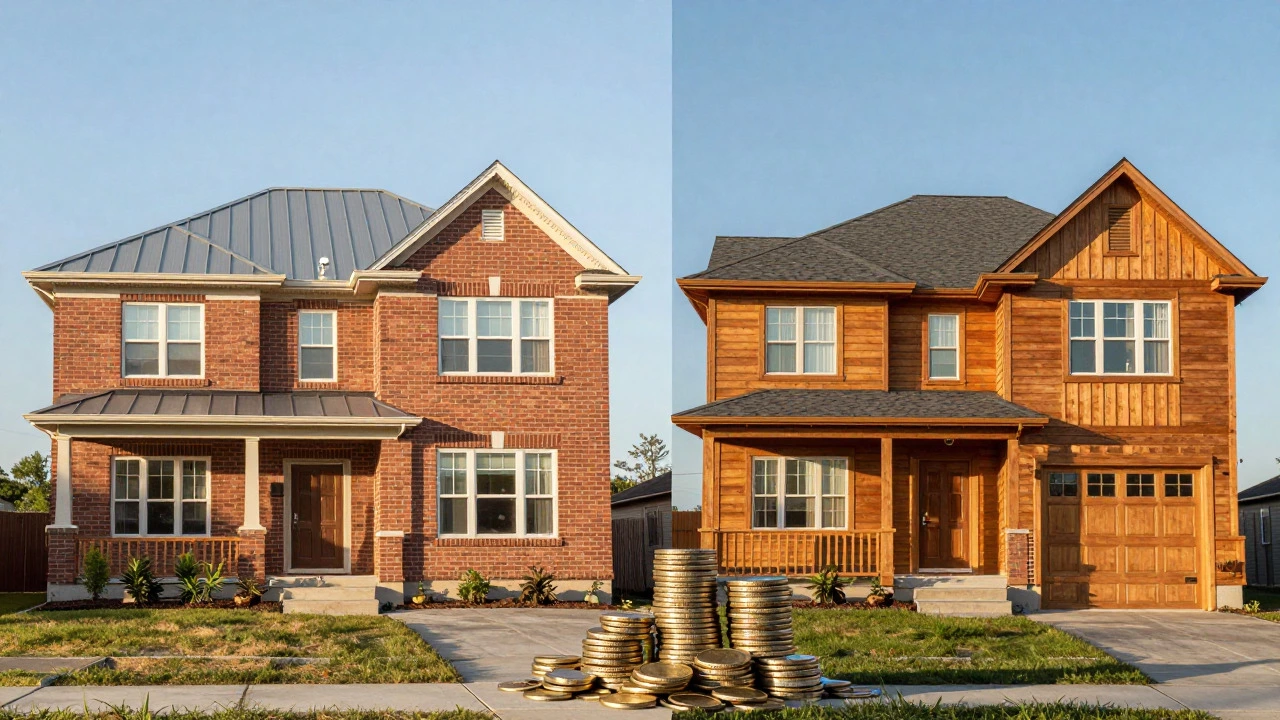
Imagine two identical houses side by side. Same square footage, same neighborhood, same value. But one owner pays $1,200 a year for insurance, while the other pays $2,500. It sounds unfair, but it’s not about luck. It’s about how insurers calculate risk. If you are buying a home or planning to build one, the physical characteristics of that structure will dictate your monthly costs more than almost anything else.
You might assume that newer is always better for your wallet. While modern safety features help, they don’t automatically mean the lowest premium. The real question isn’t just "what kind of house," but "which specific construction traits signal low risk to an insurer?" Understanding this helps you negotiate better rates or choose a property that saves you money from day one.
The Anatomy of a Low-Risk Home
Insurance companies are in the business of predicting disasters. They look at a house and ask: "How likely is this to burn down, flood, or get damaged by wind?" The answer determines your homeowners insurance premium. A house that tends to have the lowest premium usually combines three things: durable materials, modern systems, and a safe location.
Let’s break down the specific features that make a house cheap to insure.
- Construction Material: Brick, stone, or concrete block walls resist fire and high winds far better than wood frame construction. Metal roofs also outperform asphalt shingles in hail and wind resistance.
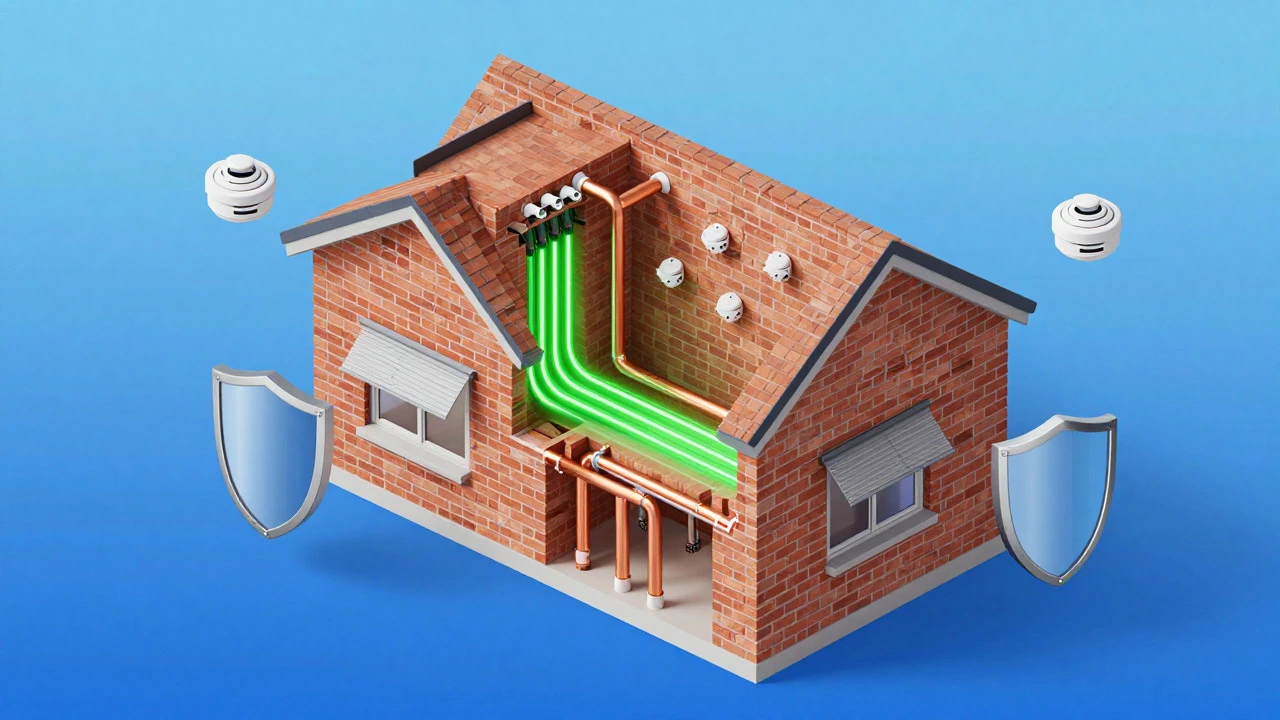
- Age of Systems: Electrical wiring, plumbing, and heating systems installed within the last 20-30 years are less likely to fail catastrophically. Old knob-and-tube wiring or polybutylene pipes are red flags that spike premiums.
- Safety Features: Smoke detectors, burglar alarms, fire sprinklers, and storm shutters actively prevent losses. Insurers reward these with discounts because they reduce the likelihood of a claim.
A single-story ranch-style home made of brick with a metal roof and updated electrical panels is often the cheapest to insure. Why? Fewer stairs mean fewer fall-related liability claims. Brick doesn’t burn. Metal roofs shed rain and resist hail. It’s a boring, safe package that insurers love.
Location: The Hidden Cost Driver
You can build the safest house in the world, but if it sits in a high-risk zone, your premium will still be high. Location is often the biggest factor after construction quality. Insurers use data models to assess regional risks.
| Risk Factor | Low Risk Scenario | High Risk Scenario | Premium Impact |
|---|---|---|---|
| Flood Zone | Outside FEMA Special Flood Hazard Area | Inside AE or VE Zone | +50% to +200% |
| Wildfire Interface | Urban/Suburban with defensible space | Wildland-Urban Interface (WUI) | +30% to +150% |
| Hurricane/Wind | Inland areas | Coastal zones <1 mile from shore | +40% to +300% |
| Crime Rate | Low crime neighborhood | High burglary/vandalism area | +10% to +25% |
If you live in Brisbane, Australia, you know that cyclones and flooding are real concerns. In the US, similar logic applies. A house built in 2020 in a floodplain might cost more to insure than a house built in 1980 on dry, inland ground. Always check the flood maps and wildfire risk indices before signing a purchase agreement. These external factors can override all the internal safety upgrades you make.
New vs. Old: The Sweet Spot
There is a common myth that brand-new homes always have the lowest insurance rates. This is partially true, but with a catch. New homes meet current building codes, which means better fire resistance and safer electrical work. However, new construction often comes with higher replacement costs. If your house burns down, rebuilding it today costs more than it did ten years ago due to inflation and labor shortages.
The "sweet spot" for low premiums is often a home that is 10-20 years old. It has already depreciated slightly in terms of initial construction hype, but its systems are still relatively modern. It avoids the pitfalls of older homes (outdated wiring, lead paint, asbestos) without carrying the maximum replacement cost valuation of a brand-new luxury build.
Additionally, very old homes (pre-1950s) often require "ordinance or law" coverage. This extra coverage pays for the cost difference between rebuilding as-is and upgrading to meet current codes. Without it, you might face a massive bill out of pocket after a loss. Adding this coverage increases your premium significantly.
Size and Complexity Matter
Simplicity saves money. A large, complex mansion with multiple wings, towers, and custom architectural details is expensive to insure. Why? Because it takes longer to rebuild, and specialized craftsmen are needed to replicate unique features. Every square foot adds to the replacement cost, which directly drives up the premium.
Consider these size-related factors:
- Total Square Footage: Larger homes cost more to replace. A 2,000 sq ft home will generally have a lower premium than a 4,000 sq ft home, assuming similar construction quality.
- Number of Stories: Multi-story homes pose higher liability risks (falls) and are harder for firefighters to access. Single-story homes are preferred by insurers.
- Detached Structures: Garages, sheds, and pools add complexity. Pools, in particular, are major liability magnets. Removing a pool can sometimes lower your premium more than adding a security system raises it.
If you are looking to minimize costs, stick to simple, rectangular floor plans. Avoid unusual shapes, steep roofs, or elaborate facades. Boring is beautiful when you are talking to an underwriter.
Protective Devices and Discounts
Even if you buy a house that isn’t perfect, you can lower your premium by installing protective devices. Insurers offer discounts for these because they statistically reduce claim frequency and severity.
Common discounts include:
- Security Systems: Monitored burglar alarms and fire suppression systems. Some insurers require certification from UL (Underwriters Laboratories) or FM Global.
- Roof Upgrades: Class A fire-rated roofing materials. In hurricane-prone areas, impact-resistant windows and doors can yield significant savings.
- Water Leak Detection: Automatic water shut-off valves that trigger when leaks are detected. Water damage is one of the most common claims, so preventing it is highly valued.
Before installing anything, call your insurer. Ask for their specific list of approved devices. Installing a generic alarm system might not qualify for a discount if it isn’t monitored by a certified central station.

Credit Score and Claims History
While the house itself is the primary factor, who lives in it matters too. In most states, insurers use credit-based insurance scores to predict risk. People with higher credit scores tend to file fewer claims. So, even if you have the ideal brick ranch home, a poor credit score can keep your premium high.
Your personal claims history is another key driver. If you’ve filed multiple claims in the last five years, you’re seen as high-risk regardless of the house’s condition. To get the lowest possible rate, maintain a clean claims record and a healthy credit profile.
Choosing the Right Coverage Limits
Finally, the amount you pay depends on how much coverage you buy. Many people over-insure their land or under-insure their belongings. Remember, insurance covers the structure and contents, not the land value. When getting quotes, ensure the "dwelling coverage" matches the actual cost to rebuild, not the market price of the home.
Deductibles play a huge role here. Choosing a higher deductible (e.g., $2,500 instead of $500) can drop your annual premium by 20-40%. This is a trade-off: you pay more out of pocket if something happens, but you save money every month. For low-risk homes, this is a smart strategy.
Does a newer house always have lower insurance?
Not necessarily. While newer homes meet current safety codes, they often have higher replacement costs due to inflation and modern amenities. A home that is 10-20 years old with updated systems often offers the best balance of safety and lower reconstruction costs, leading to moderate premiums.
Which construction material is cheapest to insure?
Brick, stone, and concrete masonry units (CMUs) are typically the cheapest to insure because they are highly resistant to fire and wind damage. Wood-frame construction is more susceptible to these perils and usually carries higher premiums.
How does location affect my homeowners insurance premium?
Location is a critical factor. Homes in areas prone to floods, wildfires, hurricanes, or high crime rates will have significantly higher premiums. Even small differences in zip codes can result in large price variations due to localized risk data used by insurers.
Can I lower my premium by removing a swimming pool?
Yes. Swimming pools are considered major liability hazards because they increase the risk of accidental injury or drowning. Filling in a pool or covering it permanently can lead to a noticeable reduction in your homeowners insurance premium.
What is the impact of my credit score on home insurance?
In most regions, insurers use credit-based insurance scores to assess risk. Higher credit scores are associated with fewer insurance claims, resulting in lower premiums. Poor credit can increase your rate by 20% or more compared to someone with excellent credit.