
FAFSA Eligibility Estimator
This tool helps you estimate how a $50k+ household income impacts your aid package. Remember, there is no strict income cutoff for filing FAFSA.
Enter your details to see estimated aid likelihood.
You might be sitting at your kitchen table, staring at a calculator, wondering if earning $50,000 a year disqualifies you from federal student aid. The short answer is no. You are absolutely eligible to apply. In fact, many families in this exact income bracket miss out on thousands of dollars because they assume the cutoff is lower or that their salary is "too high" for need-based help. The reality of the Free Application for Federal Student Aid (FAFSA) is more nuanced than a simple yes-or-no based on gross income.
The Department of Education doesn’t have a hard ceiling where you suddenly stop being eligible. Instead, they use a formula to calculate your Expected Family Contribution (EFC), now called the Student Aid Index (SAI). This number determines how much aid you get, not necessarily whether you get it at all. Even if your SAI is higher than zero, you can still qualify for low-interest federal loans, work-study programs, and sometimes grants depending on your family size and the cost of attendance at your chosen school.
How Your $50k Income Impacts Your Aid Package
When you earn $50,000, you fall into a middle-income category that often surprises applicants. Many students think financial aid is only for those below the poverty line. But the system is designed to assist a broad spectrum of households. The key factor here isn't just your total earnings; it's what portion of those earnings the government expects you to contribute toward education.
For the 2026-2027 academic year, the formula assesses parental income differently than student income. If you are a dependent student, your parents' adjusted gross income (AGI) matters most. A $50k AGI is well within the range where you might still receive some grant money, especially if you have multiple siblings in college. The government assumes that a family with one child in college has a higher capacity to pay than a family with two children paying tuition simultaneously.
| Aid Type | Likelihood at $50k Income | Why It Matters |
|---|---|---|
| Pell Grant | Low to Moderate | Depends heavily on household size and number of kids in college. |
| Federal Direct Subsidized Loan | High | Available regardless of need; interest doesn't accrue while in school. |
| State Grants | Variable | Many states have specific caps; check local rules. |
| Institutional Aid | Moderate | Colleges often fill gaps for middle-income families. |
The Student Aid Index (SAI) Explained
Gone are the days of the EFC. For recent cycles, including 2026, the term is the Student Aid Index. Think of the SAI as the minimum amount your family should contribute before other aid kicks in. With a $50k income, your SAI will likely be positive but modest. This means you won't get a full ride, but you also aren't expected to cover the entire bill upfront.
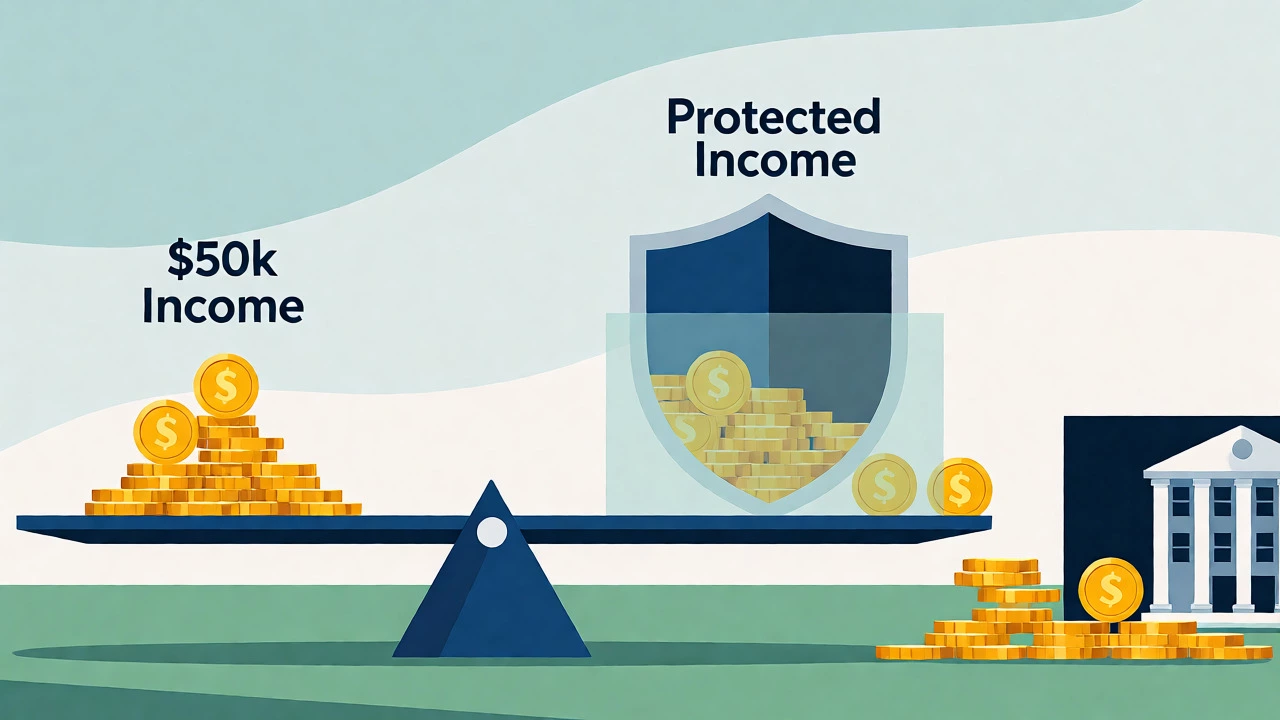
The calculation protects a certain amount of your income. For example, the first $10,000 to $15,000 of parental income is often protected from assessment entirely. Only the remaining income is assessed at a rate, typically around 22% to 47% depending on brackets. So, if you make $50k, the government might only count roughly $8,000 to $12,000 of that as available for college costs. This leaves plenty of room for you to qualify for subsidized loans and potentially small grants.
Hidden Factors That Boost Your Eligibility
Your raw salary is just one piece of the puzzle. Several other factors can dramatically change your outcome, even with a $50k cap. Ignoring these is the biggest mistake applicants make.
- Household Size: If you live in a large household, your per-person resources drop. The formula divides your income by the number of people in the home. More dependents mean less income per person, which lowers your SAI.
- Number in College: This is huge. If you have a sibling already enrolled in an undergraduate program, your parent contribution is split between them. Two kids in college on a $50k income makes each student appear to have half the available funds.
- Assets vs. Income: Savings accounts and investments are assessed too, but retirement funds like 401(k)s are generally excluded. If you have cash in a regular savings account, it counts. If it's in a Roth IRA, it usually doesn't affect the initial calculation.
- Tax Credits: Did you claim the American Opportunity Tax Credit? While you can't double-dip for the same expenses, tax preparation choices made earlier can impact your reported AGI.
What Happens If You Don't Qualify for Grants?
Let's say your SAI comes out higher than expected, and you don't get any free money like Pell Grants. Does that mean you failed? Not at all. You still gain access to critical financial tools that private banks rarely offer.
Federal Direct Subsidized Loans are the gold standard here. Unlike private loans, the government pays the interest while you're in school. On a $50k income, you likely won't qualify for the maximum loan amounts without filling out the FAFSA, but you'll definitely qualify for some. These loans come with fixed interest rates and flexible repayment plans, including income-driven options that cap payments at a percentage of your future discretionary income.
Work-study is another common outcome for middle-income families. This isn't a handout; it's a job on campus or in community service roles. The advantage? It helps you build a resume, and the earnings don't count against your next year's aid package in the same way outside jobs do.
Common Pitfalls for Middle-Income Families
Don't let pride or confusion keep you from filing. Here are the traps that catch people making $50k a year.
- Assuming "No Means No": Many skip the application because they think they make "too much." Remember, colleges use FAFSA data to award their own institutional scholarships. If you don't file, you're invisible to their financial aid office.
- Ignoring State Deadlines: Federal deadlines are generous, but state grants often run out of money early. Some states require FAFSA submission by February or March. If you wait until summer, you might lose state-specific aid even if you qualify federally.
- Misreporting Assets: Be honest about what you own. Home equity in your primary residence is usually excluded, but investment properties are counted. Mistakes here trigger verification audits, which delay your aid.
- Overlooking Professional Judgment: If your family experienced a sudden job loss or medical emergency during the prior tax year, contact the financial aid office directly. They can adjust your income figures to reflect current reality, not last year's snapshot.

Step-by-Step: Maximizing Aid on a k Salary
Ready to take action? Follow this checklist to ensure you squeeze every dollar out of the system.
- Gather Documents Early: Have your W-2s, tax returns, bank statements, and records of untaxed income ready. Use the IRS Data Retrieval Tool when possible to avoid typos.
- List All Schools: Put every school you're considering on the FAFSA, even if you're unsure. Each school uses the same data to create different packages. One might give you a better scholarship than another.
- Check Dependency Status: Ensure you're correctly classified as dependent or independent. If you're over 24, married, or a veteran, you might be independent, which removes parental income from the equation entirely.
- Appeal If Necessary: If your initial offer seems low, write a professional letter to the financial aid director. Include documentation of special circumstances like high medical bills or childcare costs that aren't reflected in your tax return.
Real-World Example: The Martinez Family
Consider the Martinez family. Both parents work, bringing in a combined $52,000 annually. They have three children, two of whom are currently attending public universities. When they filed their FAFSA, they initially thought they wouldn't qualify for anything significant.
However, because two children were in college simultaneously, the formula divided the parental contribution responsibility. Their calculated SAI dropped significantly. As a result, both students qualified for Pell Grants (smaller amounts, but real money), full Federal Direct Subsidized Loans, and additional state merit-based aid that required FAFSA completion. Without applying, they would have paid full price out of pocket, missing out on nearly $4,000 per student per year.
Is there a maximum income limit for FAFSA?
No, there is no strict upper income limit for submitting the FAFSA. Anyone can apply regardless of how much they earn. However, higher incomes generally result in a higher Student Aid Index (SAI), which may reduce or eliminate need-based grants like the Pell Grant. You will still qualify for federal loans and work-study programs regardless of income level.
Will I get a Pell Grant if I make $50,000?
It depends on your family size and the number of family members in college. A single-parent household with one child in college on $50k might get a partial Pell Grant. A two-parent household with four dependents and one child in college has a higher chance of qualifying due to the increased number of dependents lowering the per-person income assessment.
Does my savings account affect my FAFSA eligibility?
Yes, cash, savings accounts, checking accounts, certificates of deposit, and stocks/bonds are considered assets. Retirement accounts like 401(k)s and IRAs are generally excluded. Assets are assessed at a lower rate (usually 5.64%) compared to income, so having moderate savings won't drastically hurt your eligibility, but it does factor into the final calculation.
Can I negotiate my financial aid package?
Absolutely. If you receive a better offer from a comparable institution, or if your family's financial situation has changed since you filed (such as a job loss or high medical expenses), you can appeal to the financial aid office. Provide documentation to support your case. Many schools have discretionary funds specifically for middle-income students who fall through the cracks.
What if I didn't file FAFSA last year?
You must file a new FAFSA for each academic year. Missing last year's deadline doesn't prevent you from applying for the current year. However, some state and institutional aid programs require continuous enrollment and annual filing to maintain eligibility. Always file by the earliest deadline among your federal, state, and school requirements.