
Financing Impact Calculator
Your Financing Options
Credit Score Analysis
Your Estimated Credit Score Impact
Key Takeaways:
1. On-time payments can increase your score over time
2. Debt-to-income ratio is critical for future credit applications
3. Maintaining a mix of credit types helps your score
Financing Comparison
| Option | Monthly Payment | Total Cost | Credit Impact |
|---|---|---|---|
| 0% Financing | $583 | $35,000 | +15 to 25 points |
| 3% Financing | $636 | $38,175 | +10 to 20 points |
| Cash Rebate + 5% Financing | $603 | $36,250 | +5 to 15 points |
*Results based on $35,000 vehicle price and 60-month term
*Credit impact assumes on-time payments
Which option saves you the most?
Cash Rebate Option
Debt-to-Income Ratio
Your Debt-to-Income Ratio
40%
Based on your monthly income of $4,500
Recommended maximum: 36%
Above recommended limit
Your DTI ratio is high. This could impact future credit applications and loan approvals.
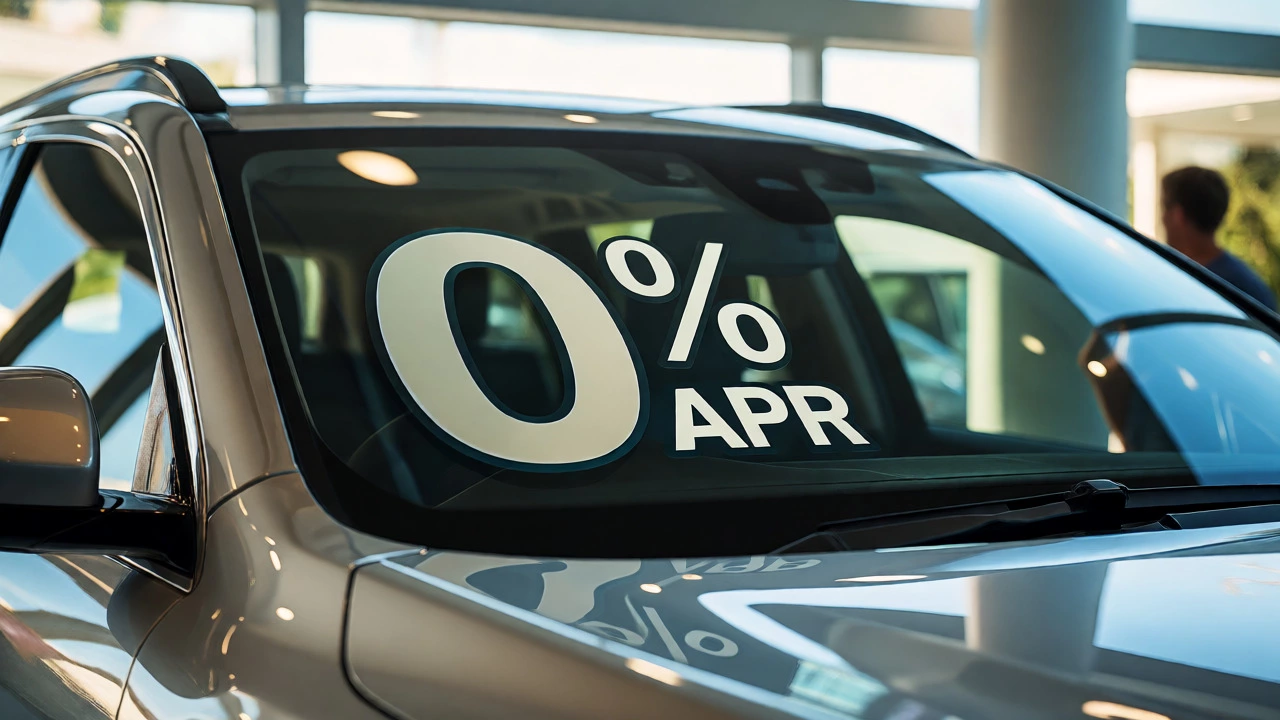
When you see a car ad shouting "0% financing for 60 months!" it’s hard not to feel like you’re getting a free ride. But beneath the flashy deal lies a question that keeps people up at night: Does 0% financing hurt your credit score? The short answer? Not directly. But how you handle it can make or break your credit in ways you might not expect.
How 0% financing actually works
0% financing means the car dealer or lender is covering the interest on your loan. You still pay back the full price of the car - just without extra charges for borrowing. It’s not a discount. It’s a subsidy. Dealers offer it to move inventory, especially at the end of the model year or during slow sales months. You’ll usually need excellent credit to qualify - often a score above 720.
When you sign up, the loan appears on your credit report just like any other auto loan. The lender reports your payment history, balance, and loan term to the credit bureaus. That’s it. The 0% rate itself doesn’t trigger any special credit scoring rules.
Why your credit score might drop - even with 0% financing
Even though the interest rate is zero, your credit score can still take a hit - not because of the deal, but because of how you manage it.
First, your credit utilization ratio can spike. When you take out a $35,000 car loan, your total debt jumps overnight. Credit scoring models look at how much you owe compared to your available credit. Even though this is an installment loan (not a credit card), a large new debt can still cause a temporary dip in your score. This usually lasts a few months, then bounces back as you make payments.
Second, your credit mix changes. If you’ve never had an auto loan before, adding one can help your score over time. But if you already have a mortgage and a student loan, and now you’re adding a big new car loan, the sudden increase in debt can look risky to scoring algorithms. This is especially true if your income hasn’t increased to match.
Third, if you miss a payment - even one - your score can drop 80 to 100 points. With 0% financing, you’re often locked into a 60- or 72-month term. That’s a long time to stay on track. One missed payment can undo months of good credit habits.
What boosts your credit score with 0% financing
Here’s the flip side: if you handle the loan right, your credit score can improve. Why? Because on-time payments make up 35% of your FICO score. Every single month you pay on time, your score gets a little boost.
Also, having a mix of credit types helps. If you’ve only ever used credit cards, adding an auto loan shows lenders you can manage different kinds of debt. That’s a positive signal.
And here’s something most people don’t realize: paying off a car loan early can actually hurt your score. Why? Because credit scoring models like to see you using credit over time. If you pay off a 60-month loan in 12 months, you’re cutting short the opportunity to build a long payment history. It’s not bad - but it doesn’t help your score as much as keeping the loan active and paying on time.
How 0% financing compares to other financing options
Let’s say you’re choosing between three options:
- 0% financing for 60 months - $35,000 loan, $583/month, $0 interest
- 3% financing for 60 months - $35,000 loan, $636/month, $2,175 total interest
- Cash rebate of $3,000 + 5% financing - $32,000 loan, $603/month, $4,250 total interest
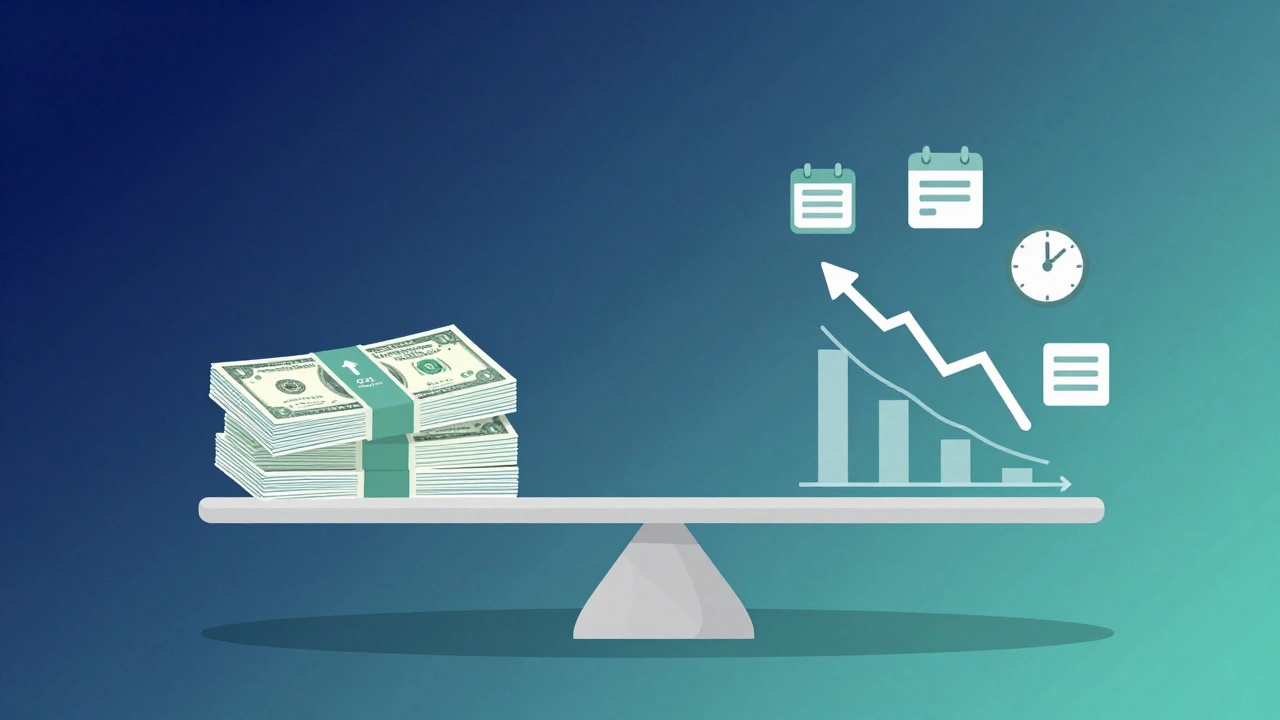
At first glance, 0% looks best. But if you have good credit and can qualify for the rebate, the $3,000 off might save you more in the long run - especially if you can invest the savings or pay down higher-interest debt.
Here’s the catch: the rebate option usually requires you to finance through a bank, not the dealer. That means you’ll need to get pre-approved. Many people skip this step and assume 0% is the only deal worth taking. But that’s a mistake. Always compare the total cost of ownership, not just the monthly payment.
What lenders really look for
Lenders don’t care that you got 0% financing. They care about your debt-to-income ratio, payment history, and credit utilization. If you’ve got a $35,000 car loan and you’re earning $45,000 a year, they’ll see you as risky - even if you’ve never missed a payment.
That’s why some people who get 0% financing get denied for a mortgage a year later. The car loan made their DTI too high. They didn’t realize their credit score wasn’t the only thing that mattered.
Before you sign, run the numbers: divide your total monthly debt payments by your gross monthly income. If it’s over 36%, you’re in the danger zone. If you’re already paying $1,200 in rent, $300 in student loans, and now $583 on a car, you’re at 40% - and that’s too high for most lenders.
When 0% financing is a smart move
It’s a great deal if:
- You have a credit score above 720
- You can afford the monthly payment without stretching your budget
- You plan to keep the car for the full loan term
- You’re not trading in a car with negative equity
- You’re not giving up a cash rebate that would save you more
For example, if you’re buying a $28,000 car, have $5,000 saved for a down payment, and can comfortably pay $400 a month, 0% financing lets you lock in a low payment without paying extra for interest. Over five years, that saves you over $2,500 compared to a 5% loan.
When to walk away
Walk away if:
- You’re being pushed to extend the loan term to 72 or 84 months to lower the payment
- You’re being told you can’t get the cash rebate if you take 0% financing
- You’re trading in a car that’s worth less than what you owe
- Your credit score is below 680 - you probably won’t qualify anyway
- You’re tempted to buy a more expensive car because the payment looks low
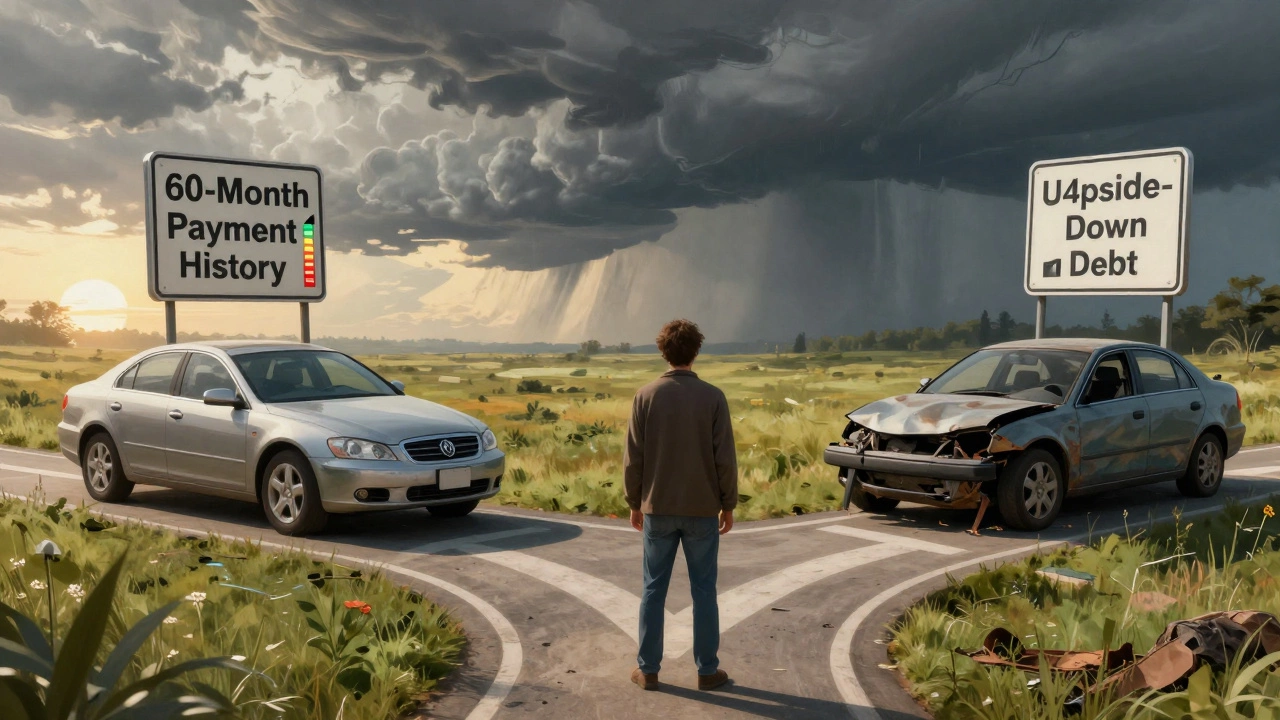
Extending the loan term to 84 months might make the payment look affordable, but you’ll be upside-down on the loan for years. If the car gets totaled or you need to sell it, you’ll owe thousands more than it’s worth. That’s not a deal - that’s a trap.
What to do after you get 0% financing
Once you sign:
- Set up automatic payments. Even one late payment can cost you hundreds in points.
- Don’t apply for other credit. New inquiries can ding your score for up to six months.
- Keep your credit card balances low. High utilization can offset the positive impact of your on-time car payments.
- Check your credit report every three months. Make sure the lender is reporting your payments correctly.
- Don’t pay off early unless you have a specific reason. Let the loan run its course to build your payment history.
And remember: your credit score isn’t the only thing that matters. Your financial health is. If the car payment leaves you with no emergency fund, you’re not winning - you’re just borrowing more.
Frequently Asked Questions
Does 0% financing count as debt on my credit report?
Yes. A 0% financing loan appears on your credit report just like any other auto loan. It shows up as an installment loan with your balance, payment history, and loan term. Lenders and credit scoring models treat it the same way - whether the interest rate is 0% or 10%.
Will 0% financing help me build credit faster?
It can, but only if you pay on time. The 0% rate doesn’t speed up credit building. What does is consistent, on-time payments over time. If you’ve never had an auto loan before, adding one to your credit mix can help. But if you miss payments, it will hurt your score more than help.
Can I get 0% financing with a 650 credit score?
It’s unlikely. Most 0% financing deals require a credit score of 720 or higher. If your score is 650, you’ll probably qualify for a higher interest rate - maybe 6% to 10%. Some dealers offer low-rate deals for mid-range credit, but true 0% is reserved for top-tier borrowers.
Is it better to take 0% financing or a cash rebate?
It depends on your numbers. If you have good credit and can afford the higher payment, the rebate often saves you more money. For example, a $3,000 rebate on a $32,000 loan at 5% saves you $1,500 more than 0% financing over five years. Always calculate the total cost - not just the monthly payment.
Will paying off my 0% loan early hurt my credit score?
It might cause a small, temporary dip. Credit scoring models reward long-term payment history. Paying off early removes an active account from your report, which can reduce the average age of your accounts. But if you’ve paid on time for two years, the damage is minimal. Your score will recover quickly, especially if you keep other accounts active and in good standing.