Loan Cost Estimator for Fair Credit
See how your credit profile affects the cost of borrowing $50,000 over 5 years.
Interest Rate
--%
Monthly Payment
$---
Total Interest
$---
Comparison by Credit Tier
| Credit Profile | Approx. Rate | Monthly Repayment | Total Interest Paid |
|---|---|---|---|
| Excellent (750+) | 9% | $1,037 | $12,220 |
| Fair (650) | 14% | $1,162 | $19,720 |
| Poor (<600) | 18% | $1,272 | $26,320 |
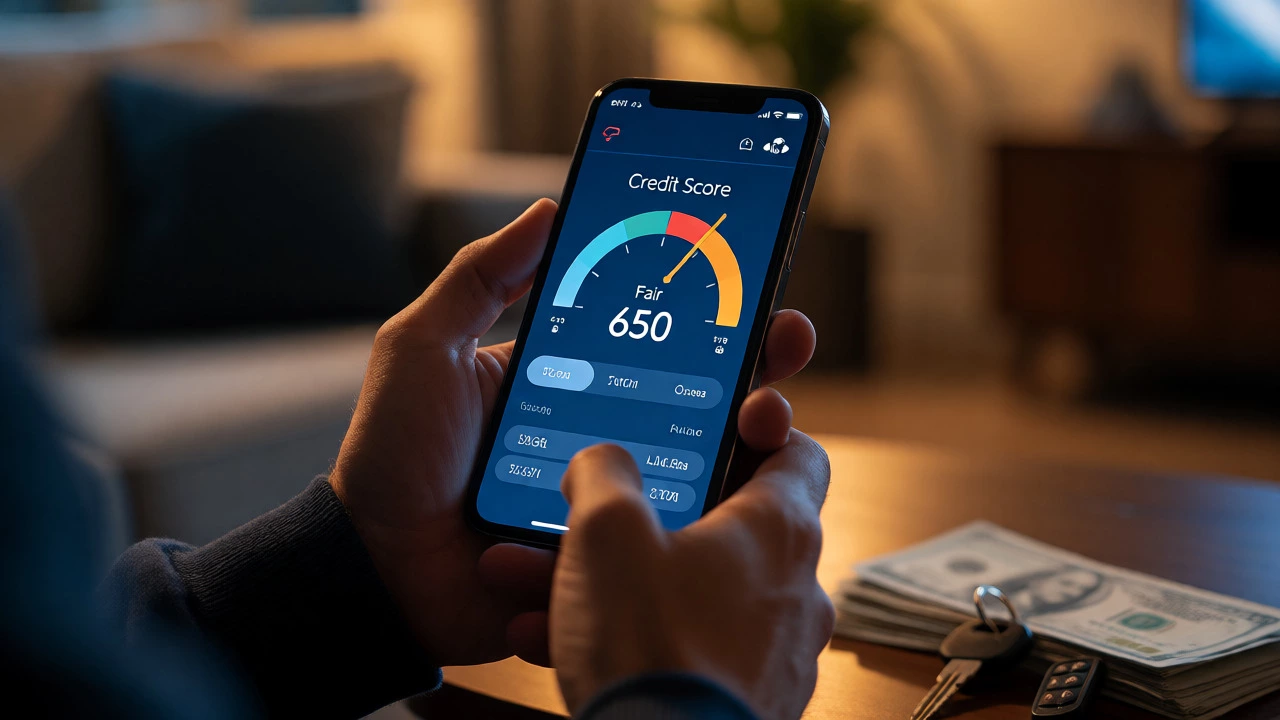
You’ve got your heart set on that car renovation, or maybe you need to consolidate some high-interest debt. You check your credit report and see a score of 650. It’s not terrible, but it’s not the golden ticket of an 800 either. Then you see the big number: $50,000. Is it even possible? The short answer is yes, but it’s going to cost you more than someone with a pristine record.
Think of your credit score as your financial reputation card. A 650 puts you in the "fair" to "good" borderline zone. Lenders aren't automatically rejecting you, but they are looking closer at the fine print. They want to know if you can handle a large chunk of debt without buckling under the pressure. Here is the honest truth about navigating this specific borrowing landscape in late 2026.
What Does a 650 Score Actually Mean for Lenders?
In Australia, we don’t use the exact same FICO system as the US, but the logic remains similar. Major credit bureaus like Equifax, Experian, and Illion generate scores based on your history. A score around 650 (on a scale where higher is better) suggests you have managed credit before, but perhaps with some hiccups. Maybe you missed a payment two years ago, or you’re carrying high balances on your cards.
Lenders categorize borrowers into tiers. An 800+ is Tier 1-prime. They get the lowest rates. A 650 often lands you in Tier 3 or 4. This doesn’t mean "no." It means "yes, but..." The "but" is usually a higher interest rate and stricter documentation requirements. Banks view a $50,000 unsecured loan as a significant risk when the borrower has a fair score. They need extra assurance that you won’t default.
The Math: What Will It Cost You?
Money talks, and right now, it’s talking about risk premiums. If you had a 750 score, you might see interest rates hovering around 8-10% for a personal loan. With a 650, expect offers between 12% and 18%, depending on the lender and your other financial factors.
Let’s break down the numbers for a standard 5-year (60-month) term. These figures assume a fixed rate and no upfront fees for simplicity.
| Credit Profile | Approx. Interest Rate | Monthly Repayment | Total Interest Paid |
|---|---|---|---|
| Excellent (750+) | 9% | $1,037 | $12,220 |
| Fair (650) | 14% | $1,162 | $19,720 |
| Poor (<600) | 20% | $1,320 | $29,200 |
See that difference? At a 650 score, you are paying nearly $7,500 more in interest over five years compared to a prime borrower. That’s a lot of cash. It highlights why shopping around isn’t just a suggestion-it’s essential. Even a 1% difference in your rate saves you hundreds of dollars.
Who Actually Approves $50k Loans for Fair Credit?
Big four banks (CBA, Westpac, NAB, ANZ) are conservative. They love collateral and perfect histories. For a $50k unsecured loan with a 650 score, they might say no, or offer a lower limit. However, the market has shifted. Online lenders and credit unions are much more flexible.
- Specialist Online Lenders: Companies like Pepper Money or Liberty Financial often look beyond the raw score. They analyze your income stability and employment history. They are used to working with mid-tier credit profiles.
- Credit Unions: If you’re a member of a union, they might offer better terms because their goal is member service, not pure profit maximization. They often have relationship-based underwriting.
- Peer-to-Peer Platforms: While less common for huge sums, some platforms allow investors to fund portions of your loan. Your story matters here, not just your number.
Don’t waste time applying to every bank on the high street. Each application triggers a hard inquiry, which can temporarily drop your score further. Do your homework first. Use comparison sites that allow soft checks-these let you see potential rates without hurting your credit file.

How to Strengthen Your Application Before You Apply
If you haven’t applied yet, pause. Spend three months polishing your profile. Small tweaks can move you from "maybe" to "approved." First, tackle your debt-to-income ratio. Lenders want to see that your monthly repayments (including the new loan) don’t exceed 30-40% of your net income. If you pay off a small credit card balance, your ratio improves instantly. Paying down $2,000 of revolving debt might seem small, but it signals responsibility.
Second, ensure your employment details are rock solid. Lenders hate gaps. If you’ve been in your current job for less than six months, consider waiting until you hit the one-year mark. Stability equals safety in their eyes. Also, double-check your address history. Inconsistencies between your utility bills and your credit report can flag fraud alerts, delaying approval.
Third, avoid opening new credit lines. No new phone plans, no store cards, no furniture financing. Every new inquiry looks like desperation to a risk algorithm. Keep your credit utilization low-under 30% of your limits is ideal, but under 10% is better.
Secured vs. Unsecured: Should You Put Up Collateral?
A $50,000 unsecured loan is a big ask for a 650 score. If you keep getting rejected, consider securing the loan. This means putting up an asset, like a car or property equity, as collateral. Secured loans dramatically reduce the lender's risk, so they reward you with lower interest rates.
For example, if you own a car worth $30,000 outright, some lenders will lend you against it. Or, if you have home equity, a line of credit might be cheaper than a personal loan. The trade-off? Risk. If you miss payments, you could lose the asset. But saving 5-8% in interest might make the risk worthwhile if your cash flow is tight.
Red Flags That Get Applications Denied
Sometimes, the score isn’t the only problem. Lenders look for patterns. Here are common deal-breakers for $50k applications: * **Recent Defaults:** Any missed payment reported in the last 12-24 months is a major red flag. * **Too Many Recent Applications:** Applying to five lenders in one week makes you look desperate. Space them out. * **Insufficient Income Verification:** Self-employed applicants often struggle here. You need to show consistent earnings through tax returns and BAS statements, not just recent payslips. * **High Existing Debt Load:** If you already owe $40,000 on other loans, adding another $50,000 pushes your total debt too high relative to income.
Be honest about your situation. If you have a past default, explain it in the cover letter. Was it due to medical issues or job loss? Context helps human underwriters understand the anomaly.
Next Steps: Your Action Plan
So, can you get the loan? Yes. But you need to be strategic. Don’t just click "apply" on the first website you find.
- Check Your Report: Pull your free credit report from Equifax, Experian, or Illion. Fix any errors immediately.
- Calculate Affordability: Ensure the repayment fits comfortably in your budget. Aim for the repayment to be no more than 15% of your take-home pay.
- Pre-Qualify: Use online tools that offer soft-pull quotes. Compare rates from at least three specialist lenders.
- Gather Documents: Have your last 3 months’ payslips, 12 weeks’ bank statements, and ID ready. Clean, organized documents speed up processing.
- Apply Selectively: Pick the top two offers and apply. If both decline, wait six months before trying again.
Remember, a 650 score is not a dead end. It’s a hurdle. With preparation and the right lender, you can cross it. Just be prepared to pay a bit more for the privilege, and always read the fine print on fees and early repayment penalties.
Is a 650 credit score good enough for a $50,000 loan?
Yes, it is possible, but it depends on your income and existing debts. Most mainstream banks may reject you or offer lower amounts, while specialist lenders and credit unions are more likely to approve a $50k loan at a higher interest rate.
What interest rate should I expect with a 650 score?
You can typically expect rates between 12% and 18% per annum for an unsecured personal loan. This varies significantly based on the lender, your loan term, and whether the loan is secured or unsecured.
Will checking my eligibility hurt my credit score?
Not if you use "soft pull" pre-qualification tools offered by many comparison sites and lenders. These checks do not impact your score. Only formal applications result in a "hard inquiry," which can slightly lower your score.
Can I improve my chances of approval quickly?
Yes. Reduce your credit card balances to lower your utilization ratio, ensure all your bills are paid on time for the next few months, and avoid applying for new credit. Providing proof of stable income also strengthens your case.
Are there hidden fees with these loans?
Always check for establishment fees, ongoing account fees, and early repayment penalties. Some lenders charge a fee to pay off the loan early, which can negate the savings of refinancing later. Read the comparison rate, not just the headline interest rate.