Debt Consolidation Credit Impact Simulator
You’ve stared at your bank statement. You see five different minimum payments due this month, each one chipping away at your savings. You hear about debt consolidation and wonder if it’s the magic bullet to simplify your life. But then comes the nagging fear: will fixing your debt actually wreck your credit score in the process?
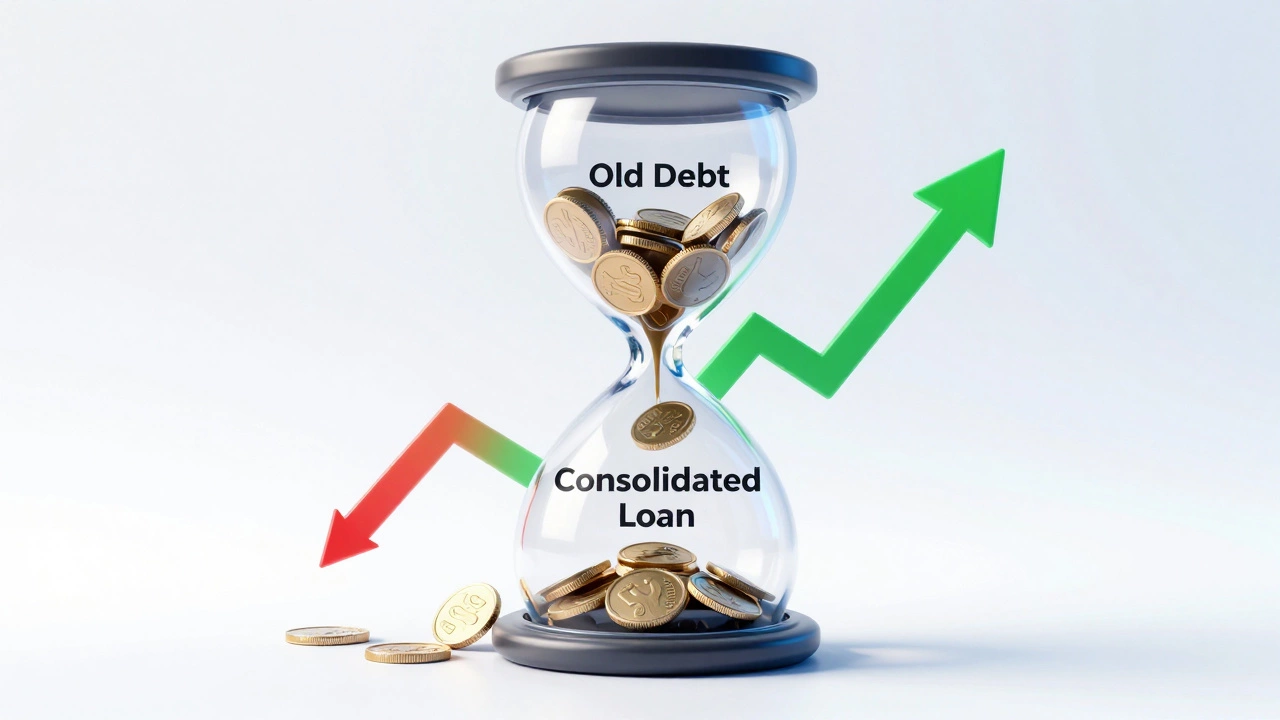
The short answer is yes, but only temporarily. Think of it like breaking a bone to set it properly. It hurts for a bit, but the long-term healing is worth it. If you rush into consolidation without understanding how credit scoring models work, you might end up with a lower score and higher stress. Let’s break down exactly what happens to your credit file when you consolidate, why it dips initially, and how to bounce back stronger.
The Immediate Hit: Hard Inquiries and New Accounts
When you apply for a personal loan or a balance transfer card to pay off existing debts, the lender needs to check your creditworthiness. This triggers a "hard inquiry" on your credit report. Unlike a soft check-which doesn’t affect your score-a hard inquiry tells other lenders that you’re actively seeking new credit.
In most scoring models, including FICO and VantageScore, a single hard inquiry might drop your score by a few points. Usually, we’re talking about 5 to 10 points. If you apply for three different consolidation loans in one week, those inquiries stack up. That’s not just a minor dip; it’s a signal to algorithms that you might be desperate for cash, which raises your risk profile.
Then there’s the age of your accounts. Credit scoring models love history. They want to see that you’ve managed credit responsibly over time. When you open a new consolidation loan, your average account age drops. Imagine having a 10-year-old credit card account and a 2-year-old car loan. Your average age is six years. Add a brand-new loan, and that average shrinks. This factor typically accounts for about 15% of your total score. So, right out of the gate, you’re fighting against two headwinds: the inquiry and the younger average age.
The Silver Lining: Lowering Your Credit Utilization
Here is where the story flips. While the initial application hurts, the act of consolidating can significantly boost another major component of your score: credit utilization ratio. This metric measures how much of your available revolving credit you’re currently using. It makes up nearly 30% of your FICO score-making it the second most important factor after payment history.
Let’s look at a real-world scenario. Say you have three credit cards with limits of $10,000 each. You owe $8,000 on them. Your utilization is 80%. That’s high. Lenders see this as risky. Now, imagine you take out a consolidation loan for $8,000 to pay off those cards completely. Your credit card balances drop to zero. Your utilization goes from 80% to 0%.
Even though you still owe the same amount of money, it’s now categorized as an installment loan rather than revolving debt. Installment loans don’t factor into your utilization ratio in the same way. By clearing those revolving balances, you send a powerful signal to credit bureaus: you are reducing your reliance on borrowed money. For many people, this single move can add 20 to 50 points to their score within a couple of months, easily offsetting the initial hit from the hard inquiry.
| Factor | Immediate Effect (0-3 Months) | Long-Term Effect (6+ Months) | Weight in Score |
|---|---|---|---|
| Hard Inquiry | Negative (-5 to -10 points) | Neutral (Fades after 1 year) | ~10% |
| Average Account Age | Negative (Slight decrease) | Neutral (Stabilizes) | ~15% |
| Credit Utilization | Positive (If revolving debt paid off) | Strongly Positive | ~30% |
| Payment History | Neutral | Positive (If payments stay current) | ~35% |
The Hidden Risk: Closing Old Accounts
There is a trap many borrowers fall into. After paying off their credit cards with a consolidation loan, they think, "Great, I don’t need these cards anymore," and they close the accounts. Don’t do this.
Closing a credit card removes its available credit limit from your calculation. If you had a $10,000 limit on a closed card, and you now only have $5,000 available on remaining cards, your potential utilization skyrockets even if you carry no balance. Furthermore, closing old accounts shortens your credit history length. Those older accounts contribute positively to your "length of credit history" factor. Keep them open. Use them sparingly-buy a tank of gas once a month and pay it off immediately-to keep them active and contributing to your positive credit mix.
Behavioral Discipline: The Make-or-Break Factor
Consolidation is a tool, not a cure. It restructures your debt, but it doesn’t erase the behavioral habits that caused the debt in the first place. The biggest threat to your credit score post-consolidation isn’t the loan itself; it’s running up new charges on your now-empty credit cards while making payments on the new loan.
If you do this, you double your debt burden. You’ll have the monthly payment for the consolidation loan plus new revolving debt. This leads to missed payments, which devastate your score far more than any hard inquiry ever could. Payment history is the single largest factor in your credit score. One late payment can drop your score by 100 points or more, depending on your starting score and how recent the delinquency is.
To protect your score, treat the consolidation loan as a strict budget constraint. Automate the payments. Set up alerts. Consider freezing your credit cards physically or digitally so you cannot use them impulsively. The goal is to demonstrate consistent, on-time payments over 12 to 24 months. This consistency builds the "positive payment history" that lenders crave.

Choosing the Right Vehicle: Loans vs. Balance Transfers
Not all consolidation methods affect your credit equally. You generally have two main paths: a personal consolidation loan or a balance transfer credit card.
Personal Loans: These are installment loans. As mentioned, they help lower utilization but introduce a hard inquiry and reduce average account age. However, they provide a fixed repayment schedule, which helps prevent the "revolving debt trap." Interest rates vary based on your credit profile, often ranging from 6% to 36% APR in the current market.
Balance Transfer Cards: These offer a 0% introductory APR period, usually lasting 12 to 21 months. This can save you thousands in interest. However, transferring a balance counts as new credit usage. If you max out the new card’s limit during the transfer, your utilization spikes to near 100%, which will tank your score temporarily. Additionally, if you fail to pay off the balance before the promo period ends, you face steep retroactive interest or high standard rates, potentially worsening your financial position.
For most people with moderate-to-high credit scores, a personal loan offers a more stable path to credit improvement because it eliminates the temptation of revolving credit entirely. For those with excellent discipline and a clear payoff plan within 12 months, a balance transfer can be highly effective.
Rebuilding Strategy: What to Do After Consolidation
Once you’ve signed the papers and paid off the old debts, your job shifts from restructuring to rebuilding. Here is a practical checklist to ensure your credit score climbs steadily:
- Monitor your reports: Check your credit report from all three bureaus (Equifax, Experian, TransUnion) annually to ensure the old accounts are reported as "paid in full" and the new loan is accurate.
- Keep utilization low: Aim to keep your revolving credit usage below 10%. Ideally, under 5%.
- Diversify your credit mix: Having both installment loans (like your consolidation loan) and revolving credit (credit cards) shows you can handle different types of debt. This is a minor factor, but it helps.
- Avoid new applications: Give your credit file breathing room. Wait at least six months before applying for any new credit unless absolutely necessary.
- Pay more than the minimum: On your consolidation loan, paying extra reduces the principal faster, lowering your overall debt-to-income ratio, which lenders view favorably.
Remember, credit scores are dynamic. They change every month based on data reported by lenders. The initial dip from consolidation is normal and expected. Focus on the long game. By simplifying your payments and lowering your utilization, you are setting the foundation for a healthier financial future. The pain is temporary; the stability is permanent.
How long does it take for my credit score to recover after debt consolidation?
Most people see their credit score begin to recover within 3 to 6 months. The initial drop from the hard inquiry and new account age is temporary. As your credit utilization decreases and you make on-time payments on the new loan, your score should surpass its pre-consolidation level within 6 to 12 months, provided you do not incur new debt.
Does debt consolidation remove negative marks from my credit report?
No. Debt consolidation does not erase past mistakes. Late payments, collections, or charge-offs remain on your credit report for seven years. Consolidation simply changes how you manage current debt. However, by preventing future late payments, you stop adding new negative marks, allowing old ones to age off naturally.
Should I close my credit cards after paying them off with a consolidation loan?
It is generally better to keep them open. Closing cards reduces your total available credit, which increases your credit utilization ratio and can lower your score. It also shortens your average account age. Keep them open, but cut them up or store them safely to avoid temptation. Use them occasionally for small purchases to keep the accounts active.
Can I get a mortgage after consolidating my debt?
Yes, but timing matters. Mortgage lenders prefer to see a stable credit history. Applying for a mortgage immediately after taking out a large consolidation loan may raise red flags about your cash flow. It is advisable to wait at least 6 months to establish a track record of on-time payments on the new loan before applying for a home loan.
What is the difference between a hard and soft credit inquiry?
A hard inquiry occurs when a lender checks your credit as part of a formal application for new credit (like a loan or credit card). This affects your score. A soft inquiry happens when you check your own credit or when a lender pre-approves you based on limited information. Soft inquiries do not affect your credit score.