If you’re juggling multiple credit cards, medical bills, or personal loans, a consolidation loan can simplify your payments - but only if you can get approved. The big question isn’t just whether you qualify, but what credit score you actually need to land one with decent terms. The truth? There’s no magic number, but your score dramatically changes what lenders will offer you.
How Credit Scores Work in Australia
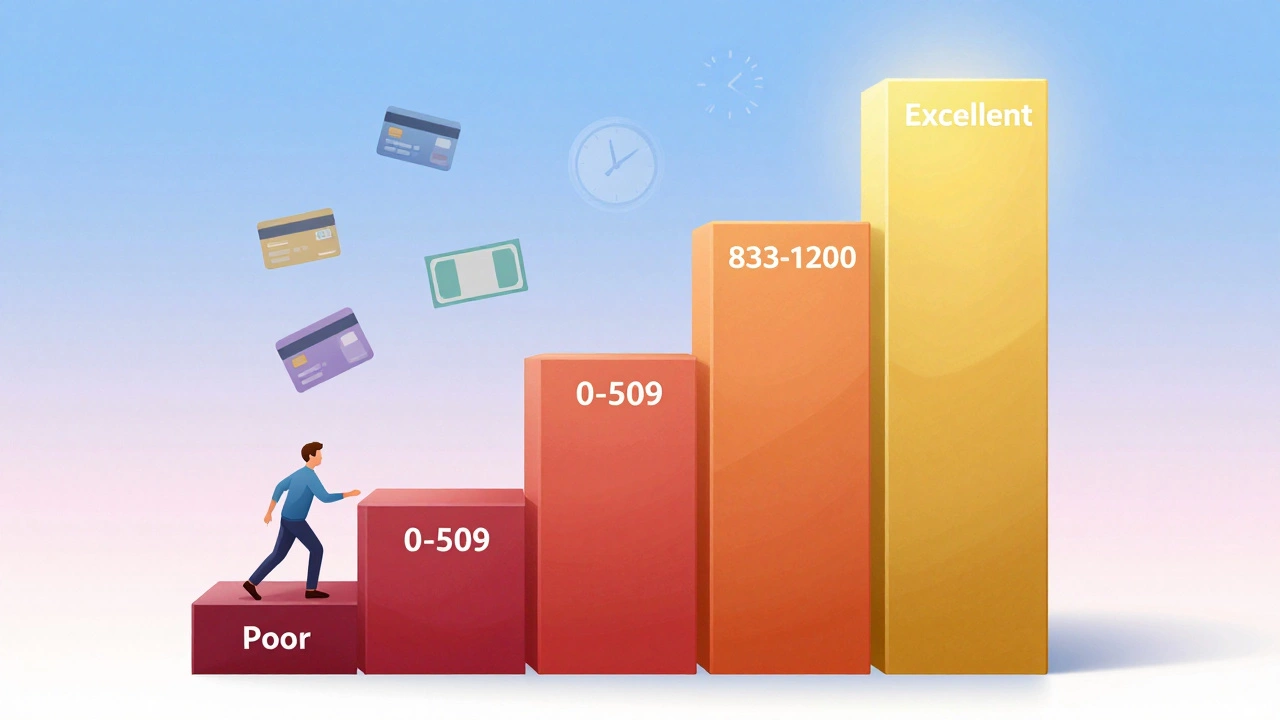
In Australia, credit scores range from 0 to 1,200, depending on the bureau - Equifax, Experian, or illion. Most lenders use Equifax, which breaks scores into five tiers:
- 0-509: Poor
- 510-621: Fair
- 622-725: Good
- 726-832: Very Good
- 833-1,200: Excellent
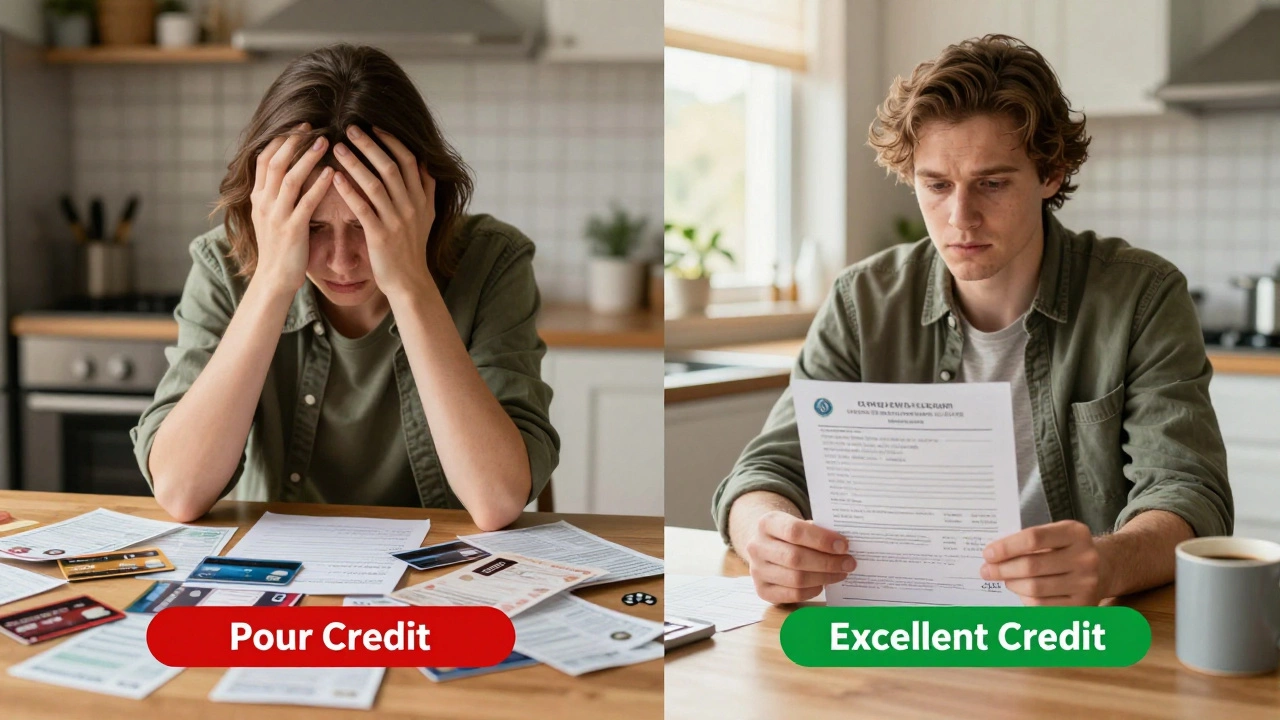
These aren’t just labels - they’re gatekeepers. A score below 500 means you’re in the high-risk zone. Lenders see you as someone who’s likely to miss payments. A score above 700? You’re in the sweet spot. You’ll get lower interest rates, higher loan amounts, and more options.
What Credit Score Do You Need to Get Approved?
Most lenders in Australia require at least a fair credit score - around 510-621 - just to consider your application. But approval doesn’t mean good terms. Here’s what you can realistically expect based on your score:
- Below 510 (Poor): Very few lenders will approve you. Those that do charge interest rates over 20% and may require a co-signer or collateral. You’ll likely be pushed toward payday loans or bad credit lenders - which can trap you in deeper debt.
- 510-621 (Fair): You’ll find lenders willing to work with you, but expect rates between 14% and 18%. Loan amounts are usually capped at $15,000-$20,000. Approval might take longer, and you’ll need proof of steady income.
- 622-725 (Good): This is where things get interesting. You can access standard consolidation loans from banks and major lenders. Rates drop to 9%-13%. Loan amounts up to $50,000 are common. Some lenders even offer 12-month interest-free periods.
- 726+ (Very Good to Excellent): You’re in prime territory. Rates as low as 6.5%-8.5%. You can negotiate terms, get higher limits, and even qualify for secured loans with even lower rates. Some lenders offer debt consolidation as part of a home loan refinance.
Real example: A friend in Brisbane had $28,000 in credit card debt across three cards. Her score was 640. She got a $25,000 consolidation loan at 11.5% over five years. Her monthly payment dropped from $1,100 to $560. That’s the power of crossing the 622 threshold.
Why Your Score Isn’t the Only Thing That Matters
Even if your score is below 600, you might still qualify - if the rest of your application is strong. Lenders look at four other things:
- Income stability: Are you employed full-time? Do you have pay slips from the last three months? Self-employed people need tax returns and bank statements.
- Debt-to-income ratio: If you’re spending more than 40% of your income on debt payments, lenders will hesitate - even with a good score.
- Existing debts: If you’ve got multiple defaults or court judgments, your score might be low, but clearing those can open doors fast.
- Loan purpose: Lenders like it when you say you’re using the loan to pay off credit cards. They don’t like it when you say you’re using it for a holiday or a new car.
One client I worked with had a score of 580 but had been employed at the same hospital for eight years. He cleared two defaults, showed six months of consistent pay, and got approved for $18,000 at 13.9%. His score didn’t jump overnight - his story did.
How to Improve Your Score Fast (Before Applying)
You don’t need to wait six months to improve your score. Here’s what actually works in under 30 days:
- Pay down your credit card balances: Aim to use less than 30% of your available limit. If you’ve got $10,000 in credit, keep your balance under $3,000. This alone can boost your score by 40-70 points.
- Check for errors: One in five Australians has a mistake on their credit report. Missed payments that weren’t yours? Dispute them with Equifax or Experian. You can do it online in 10 minutes.
- Don’t open new credit: Every hard inquiry knocks off 5-10 points. Wait until after you get your loan.
- Pay all bills on time: Even small utility bills can be reported now. Set up direct debits if you’re forgetful.
One woman in Toowoomba paid off $1,200 in overdue phone bills, lowered her credit card usage from 85% to 25%, and her score jumped from 530 to 660 in 22 days. She applied the next week and got her loan approved with no issues.
What Happens If You’re Rejected?
Rejection isn’t the end - it’s a signal. If you’re turned down:
- Ask the lender for the reason. They’re legally required to tell you.
- Don’t reapply with another lender right away. Each rejection adds another hard inquiry.
- Use the time to fix what’s holding you back - pay down debt, get a letter from your employer, or apply for a secured loan first.
Some people try payday lenders after rejection. Don’t. Those loans often have fees that make your debt worse. A $5,000 payday loan can cost you $1,800 in fees alone over six months. A consolidation loan at 12%? You’d pay $1,500 in total interest over five years.
Alternatives If Your Score Is Too Low
If you’re stuck below 500, here are realistic alternatives:
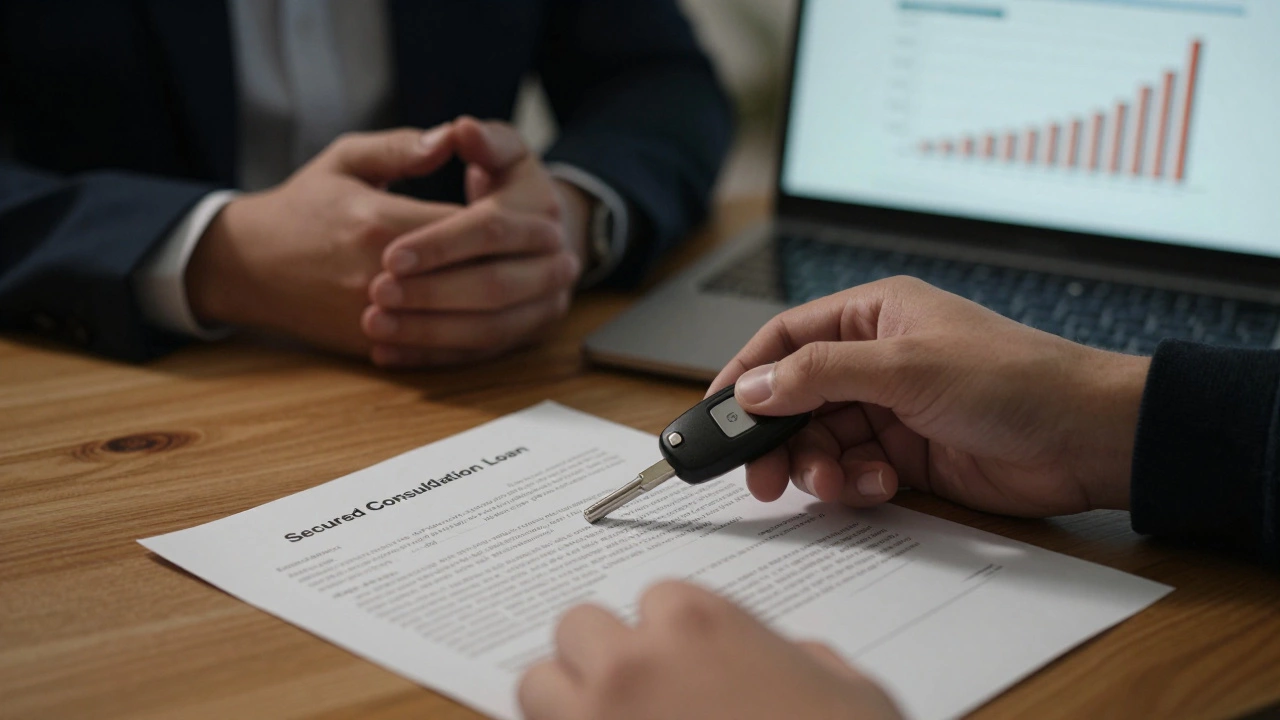
- Secured consolidation loan: Use your car or savings as collateral. Interest rates drop to 8%-11% even with poor credit.
- Guarantor loan: A family member with good credit co-signs. Your score doesn’t matter as much. Debt agreement: A formal arrangement with your creditors through a trustee. It shows up on your credit file but stops collection calls and freezes interest.
- Non-profit debt counselling: Organisations like Financial Counselling Australia help negotiate lower payments and stop penalties.
One man in Newcastle had $34,000 in debt and a score of 470. He went through a debt agreement. His payments dropped from $1,300 to $420 a month. He paid it off in three years. His score started climbing the moment he stuck to the plan.
Final Tip: Don’t Chase the Lowest Rate - Chase the Right Plan
It’s tempting to compare interest rates like you’re buying a new phone. But a 7% rate means nothing if you can’t afford the payments. Focus on:
- Monthly payment you can actually live with
- Loan term that doesn’t stretch you into retirement
- Fees - application, monthly, early repayment
- Whether the lender reports payments to credit bureaus (so you can rebuild your score)
The goal isn’t just to get a loan. It’s to walk out of it with less debt - and a better score. That’s how you break the cycle for good.
What is the minimum credit score for a consolidation loan in Australia?
Most lenders require at least a fair credit score of 510-621 to approve a consolidation loan. Below that, approval is rare and comes with very high interest rates. Some lenders offer secured options for scores under 500, but terms are less favourable.
Can I get a consolidation loan with bad credit?
Yes, but your options are limited. You’ll likely need a secured loan (using your car or property as collateral) or a guarantor. Interest rates may exceed 20%, and loan amounts are usually smaller. Avoid payday lenders - they make debt worse.
How long does it take to improve my credit score for a consolidation loan?
You can see improvements in as little as 30 days by paying down credit card balances, disputing errors, and making all payments on time. Major improvements (like jumping from poor to fair) often take 3-6 months of consistent behaviour.
Will a consolidation loan hurt my credit score?
Applying for one causes a hard inquiry, which can lower your score by 5-10 points. But if you use the loan to pay off credit cards and make all payments on time, your score will likely improve over time. That’s because your credit utilisation drops and your payment history improves.
Should I use a broker to get a consolidation loan?
If your credit score is under 650, a broker can save you time and money. They know which lenders work with bad credit and can match you to the right product. Most brokers don’t charge you - they get paid by the lender. Just make sure they’re licensed by ASIC.