Leftover Money Calculator
Enter your monthly take-home pay and expenses to see how much you have left after bills and whether it meets recommended benchmarks.
Enter your details and click calculate to see your financial health score.
You just got paid. The rent or mortgage is gone, the electricity bill is paid, and your groceries are in the fridge. You look at your bank account balance and feel that familiar mix of relief and panic. Is this normal? Should there be more left over? Or are you spending too much because there’s nothing left?
There is no single magic number that works for everyone, but there is a healthy range. Most financial experts suggest aiming to keep 20% of your take-home pay as money left after bills. This isn’t just "extra" cash; it’s your safety net, your future, and your freedom. If you’re consistently landing below 5%, you’re living on the edge. If you’re above 30%, you’re likely under-spending or have a high income relative to your fixed costs.
The 50/30/20 Rule: Your Baseline Benchmark
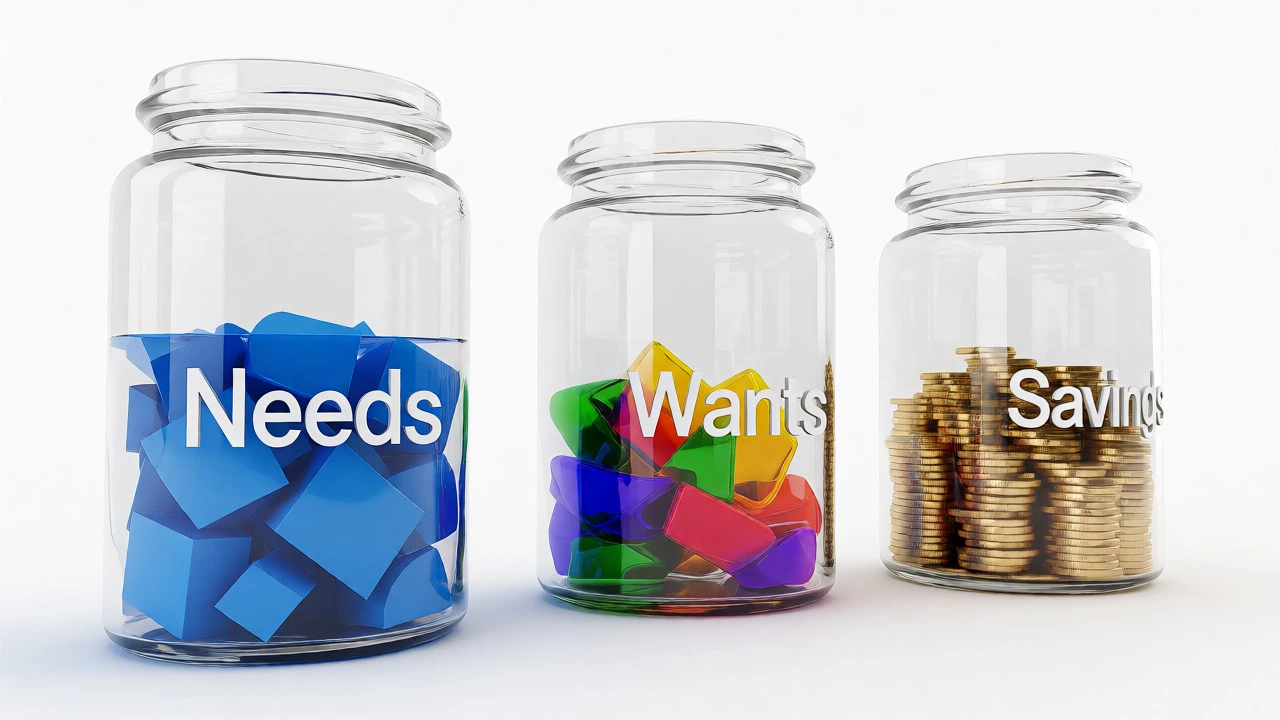
The most common framework for answering "how much should I have left?" is the 50/30/20 rule. It’s simple, flexible, and widely accepted by planners from Brisbane to Boston. Here’s how it breaks down against your net income (what actually hits your bank account):
- 50% for Needs: These are non-negotiables. Rent/mortgage, utilities, groceries, insurance, minimum debt payments, and transport to work. If these eat up more than half your check, your housing or transport costs are likely too high.
- 30% for Wants: Dining out, subscriptions, hobbies, travel, and entertainment. This is where life happens. Cutting this to zero makes you miserable and sets you up for failure.
- 20% for Savings & Debt Repayment: This is the "money left after bills" we’re talking about. It goes into emergency funds, retirement contributions, and extra debt payments.
If you follow this strictly, you should see roughly one-fifth of your paycheck remaining after all obligations are met. But let’s be real-life doesn’t always fit neatly into boxes. Maybe your rent is 60% of your income because you live in a city center. That’s fine, but it means your "wants" bucket shrinks, not your savings bucket. You don’t want to sacrifice long-term security for short-term comfort unless it’s temporary.
| Category | Target % | What It Covers | Red Flag Threshold |
|---|---|---|---|
| Needs | 50% | Rent, Food, Utilities, Transport | > 60% |
| Wants | 30% | Hobbies, Dining, Subscriptions | < 10% (Burnout risk) |
| Savings/Debt | 20% | Emergency Fund, Investments, Extra Debt Pay | < 5% |
Why "Leftover" Money Isn't Just Spare Change
Many people treat leftover cash as free money for impulse buys. Big mistake. In personal finance, this surplus is called disposable income. Disposable income is the amount of money an individual has available for spending or saving after taxes and mandatory deductions have been subtracted. How you handle this defines your financial trajectory.
Think of it in three tiers of priority. First, you need an emergency fund. An emergency fund is a pool of liquid assets set aside to cover unexpected expenses like car repairs or medical bills without relying on credit cards. Aim for 3-6 months of essential expenses. If you don’t have this, every dollar of leftover money goes here until you hit that target. Second, tackle high-interest debt. Credit card interest rates often hover around 18-20%. Paying that off gives you a guaranteed "return" equal to the interest rate. Third, invest for growth. Once those two bases are covered, your leftover money starts working for you through compound interest.
Calculating Your Personal Number
Generic percentages are great starting points, but your life is specific. To find your true target, you need to audit your actual spending. Most people underestimate their small purchases. A $5 coffee daily is $150 a month. A forgotten subscription is $20 a month. These leaks drain your potential savings.
Here’s a quick way to calculate what you should have left:
- List your Net Income: Take your monthly take-home pay. Not gross salary. Net.
- Subtract Fixed Costs: Rent, loan payments, insurance premiums, internet. These rarely change.
- Estimate Variable Essentials: Groceries, fuel, utility usage. Use averages from the last 3 months.
- Set Your Savings Goal: Decide what percentage you can realistically save. Start with 10% if 20% feels impossible.
- The Remainder is Your Budget: Whatever is left after steps 1-4 is what you can spend on wants. If this number is negative, you’re overspending on needs or wants.
For example, if you earn $4,000 net per month, and your fixed costs plus essentials total $2,800, you have $1,200 left. If you aim for a 20% savings goal ($800), you only have $400 for wants. That might feel tight, but it’s manageable. If you try to save $1,500, you’ll fail because you’ll starve yourself of enjoyment.
Factors That Shift the Target
Your ideal leftover amount depends heavily on your life stage and location. Living in Sydney or Melbourne might mean higher housing costs, forcing your "needs" percentage up. Conversely, owning a home outright drastically changes the math.
Housing Status: If you own your home, your "leftover" should be significantly higher because you aren’t paying rent. However, you must budget for maintenance. A broken heater or roof leak can wipe out months of savings. Experts recommend setting aside 1-2% of your home’s value annually for repairs.
Family Size: Single professionals often have higher disposable income percentages. Families face higher variable costs (food, activities, childcare). While the absolute dollar amount saved might be similar, the percentage of income left over often drops for families due to scale.
Debt Load: If you’re aggressively paying off student loans or a car note, your "leftover" money is technically going to savings (in the form of equity) rather than cash in hand. Don’t confuse low cash flow with poor financial health if that cash is building assets.
Troubleshooting: When You Have Nothing Left
If you finish the month with $0.00, you’re living paycheck to paycheck. This is precarious. One flat tire or dental issue sends you into debt. Here’s how to fix it without feeling deprived:
- Audit Subscriptions: Cancel streaming services you haven’t watched in 30 days. Rotate them if you must.
- Cook More, Eat Out Less: Meal prepping saves time and money. Even cooking 4 nights a week instead of 2 can free up $100-$200 monthly.
- Negotiate Bills: Call your internet and phone providers. Ask for retention offers. Many companies will lower rates for loyal customers who threaten to leave.
- Use the Envelope System: For variable categories like dining or shopping, use cash or a separate debit card. When it’s gone, it’s gone. This creates physical friction against overspending.
Conversely, if you have too much left over (say, 40%+), you might be under-living. Are you missing out on experiences? Consider increasing your "wants" allocation or investing more aggressively to beat inflation. Money sitting idle loses purchasing power over time.

Real-World Example: The Brisbane Scenario
Let’s look at a hypothetical case study relevant to our local context. Sarah earns $75,000 AUD annually. Her net monthly income is approximately $4,900 after tax and superannuation deductions.
Her fixed costs (rent $1,600, utilities $200, transport $300, insurance $150) total $2,250. That’s 46% of her income. Good. She spends $600 on groceries and $200 on personal care. Total essentials: $3,050 (62%). She’s already over the 50% benchmark, largely due to rent. She aims to save 15% ($735) for her emergency fund and first home deposit. This leaves her with $1,115 for wants. This is realistic. She doesn’t force herself to save 20% immediately because her housing costs are high. She adjusts the ratio to fit her reality while still prioritizing savings.
Frequently Asked Questions
Is it okay to have less than 20% left after bills?
Yes, especially if you have high fixed costs like rent or debt repayment. The key is consistency. Saving 5% consistently is better than attempting 20% and failing every month. Focus on increasing the percentage gradually as your income rises or debts decrease.
Does money used to pay off debt count as "leftover" money?
Absolutely. Financially, paying down principal on a loan is equivalent to saving because it builds equity and reduces future liabilities. When calculating your "savings rate," include both cash savings and extra debt payments beyond the minimums.
How do I handle irregular income?
If you’re freelance or commission-based, base your budget on your lowest expected monthly income. Any money earned above that baseline goes directly into a buffer account. This smooths out the highs and lows, ensuring you always have enough for bills even during slow months.
Should I keep my emergency fund in a regular savings account?
Ideally, yes, but choose a high-yield savings account to combat inflation. It needs to be accessible quickly (within 1-2 days) but separate from your checking account to prevent accidental spending. Avoid locking it away in term deposits that penalize early withdrawal.
What if my expenses exceed my income?
You are running a deficit. You must either increase income (side hustle, raise, new job) or cut expenses. Look at your largest variable costs first. Often, reducing housing costs (roommates, moving) or transportation costs (public transit, selling a second car) provides the biggest immediate impact.