How Much Can I Remortgage Calculator
Enter Your Details
Your Potential Remortgage Amount
Note: This is a simplified estimate. Actual loan amounts depend on lender approval criteria, credit history, and other factors.
When you’re thinking about remortgaging in Australia, the biggest question isn’t usually about interest rates or lenders-it’s how much you can actually borrow. You might own your home outright, have paid off half your mortgage, or even have a few extra debts piling up. The answer to how much you can remortgage depends on more than just your property value. It’s about your income, your debts, your credit history, and what lenders are willing to risk right now in 2026.
What Determines How Much You Can Remortgage?
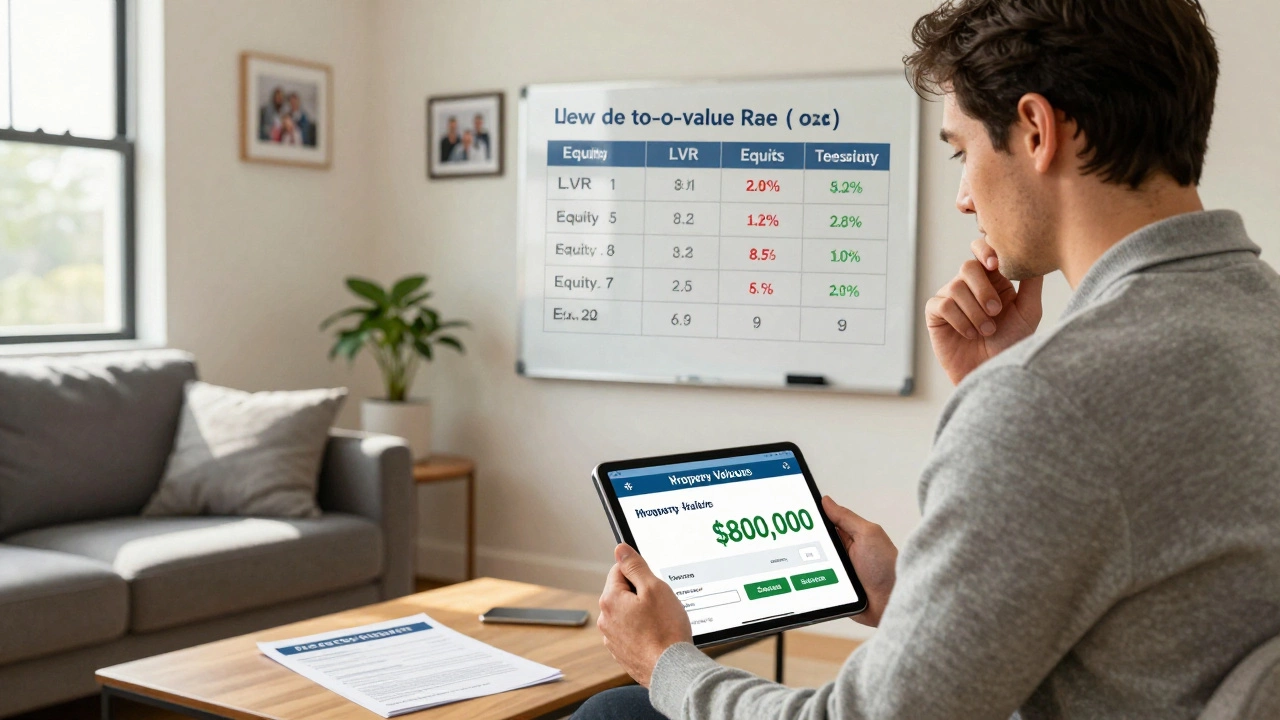
Lenders don’t just look at your house. They look at you. Your income, your spending, your other loans, and even your job stability all matter. The main number they care about is your loan-to-value ratio (LVR). That’s how much you want to borrow compared to what your home is worth.
For example, if your home is worth $800,000 and you still owe $300,000, you have $500,000 in equity. Most lenders in Australia will let you borrow up to 80% of your home’s value without needing mortgage insurance. That means you could potentially borrow $640,000 total. Subtract what you already owe ($300,000), and you’re left with $340,000 you could access through remortgaging.
But here’s the catch: lenders won’t give you the full $340,000 just because it’s there. They’ll check if you can afford the new repayments. If your income is $90,000 a year and you’re already paying $1,200 a month on credit cards and car loans, they might cap your new loan at $500,000 total-even if you have enough equity to go higher.
Income and Affordability Rules in 2026
The Australian Prudential Regulation Authority (APRA) still enforces strict lending standards. Banks use a serviceability test that assumes interest rates could rise by 3% above your current rate. So if you’re on a 5.5% fixed rate, they’ll calculate your repayments as if it’s 8.5%.
They also subtract your living expenses using the Household Expenditure Measure (HEM), which varies depending on your location and family size. In Brisbane, a single person might be allowed $600 a month for essentials. A couple with two kids? More like $1,400. That leaves less room for loan repayments.
Let’s say you earn $110,000 a year after tax. Your current mortgage is $280,000 at 5.2%. You’ve got a car loan of $15,000 and $8,000 in credit card debt. Your home is valued at $750,000. Even though you have $470,000 in equity, lenders might only approve you for a new loan of $550,000 because your monthly outgoings are too high to safely handle more debt.
How Much Equity Do You Really Have?
Equity isn’t just your home’s value minus your mortgage. It’s what you’d actually get if you sold today. That means you need to subtract selling costs-real estate agent fees (around 2.5%), legal fees, and stamp duty if you’re buying another property. If your home is worth $700,000 and you owe $350,000, your equity is $350,000. But after $17,500 in selling costs, your usable equity drops to $332,500.
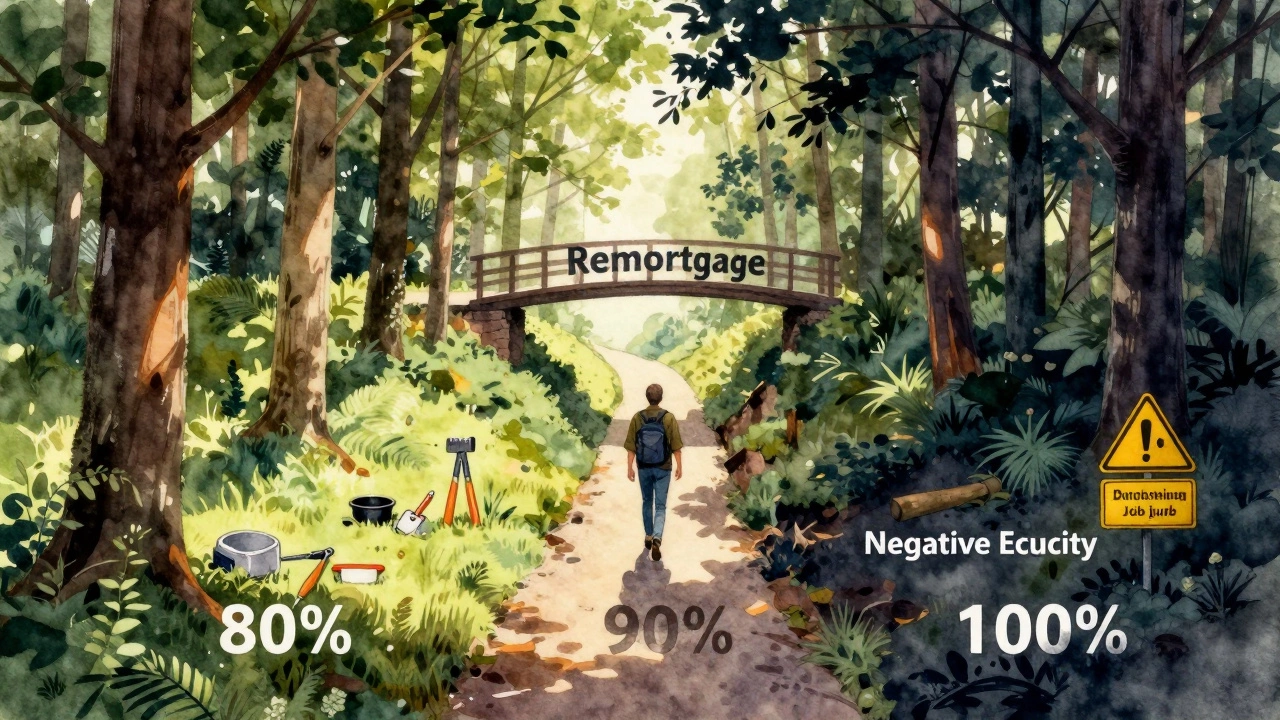
Some people think they can borrow 100% of their equity. That’s rare. Most lenders cap it at 80% LVR. A few might go to 90%, but only if you have an excellent credit score, stable income, and no other debts. Even then, you’ll pay higher interest and probably need mortgage insurance.
What Can You Use the Extra Money For?
Remortgaging isn’t just about paying off credit cards. It’s a tool. People use it for:
- Home renovations (kitchens, bathrooms, extensions)
- Debt consolidation (combining high-interest loans into one lower-rate mortgage)
- Investing in property or shares
- Education or starting a business
- Emergency funds or medical costs
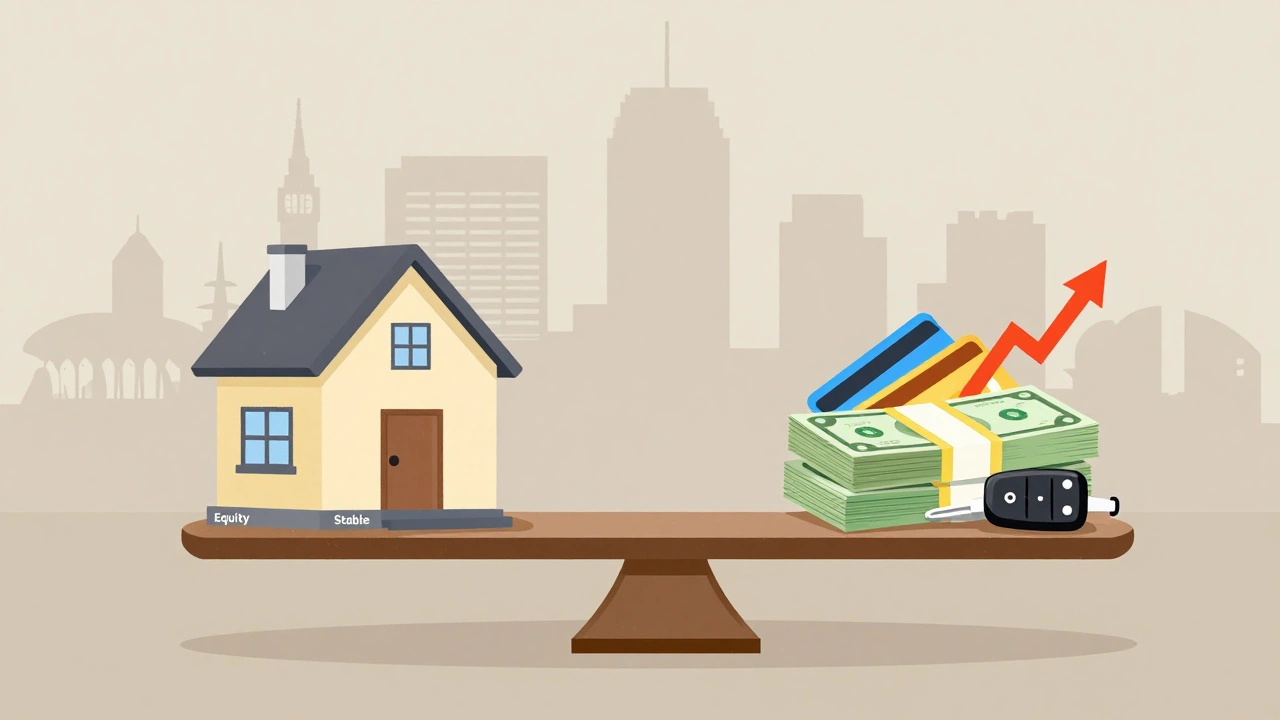
But here’s the reality: using your home as a cash machine is risky. If property values drop, you could end up owing more than your house is worth. If you lose your job, your repayments become a burden. That’s why lenders are careful-and why you should be too.
Current Remortgage Rates in Australia (January 2026)
As of early 2026, fixed rates for owner-occupiers are hovering between 5.8% and 7.2%. Variable rates range from 6.5% to 8.1%. The best deals usually go to people with:
- LVR under 70%
- High credit score (750+)
- Stable employment (full-time for 2+ years)
- Minimal other debts
Big banks like Commonwealth Bank and NAB still dominate the market, but non-bank lenders like Pepper Money and Liberty are offering more flexible terms for people with complex finances. They might charge higher rates, but they’re more likely to approve you if you’ve got equity and a solid income.
How to Calculate Your Maximum Remortgage
You can do a quick estimate yourself:
- Find your home’s current market value (use Domain or CoreLogic estimates)
- Subtract your current mortgage balance
- Multiply the result by 0.8 (for 80% LVR)
- Subtract any other secured debts (car loans, personal loans secured against your home)
Example:
- Home value: $720,000
- Current mortgage: $320,000
- Car loan: $20,000 (secured)
- Equity: $400,000
- 80% of home value: $576,000
- Max new loan: $576,000 - $320,000 - $20,000 = $236,000
That’s your theoretical maximum. But your bank might offer less based on your income and expenses.
What Stops People From Getting the Full Amount?
Here are the top 5 reasons people get declined for higher remortgage amounts:
- High existing debt - Even if you have equity, too many repayments kill your serviceability.
- Unstable income - Freelancers, commission workers, and new business owners often need extra proof of income.
- Low credit score - Missed payments, defaults, or too many credit applications in the last 6 months hurt your chances.
- Property condition - If your home needs major repairs, lenders might undervalue it or refuse to lend.
- Loan purpose - Lenders are wary if you’re using the money for high-risk investments like crypto or gambling.
If you’ve been declined before, don’t give up. Fix one thing at a time. Pay down a credit card. Wait 6 months after a credit check. Get your income documentation in order.
When Remortgaging Doesn’t Make Sense
It’s easy to get excited about unlocking equity. But sometimes, it’s a trap.
If you’re remortgaging just to fund a holiday, a new car, or to cover monthly bills, you’re trading short-term relief for long-term pain. You’re extending debt over 25-30 years. That $10,000 credit card balance could end up costing you $25,000 in interest over time.
Also, if you’re close to retirement and your mortgage won’t be paid off by then, remortgaging might push your repayment period past 70. That’s risky if your income drops.
And if property prices are falling? You could end up in negative equity. That happened in 2022-2023 in parts of Sydney and Melbourne. Don’t assume your home’s value will keep rising.
How to Get the Best Remortgage Deal
Don’t just go to your current bank. Shop around. Use a mortgage broker-they don’t cost you anything, and they know which lenders are offering the best terms right now.
Here’s what to ask:
- What’s the maximum LVR you’ll lend me?
- What are the fees? (Application, valuation, legal)
- Is there a break fee if I switch again in 2 years?
- Can I make extra repayments without penalty?
- Do you offer a redraw facility?
Some lenders waive valuation fees if you’ve been with them for over 5 years. Others give cashback for switching. Compare the total cost-not just the interest rate.
What Happens After You Remortgage?
Once you get approved, the lender pays off your old mortgage and gives you the extra cash. You’ll get a new loan contract. Your repayments will change. Make sure you understand the new terms.
Set up direct debits. Track your spending. Don’t fall back into old habits. Remortgaging isn’t a windfall-it’s a financial reset. Use it wisely.
If you’ve used the money for renovations, keep receipts. You might need them later for tax or if you sell. If you’ve paid off debts, celebrate-but don’t open new credit cards. That’s how people get stuck again.
Final Thoughts
How much you can remortgage isn’t just about your home’s value. It’s about your income, your discipline, and your long-term goals. In 2026, lenders are cautious. They’re not handing out cash. They’re lending against security-and they want to be sure you’ll pay it back.
If you have equity, a steady income, and a clear plan, you can unlock a lot. But if you’re doing it to chase lifestyle or cover overspending, you’re setting yourself up for trouble.
Run the numbers. Talk to a broker. Don’t rush. The best remortgage isn’t the one that gives you the most cash-it’s the one that gives you the most freedom without the most risk.
How much can I remortgage if I have $500,000 in equity?
Having $500,000 in equity doesn’t mean you can borrow all of it. Most lenders cap borrowing at 80% of your home’s value. So if your home is worth $800,000, you can borrow up to $640,000 total. If you already owe $300,000, you can access up to $340,000. But your income and existing debts will likely reduce that amount. Lenders won’t give you the full $340,000 if your monthly expenses are too high.
Can I remortgage with bad credit?
Yes, but it’s harder and more expensive. Non-bank lenders like Pepper Money or Liberty might approve you if you have strong equity and steady income, even with a credit score under 650. You’ll pay higher interest-possibly 8% or more-and may need to pay mortgage insurance. Avoid applying with multiple lenders at once; each credit check lowers your score further.
Do I need a deposit to remortgage?
No, you don’t need a deposit. Remortgaging uses the equity in your home as security. But if you’re borrowing more than 80% of your home’s value, you’ll likely need to pay Lenders Mortgage Insurance (LMI). That can cost thousands, so it’s better to stay under the 80% threshold if you can.
How long does remortgaging take in Australia?
It usually takes 3 to 6 weeks. The timeline depends on how quickly you provide documents (pay slips, bank statements, tax returns), how fast the lender values your home, and whether there are delays with conveyancers. If you’re switching lenders, your old mortgage must be paid off before the new one starts-so plan for a few days of overlap.
Is remortgaging cheaper than a personal loan?
Usually, yes. Mortgage rates in 2026 are around 6-7%, while personal loans range from 9% to 18%. Even with fees, remortgaging often saves you money over time. But remember: you’re securing the debt against your home. If you can’t pay, you could lose it. Personal loans are unsecured, so they’re safer for smaller amounts or short-term needs.