Investment Opportunity Cost Calculator
Your Investment Projection
The Cost of Waiting
If you wait 1 year to start this exact plan, here is what you miss out on:
- Lost Interest $0
- Final Portfolio Difference $0
Look around you. The headlines are screaming about interest rate cuts, geopolitical tensions, and the next big tech bubble. If you’re sitting on a pile of cash, it feels like every direction is risky. You worry that if you invest now, the market will crash tomorrow. But you also know that keeping your money under the mattress guarantees you’ll lose purchasing power to inflation. So, is it actually smart to invest right now? The short answer is yes-but not in the way most people think.
We are currently navigating a unique economic landscape in mid-2026. After years of aggressive rate hikes by central banks to cool down post-pandemic inflation, we are seeing a stabilization phase. Interest rates are no longer at historic lows, but they aren’t punishingly high either. This creates a specific window of opportunity for investors who understand how to balance risk with reward. The question isn't whether to invest; it's what to invest in and how to protect yourself from sudden shocks.
The Psychology of Timing: Why Waiting Is Costing You
Most people hesitate because they want to pick the perfect moment. They wait for the "bottom" before buying stocks or real estate. Here’s the hard truth: nobody consistently picks the bottom. Not even professional fund managers. When you wait for the perfect time, you miss out on compound growth during the periods when the market is flat or rising slowly.
Consider this scenario. You have $10,000 to invest. You decide to wait until the market drops by 5% before putting your money in. While you wait, the market actually rises by 3%. By the time you finally buy, you’ve missed three months of gains. Over a decade, those missed compounding periods can amount to tens of thousands of dollars. Time in the market beats timing the market. Every single time.
This doesn’t mean you should throw all your savings into a volatile stock today. It means you need a strategy that works regardless of whether the market goes up or down next week. That strategy is called dollar-cost averaging, which involves investing a fixed amount of money at regular intervals regardless of share price. Instead of dumping $10,000 in at once, you invest $500 every month. If the market drops, your $500 buys more shares. If it rises, your existing shares gain value. You remove emotion from the equation.
Understanding the Current Economic Climate (2026)
To make smart decisions, you need to look at the data, not the fear. As of July 2026, several key metrics define our investment environment:
- Inflation Rates: Global inflation has cooled significantly from the peaks of 2022-2023. In major economies like the US, UK, and Australia, inflation is hovering closer to central bank targets (around 2-3%). This is good news for bonds and stable assets.
- Interest Rates: Central banks have begun cutting rates slightly after holding them steady for two years. This makes borrowing cheaper but also reduces the yield on safe assets like savings accounts.
- Tech Sector Maturity: The artificial intelligence boom has moved from hype to implementation. Companies are now showing actual profits from AI integration, making the sector less speculative than it was in 2023.
These factors suggest that the era of "free money" is over, but the era of panic is also receding. We are in a period of normalization. For investors, this means diversification is more important than ever. You can’t just bet on one sector hoping it will carry you through.
Asset Classes to Consider Right Now
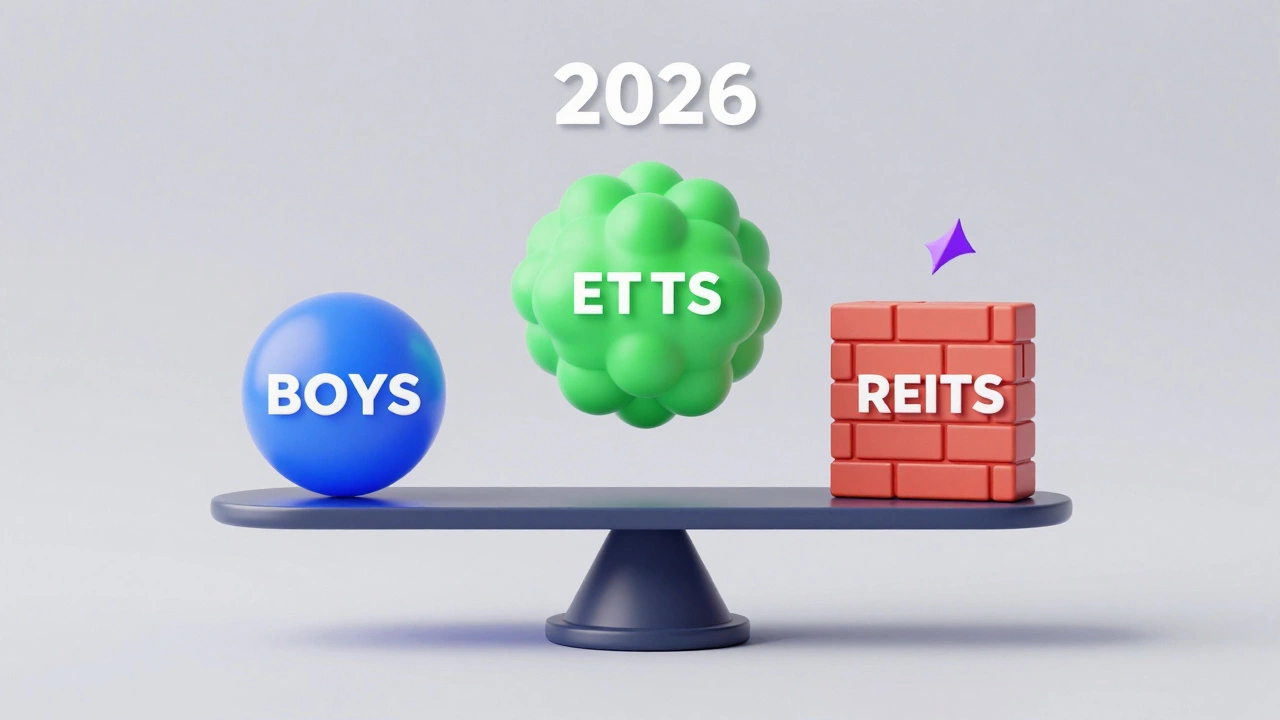
Not all investments are created equal. Depending on your risk tolerance and timeline, different assets make sense in 2026. Let’s break down the main options.
| Asset Class | Risk Level | Potential Return | Best For |
|---|---|---|---|
| Broad Market ETFs | Medium | 7-10% annually (long-term avg) | Long-term growth, retirement |
| Government Bonds | Low | 3-4% annually | Capital preservation, income |
| Real Estate (REITs) | Medium-High | 5-8% + dividends | Diversification, inflation hedge |
| Cryptocurrency | Very High | Highly Volatile | Speculative growth, small % of portfolio |
1. Broad Market ETFs (The Core Holding)
Exchange-Traded Funds (ETFs) that track major indices like the S&P 500 or the ASX 200 remain the backbone of any sensible portfolio. In 2026, these funds offer exposure to hundreds of companies at a fraction of the cost of individual stock picking. You’re betting on the global economy, not a single CEO. If one company fails, it barely dents your portfolio. This is the definition of smart, low-effort investing.
2. Government Bonds (The Safety Net)
With interest rates stabilizing, government bonds are offering respectable yields again. Unlike five years ago when bond yields were near zero, you can now earn 3-4% with very little risk. These are crucial for balancing out the volatility of stocks. If the stock market crashes, bonds often hold their value or rise, providing stability.
3. Real Estate Investment Trusts (REITs)
You don’t need to buy a physical house to invest in property. REITs allow you to own shares in commercial real estate portfolios. In 2026, as interest rates ease, the pressure on property developers eases too. REITs provide regular dividend payments, which can be reinvested to grow your wealth faster.
The Danger Zone: What to Avoid
Just as there are smart moves, there are traps. In 2026, the biggest risks come from FOMO (Fear Of Missing Out). Social media is flooded with tips on meme stocks, unproven crypto tokens, and complex derivatives. These are not investments; they are gambling instruments.
Avoid anything that promises guaranteed high returns with low risk. That combination does not exist. If someone tells you they can double your money in six months, run. Also, be wary of concentrated positions. Putting 50% of your net worth into one tech stock is a recipe for disaster. Even great companies can fail due to regulation, competition, or internal mismanagement.

Building Your Personal Strategy
Smart investing is personal. It depends on your age, income, and goals. Here is a simple framework to build your plan:
- Define Your Horizon: When do you need the money? If it’s less than 3 years, keep it in high-yield savings or bonds. Don’t put short-term money in the stock market.
- Assess Risk Tolerance: Can you sleep at night if your portfolio drops 20%? If not, increase your bond allocation.
- Automate Contributions: Set up automatic transfers from your paycheck to your investment account. This forces discipline and removes the temptation to spend.
- Rebalance Annually: Once a year, check your asset allocation. If stocks have grown too large compared to bonds, sell some stocks and buy bonds to return to your target mix.
For example, a 30-year-old might aim for 80% stocks and 20% bonds. A 60-year-old might prefer 40% stocks and 60% bonds. There is no one-size-fits-all rule, but younger investors can afford more risk because they have more time to recover from downturns.
Common Mistakes to Sidestep
Even with a good plan, human behavior can derail your progress. Watch out for these pitfalls:
- Overtrading: Buying and selling frequently generates fees and taxes that eat into your returns. Buy and hold is still king.
- Panic Selling: When the market drops, the instinct is to sell. This locks in losses. Remember, markets always recover eventually. Stay the course.
- Ignoring Fees: A 1% fee might seem small, but over 30 years, it can cost you tens of thousands of dollars. Choose low-cost index funds with expense ratios below 0.1%.
Finally, remember that investing is a marathon, not a sprint. The goal isn’t to get rich quick. It’s to build wealth steadily over decades. By starting now, using dollar-cost averaging, and staying diversified, you’re giving yourself the best possible chance of success.
Is it too late to start investing in 2026?
No, it is never too late. While starting earlier gives you more time for compound interest, starting now is infinitely better than waiting another year. Even small amounts invested regularly can grow significantly over time.
How much money do I need to start investing?
You can start with as little as $50-$100. Many modern brokerage platforms allow fractional share purchases, meaning you don’t need to buy whole shares of expensive companies. Consistency matters more than the initial amount.
Should I invest in individual stocks or ETFs?
For most people, ETFs are the smarter choice. They provide instant diversification and lower risk. Individual stocks require significant research and carry higher risk of total loss. Only allocate a small portion of your portfolio to individual stocks if you enjoy the process.
What happens to my investments if the market crashes?
Your portfolio value will drop, but this is normal. Historically, markets have always recovered from crashes. If you don’t need the money immediately, you should stay invested. Selling during a crash turns temporary paper losses into permanent realized losses.
Are cryptocurrencies a safe investment in 2026?
Cryptocurrencies remain highly volatile and speculative. They can offer high returns but also carry the risk of significant losses. Financial experts generally recommend limiting crypto holdings to 1-5% of your total portfolio, treating it as a high-risk speculation rather than a core investment.