
Car Down Payment & Equity Calculator
Enter your vehicle details below to compare the financial impact of putting cash down versus keeping it liquid.
Your Loan Scenario
Equity Risk Assessment
Calculating...
Low RiskYou’re standing in the showroom, keys jingling in your pocket, ready to drive off in that shiny new SUV. The salesperson smiles and asks the million-dollar question: "How much are you putting down?" It’s a simple question with complicated answers. On one hand, throwing cash at the car feels responsible. On the other, keeping that cash liquid might save you headaches later. There is no universal "yes" or "no." It depends entirely on your credit score, the interest rate, and how long you plan to keep the vehicle.
Most people treat a down payment as a moral obligation rather than a financial tool. They think, "I should pay more upfront because debt is bad." But cars are depreciating assets. Unlike a house, which might appreciate, a new car loses roughly 20% of its value the moment you drive it off the lot. If you put $5,000 down on a $30,000 car, you haven't just paid for the car; you've likely paid for depreciation before you even turned the ignition key. Let’s break down when writing that check makes sense and when you should keep your wallet closed.
The Depreciation Trap: Why Cash Can Vanish Fast
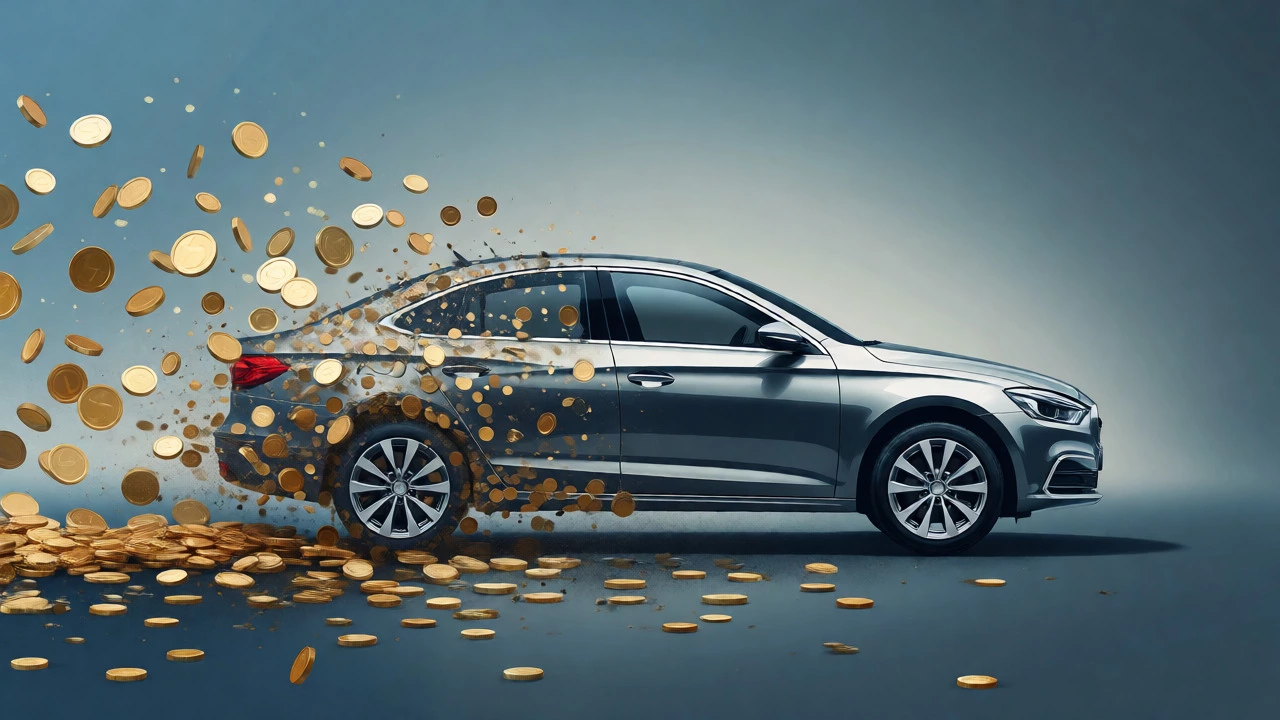
Here is the brutal reality of car ownership: depreciation is the biggest cost of owning a vehicle, often larger than fuel or insurance. When you finance a car, you are borrowing money against an asset that shrinks in value every single day. This creates a dangerous scenario known as being "upside down" or having negative equity.
Imagine you buy a $40,000 truck with zero down. You owe the bank $40,000. After one year, that truck is only worth $32,000 on the used market. If you total the car in an accident, insurance pays you the current market value ($32,000), but you still owe the bank $40,000. That $8,000 gap? You have to pay it out of pocket. A solid down payment acts as a buffer against this crash. By putting 10-20% down, you ensure that the loan balance stays below the car's actual value, protecting you from owing money on a car you no longer have.
When a Down Payment Is Non-Negotiable
While flexibility exists, there are specific scenarios where skipping the down payment is a financial mistake. If you fall into any of these categories, writing that check is usually the smart move.
- Your Credit Score is Below 650: Lenders view subprime borrowers as high-risk. Without a down payment, they see no skin in the game. Offering cash reduces their risk, which can lower your interest rate significantly. Even a 1% drop in APR saves hundreds over a five-year term.
- You Are Buying a High-Depreciation Vehicle: Luxury cars, sports cars, and certain electric vehicles lose value faster than standard sedans or trucks. A BMW 7-Series might lose 40% of its value in three years. A Toyota Camry might lose 25%. The steeper the drop, the more down payment you need to stay solvent.
- You Want Lower Monthly Payments: If your budget is tight, a larger down payment reduces the principal amount financed. Smaller principal means smaller monthly installments. This frees up cash flow for groceries, rent, or emergency funds, reducing the stress of a fixed monthly obligation.
The Case for Keeping Your Cash Liquid
Now, let’s look at the other side. Why would you refuse to pay extra? Because once that money goes into the car, it’s gone. You can’t use it to fix a leaking roof, cover a medical bill, or invest in a higher-yielding opportunity. This is the concept of opportunity cost.
Consider the math. If you get a promotional APR (Annual Percentage Rate) of 0% to 2.9%, financing is essentially free money. Meanwhile, a high-yield savings account or a conservative index fund might return 4-5% annually. In this scenario, putting $5,000 down on the car earns you nothing. Leaving that $5,000 in a savings account earns you interest. You are literally losing money by paying it early. Additionally, if you face a job loss or emergency, you cannot easily pull cash back out of a financed car without selling it or refinancing, both of which take time and incur fees.
Insurance Implications: Gap Coverage vs. Down Payment
Many drivers confuse the need for a down payment with the need for gap insurance. Gap insurance covers the difference between what you owe and what the car is worth if it’s totaled. Some lenders require it; others don’t.
If you put a large down payment, you might avoid needing gap insurance entirely because you start with positive equity. However, gap insurance is relatively cheap-often under $300 for the life of the loan. Sometimes, it is cheaper to pay for gap coverage and keep your cash in the bank than to put thousands down solely to avoid the policy. Run the numbers. If the interest saved by a larger down payment is less than the cost of gap insurance plus the lost investment potential, skip the big down payment.
Real-World Comparison: Two Scenarios
Let’s look at concrete examples using a $30,000 vehicle over a 60-month term. We’ll compare two drivers: Sarah, who puts $5,000 down, and Mike, who puts $0 down.
| Feature | Sarah (Puts $5k Down) | Mike (Puts $0 Down) |
|---|---|---|
| Loan Principal | $25,000 | $30,000 |
| Interest Rate (APR) | 6.0% | 7.5% (Higher due to risk) |
| Monthly Payment | $483 | $600 |
| Total Interest Paid | $4,000 | $6,000 |
| Cash Left in Bank | $0 (Used for down) | $5,000 (Invested/Saved) |
| Risk of Negative Equity | Low | High (Year 1-2) |
In this scenario, Sarah pays $2,000 less in interest. But she has no cash cushion. Mike pays more interest but keeps $5,000 accessible. If Mike invests his $5,000 and earns 5% returns, he generates $250/year. Over five years, that’s $1,250 in earnings, offsetting some of the extra interest he paid. Who wins? It depends on whether Mike needs that liquidity or if Sarah values peace of mind over maximum net worth.
Strategic Tips for Negotiating Your Down Payment
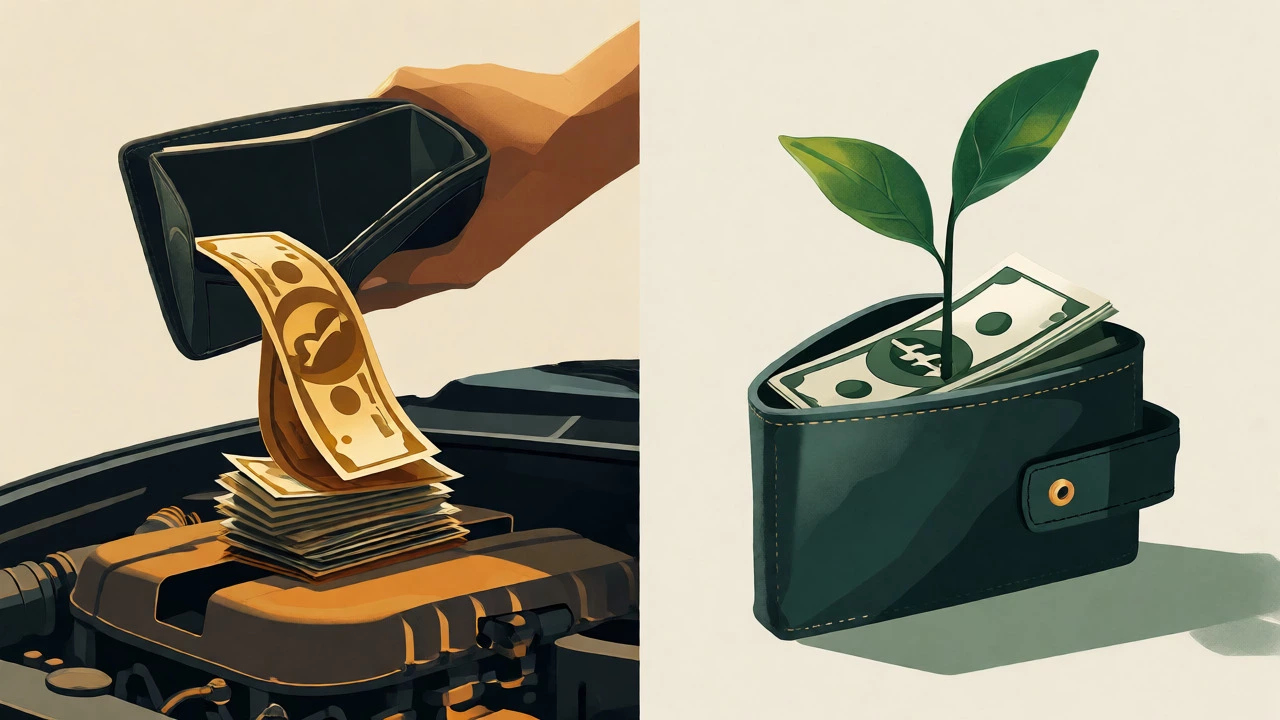
Don’t just hand over cash blindly. Use it as a negotiation tool. Dealerships make money on financing, not just the car price. Here is how to play the game:
- Negotiate the Price First: Never discuss the down payment until you’ve agreed on the final out-the-door price. If you mention a large down payment too early, dealers might inflate the car price to recoup their profit margin.
- Ask for the "Bank Rate": Ask the dealer what rate they can offer if you increase the down payment. Sometimes, moving from 0% down to 10% down drops the rate by 0.5%. Calculate if the interest savings justify locking up that cash.
- Check for Rebates: Manufacturers often offer cash rebates for financing through their captive lender (e.g., Toyota Financial). These rebates act like a down payment. Ensure you aren’t double-counting them.
- Avoid "Balloon" Payments: Some leases or loans allow low payments with a huge lump sum at the end. Don’t confuse this with a down payment. A balloon payment is a future liability, not a present asset reduction.
Frequently Asked Questions
Is 20% down always necessary?
No. The "20% rule" comes from mortgages, not car loans. For cars, 10% is often sufficient to avoid negative equity in the first year. If you have excellent credit and a low-interest loan, even 0% down can be financially sound if you maintain an emergency fund.
Can I add a down payment after signing the contract?
Generally, no. Once the loan is funded, the principal is set. You can make extra payments toward the principal later, which reduces interest costs, but you cannot retroactively change the initial down payment structure to alter the approved interest rate or term without refinancing.
Does a down payment affect my credit score?
Not directly. The down payment itself doesn't appear on your credit report. However, by lowering the loan-to-value ratio, it may help you qualify for better terms, which indirectly supports healthy credit utilization ratios. Timely payments on the resulting loan will boost your score.
What happens if I trade in my old car instead of using cash?
A trade-in value counts exactly like a cash down payment. If your old car is worth $10,000 and you owe $8,000, you have $2,000 in equity. That $2,000 reduces the new loan principal. Be careful: if you owe more than the car is worth (negative equity), that debt gets rolled into the new loan, increasing your principal.
Should I put money down on a lease?
Leases work differently. Putting money down lowers your monthly payment but does not reduce the total cost of the lease unless you terminate early. If you total the leased car, insurance pays the leasing company, and your down payment is generally lost. Many experts advise putting $0 down on leases to preserve cash flow.