
Homeowners Insurance Policy Selector
Select your options and click "Analyze" to see your recommended policy form.
You just bought your first home. The keys are in your hand, the moving boxes are stacked high, and suddenly, a lender or agent mentions homeowners insurance. You stare at a list of options that looks like alphabet soup: HO-1, HO-2, HO-3, HO-5. It’s overwhelming. But here’s the truth most agents won’t shout from the rooftops: for the vast majority of standard single-family homes, there is one specific policy type that serves as the industry baseline. It’s not the cheapest option on paper, but it’s the most balanced starting point for protecting your biggest asset.
The Standard Baseline: Understanding the HO-3 Policy
When people ask for the "most basic" policy, they often mean the cheapest. But in the insurance world, "basic" usually refers to the standard form that meets lender requirements without unnecessary frills. That is the HO-3 special form policy. Unlike older forms that only covered named perils (like fire or theft), the HO-3 uses an "open peril" structure for the dwelling itself. This means your house is covered for everything unless specifically excluded. It’s a critical distinction because it offers broader protection than the strictly limited HO-1 or HO-2 forms, yet costs less than the premium HO-5 comprehensive form.
Why do lenders insist on this? Because it protects their collateral. If your roof collapses due to a hailstorm-a peril not always listed in narrower policies-the HO-3 covers it. If you choose a cheaper, more restrictive policy, you might find yourself paying out of pocket for repairs that should have been covered. Think of the HO-3 as the goldilocks zone: not too little, not too much, just right for standard suburban living.
What Does 'Basic' Actually Cover?
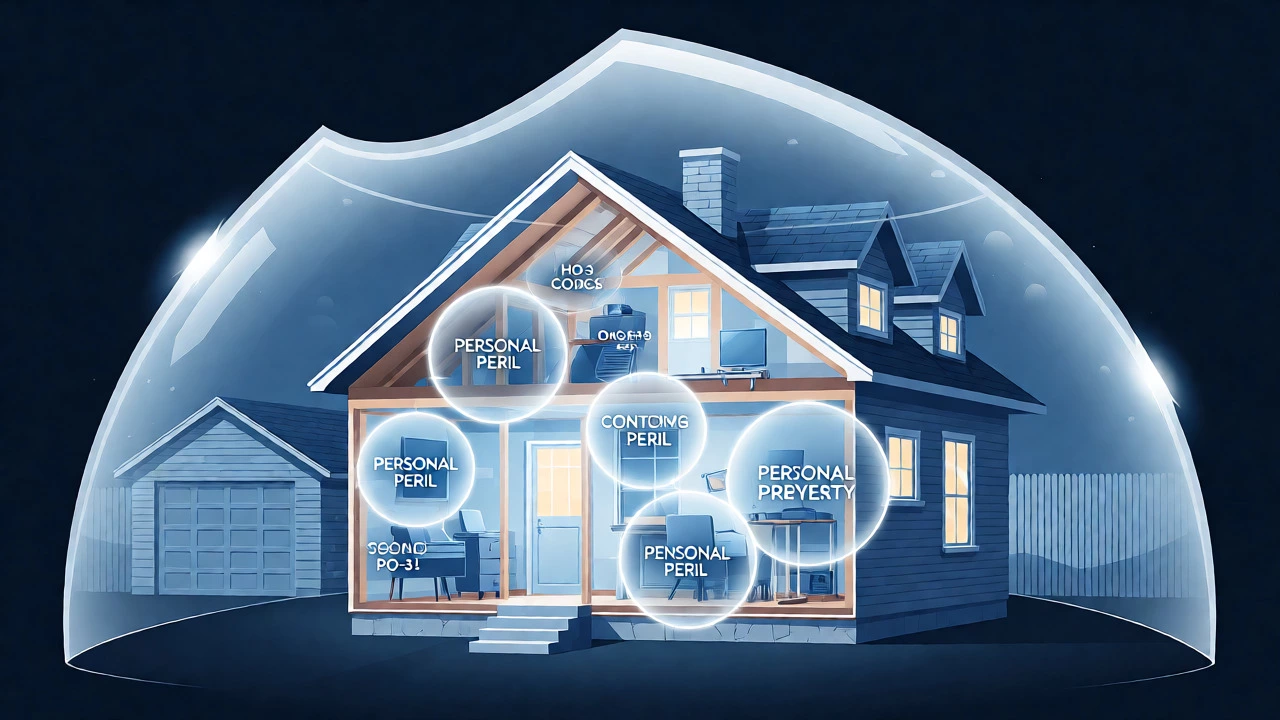
A common misconception is that "basic" means minimal. In reality, a standard HO-3 policy includes four main components. Ignoring any of them leaves gaps in your financial armor.
- Dwelling Coverage: This pays to rebuild your house if it’s destroyed. It doesn’t cover the land value, just the structure. Experts recommend insuring for 100% of replacement cost, not market value.
- Other Structures: Your detached garage, fence, or shed. These are typically covered at 10% of your dwelling limit.
- Personal Property: Your furniture, clothes, and electronics. This is usually covered on a "named peril" basis, meaning you must prove the item was damaged by a covered event like fire or vandalism.
- Loss of Use: If your home is uninhabitable after a storm, this pays for hotel bills and meals while repairs happen.
Notice what isn’t included by default? Floods and earthquakes. These require separate policies. Many homeowners assume "house insurance" covers all water damage. It doesn’t. A burst pipe inside your walls? Covered. Water rising from the street during a hurricane? Not covered under a basic HO-3. Knowing these boundaries saves you from nasty surprises.
Comparing the Alphabet Soup: HO-1 vs. HO-2 vs. HO-3
To truly understand why the HO-3 is the recommended baseline, you need to see how it stacks up against the alternatives. While HO-1 exists on paper, many insurers no longer offer it because it’s so restrictive it’s practically useless for modern risks. HO-2 is better but still limits you to specific events. HO-3 opens the door wider.
| Policy Form | Dwelling Coverage Type | Personal Property Coverage | Best For |
|---|---|---|---|
| HO-1 (Basic) | Named Perils Only | Named Perils Only | Older homes; rarely available today |
| HO-2 (Broad) | Named Perils Only | Named Perils Only | Budget-conscious owners with low risk |
| HO-3 (Special) | Open Perils (All except exclusions) | Named Perils Only | Standard single-family homes; lender requirement |
| HO-5 (Comprehensive) | Open Perils | Open Perils | High-value homes; maximum protection |
The jump from HO-2 to HO-3 is significant. With HO-2, if a tree falls on your house due to wind, you’re covered. But if a mysterious crack appears in your foundation due to soil movement (often excluded anyway) or a unique accident occurs, you might be denied. HO-3 shifts the burden of proof. The insurer has to prove the damage wasn’t covered, rather than you proving it was. That legal advantage is worth the slight premium difference.
Liability: The Hidden Shield
Many first-time buyers obsess over the deductible amount but ignore personal liability. This part of your basic policy is arguably more important than the dwelling coverage. Liability protects you if someone gets hurt on your property and sues you. Or if your dog bites a neighbor. Or if your kid throws a baseball through a window.
Standard HO-3 policies usually start with $100,000 to $300,000 in liability limits. Is that enough? In today’s litigious society, probably not. Medical bills pile up fast. If a guest slips on your icy walkway and breaks a hip, rehabilitation costs can easily exceed $100,000. Bumping your liability limit to $500,000 often costs only a few dollars extra per month. It’s the cheapest peace of mind you can buy. Don’t let the word "basic" trick you into thinking you need minimal liability coverage.
How to Keep Your Basic Policy Affordable
Just because HO-3 is the standard doesn’t mean you have to overpay. Insurers look at risk factors to set your price. You can control several of these variables. First, consider your deductible. Raising it from $500 to $1,000 or $2,500 can lower your annual premium by 10-25%. Can you afford to pay $2,500 out of pocket if disaster strikes? If yes, take the savings.
Second, bundle your policies. Buying auto and home insurance from the same carrier often unlocks discounts of 10-20%. Third, improve your home’s safety profile. Installing a monitored security system, replacing old wiring, or updating your roof can trigger credits. Some insurers even offer discounts for smart home devices like leak detectors, which prevent the costly water claims they dread most.
When 'Basic' Isn't Enough
While HO-3 is the baseline, it’s not a one-size-fits-all solution. If you own a condo, you need an HO-6 policy, which covers the interior of your unit and your personal belongings, since the building’s exterior is covered by the HOA master policy. If you rent, you don’t need homeowners insurance at all; you need renters insurance, which skips dwelling coverage entirely.
Also, consider your location. If you live in Florida or coastal areas prone to hurricanes, a standard HO-3 might exclude wind damage. You’d need a separate windstorm policy. Similarly, if you run a business from home, your basic policy likely won’t cover business equipment or liability. You’ll need a rider or endorsement. Always review your exclusions list. It’s the fine print where dreams go to die.
Frequently Asked Questions
Is HO-3 really the cheapest option?
No, HO-1 and HO-2 are technically cheaper because they offer less coverage. However, HO-3 is often considered the best value because the small price difference buys significantly broader protection for your dwelling. Many insurers have phased out HO-1 and HO-2 entirely, making HO-3 the entry-level option in practice.
Does basic homeowners insurance cover flooding?
No. Standard HO-3 policies exclude flood damage caused by external sources, such as heavy rain causing rivers to overflow or storm surges. You need a separate flood insurance policy, often provided through the National Flood Insurance Program (NFIP) in the US, to cover this risk.
What is the difference between replacement cost and actual cash value?
Replacement cost pays what it costs to replace your damaged item with a new one of similar kind and quality, without deducting for depreciation. Actual cash value (ACV) pays the replacement cost minus depreciation. For example, a five-year-old TV would be paid for at its current used market value under ACV, but at the cost of a new equivalent model under replacement cost. Replacement cost premiums are higher but offer better protection.
Do I need earthquake insurance with my basic policy?
If you live in an earthquake-prone area like California or parts of Australia, yes. Earthquake damage is almost universally excluded from standard HO-3 policies. You can add an earthquake endorsement or buy a standalone policy, though these often come with higher deductibles (sometimes 10-15% of the dwelling value).
Can I change my policy type after buying a home?
Yes, you can switch policy types at renewal or sometimes mid-term. If you realize your HO-2 policy left you exposed after a minor incident, you can upgrade to HO-3. Conversely, if you want to save money and accept more risk, you could downgrade, though most lenders require at least HO-3 level coverage for the dwelling.