
Zero-Based Budget Calculator
Your Monthly Budget
Expense Categories
Budget Analysis
Ever feel like your paycheck disappears before you even know it happened? You’re not alone. Most people think budgeting means tracking expenses or cutting back on coffee. But what if you could assign every dollar a job before it even hits your account? That’s the core idea behind zero-based budgeting.
What Exactly Is Zero-Based Budgeting?
Zero-based budgeting isn’t about spending less. It’s about spending intentionally. The name comes from starting each month with a $0 balance - not in your bank account, but in your budget. Every dollar you earn gets a specific job: rent, groceries, savings, entertainment, even that $5 weekly treat. When every dollar has a purpose, nothing slips through the cracks.
This method was popularized by Dave Ramsey, but it’s been used by families, small business owners, and even governments for decades. Unlike traditional budgeting, where you look at last month’s spending and tweak it slightly, zero-based budgeting starts fresh each time. No carryovers. No assumptions. Just you, your income, and your goals.
How It Works: The 4 Simple Steps
There’s no fancy software or complicated math. Just four steps:
- Write down your total monthly income. Include everything: salary, side gigs, tax refunds, even that $20 your cousin paid you back. Use your net income - what actually lands in your account after taxes and deductions.
- List every single expense. Go back through your bank statements for the last three months. Don’t skip small stuff. Coffee, Netflix, gas, phone bill, pet food, even birthday gifts. If it’s a regular outflow, it goes on the list.
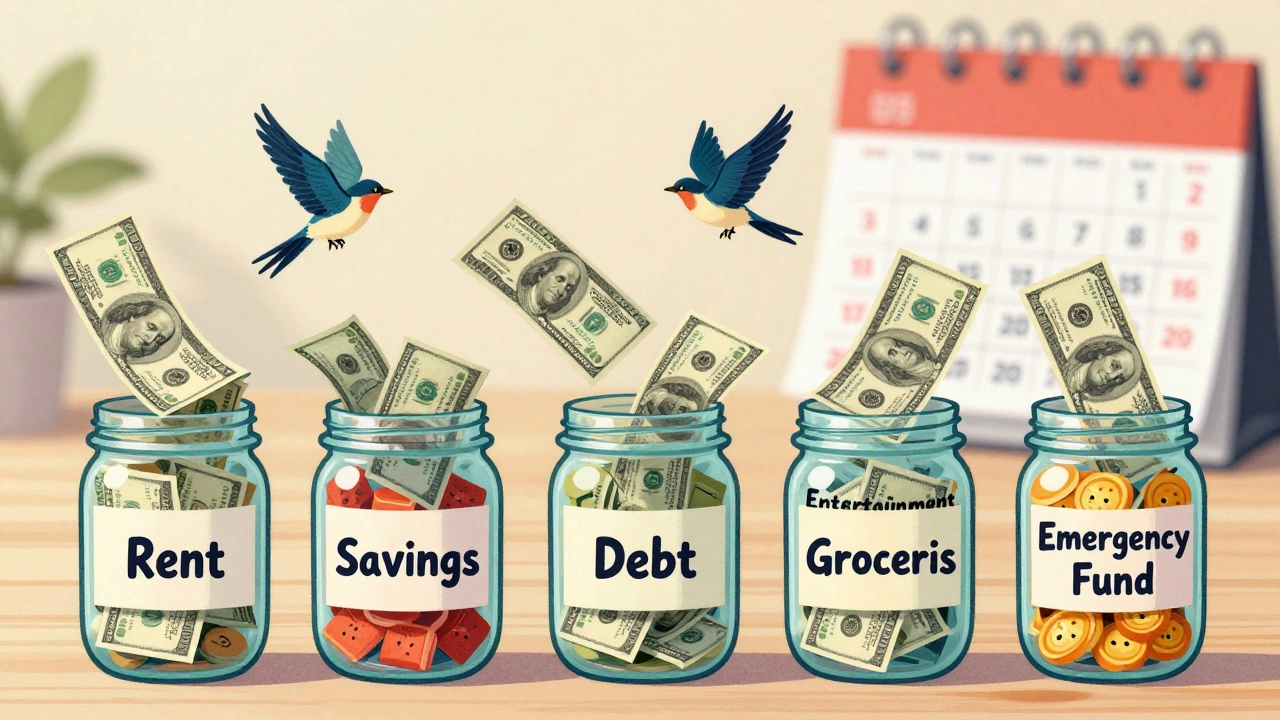
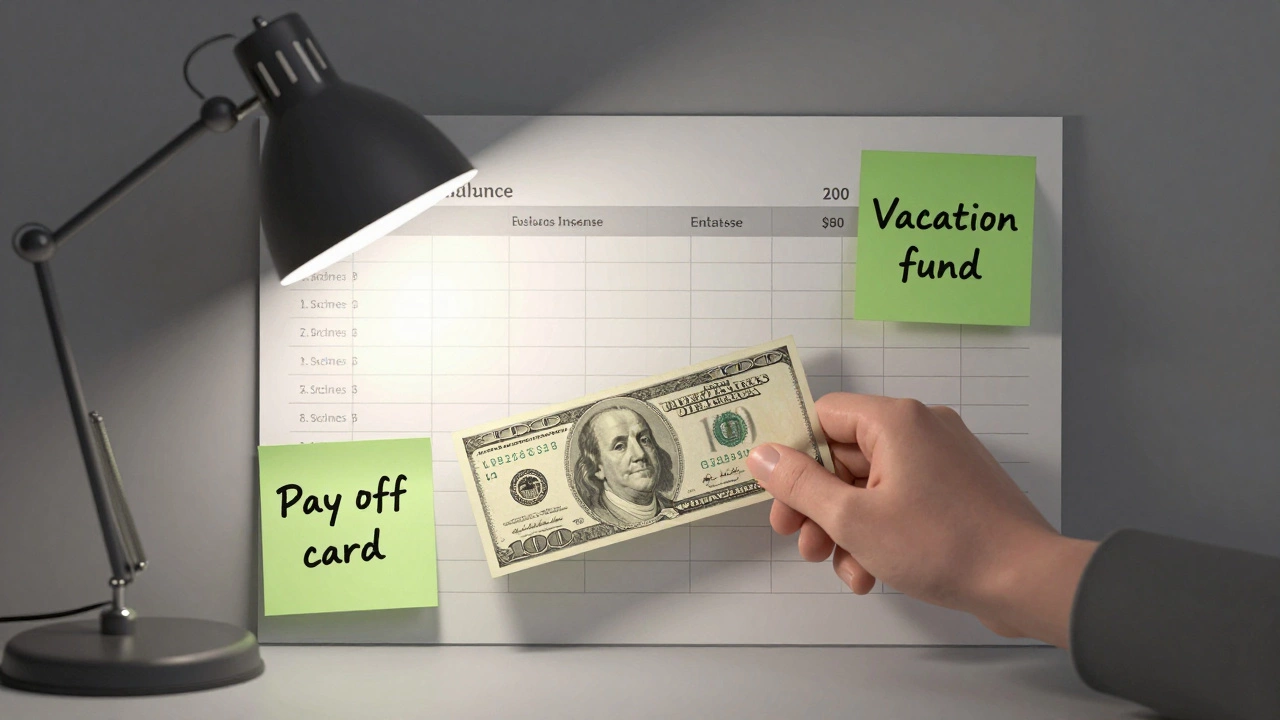
- Assign every dollar a job. Start with your fixed costs - rent, utilities, car payments. Then cover savings goals, debt payments, and emergency fund contributions. After that, allocate money to variable expenses like groceries and entertainment. Keep going until your income minus your expenses equals zero. If you have money left over, give it a job: extra savings, a vacation fund, or paying down debt faster.
- Track every dollar as you spend it. This is where most people fail. You need to record every purchase, even if it’s cash. Use an app, a spreadsheet, or pen and paper. The goal isn’t perfection - it’s awareness. If you overspend on dining out, you’ll know right away because you didn’t leave room for it.
Why It Works Better Than Other Methods
Most budgeting systems tell you to spend a percentage of income on categories - like the 50/30/20 rule (50% needs, 30% wants, 20% savings). That sounds neat, but it doesn’t account for your actual life. What if you live in a city where rent is 60% of your income? Or what if you’re paying off $20,000 in student loans? The 50/30/20 rule doesn’t help there.
Zero-based budgeting fixes that. It’s flexible. It’s personal. You decide what matters most. Maybe you want to pay off your car in 12 months. Maybe you’re saving for a down payment. Maybe you just want to stop living paycheck to paycheck. This method lets you make those choices explicit.
It also forces you to confront hidden money leaks. That $80 monthly subscription you forgot about? You’ll see it when you’re trying to assign every dollar. That $50 you spend on impulse buys every week? You’ll notice when you realize you didn’t budget for it.
Real-Life Example: Sarah’s Month
Sarah earns $3,200 a month after taxes. She used to think she was doing fine - until she looked at her bank account and realized she had $0 saved and $4,000 in credit card debt.
Here’s how she zero-based her budget:
- Rent: $1,100
- Utilities: $180
- Car payment: $320
- Car insurance: $90
- Phone bill: $60
- Groceries: $400
- Gas: $150
- Student loan payment: $250
- Minimum credit card payment: $100
- Emergency fund: $200
- Debt payoff extra: $300
- Entertainment: $100
- Gifts & donations: $50
- Personal care: $40
- Remaining: $0
She didn’t have any money left over. But she also didn’t have any guilt. She knew exactly where every dollar was going. Within six months, she paid off $1,800 in credit card debt and built a $1,500 emergency fund. She didn’t cut out coffee - she just stopped spending on things she didn’t care about.
Pitfalls to Avoid
Zero-based budgeting sounds simple, but people mess it up in predictable ways:
- Ignoring irregular expenses. You don’t pay car insurance every month - but you pay it every six. If you don’t set aside $50 a month for it, you’ll be shocked when the bill hits. Always break annual or quarterly costs into monthly chunks.
- Not tracking spending. If you don’t record what you spend, the budget becomes a fantasy. Use an app like YNAB, EveryDollar, or even a Google Sheet. Just do it.
- Being too rigid. Life happens. If you overspend on groceries one month, don’t quit. Adjust next month’s budget. Zero-based budgeting isn’t about punishment - it’s about awareness.
- Forgetting future goals. If you don’t budget for vacation, holiday gifts, or car repairs, you’ll end up using credit cards again. Always plan ahead.
Who Benefits Most From This Method?
Zero-based budgeting isn’t for everyone - but it’s perfect for people who:
- Feel like money disappears without explanation
- Struggle with credit card debt
- Want to get out of living paycheck to paycheck
- Have irregular income (freelancers, gig workers)
- Are saving for a big goal (house, car, trip)
If you’ve tried other budgeting methods and they didn’t stick, this might be the one. It’s not about restriction - it’s about control. You’re not giving up anything. You’re just deciding what matters most.
Tools to Get Started
You don’t need expensive software. Here are your best options:
- YNAB (You Need A Budget): Built for zero-based budgeting. Syncs with your bank, tracks spending in real time, and nudges you when you overspend. Costs $15/month, but offers a free 34-day trial.
- EveryDollar (by Dave Ramsey): Free version available. Simple interface. Good for beginners.
- Google Sheets or Excel: Download a free zero-based budget template. You’ll need to update it manually, but it’s completely free.
- Paper and pen: Yes, really. Write your income on top. List your expenses below. Use a calculator. It works.
What Happens After You Master It?
Once you’ve done zero-based budgeting for a few months, something shifts. You stop worrying about money. You start making decisions based on values, not fear. You say "no" to things that don’t align with your goals. You feel proud when you pay off a bill because you planned for it.
Some people eventually move to envelope systems or automated savings. Others stick with zero-based budgeting forever. It’s not about the method - it’s about the mindset. You’re no longer reacting to money. You’re directing it.
Is zero-based budgeting the same as the envelope system?
No. The envelope system is a physical way to manage cash - you put bills in labeled envelopes. Zero-based budgeting is a mental framework: every dollar gets a job. You can use envelopes with zero-based budgeting, or you can use an app. The method is flexible; the principle is what matters.
Do I need to use an app for zero-based budgeting?
No. Apps make it easier, but they’re not required. Many people succeed with pen and paper. The key is consistency, not technology. If you’ll actually write it down, do it manually. If you’ll ignore a paper budget, then try an app.
What if my income changes every month?
Use your lowest monthly income to plan your budget. That way, you’re always covered. Any extra money goes into savings or debt payoff. This works especially well for freelancers, gig workers, or seasonal jobs. You’re not guessing - you’re preparing for the worst.
Can I still have fun with zero-based budgeting?
Absolutely. In fact, you’ll have more fun because you’re not spending guiltily. You’ve already budgeted for entertainment, dining out, and hobbies. When you spend that money, you’re not breaking rules - you’re following your plan.
How long does it take to get good at zero-based budgeting?
Most people feel comfortable after three months. The first month is messy - you’ll forget expenses, miscount income, and overspend. That’s normal. By month three, you’ll start seeing patterns. By month six, you’ll be making smarter financial decisions without even thinking about it.