Can you live comfortably on $50,000 a year in retirement? It’s not a yes-or-no question. It’s a location, lifestyle, and timing question-and the answer changes depending on where you live, what you own, and how you spend. In Australia in 2025, $50,000 a year is enough for a modest but decent retirement… if you plan right. For others, it’ll feel tight. Let’s break down what this really means.
What $50,000 a Year Really Buys in 2025
At first glance, $50,000 sounds like a solid income. But retirement isn’t like working. You’re no longer getting employer super contributions, work-related tax breaks, or free lunches. Your costs shift. Health care goes up. Transport costs stay stubborn. And if you own your home, you’re still paying rates, insurance, and maintenance.
In Brisbane, where the cost of living is lower than Sydney or Melbourne, $50,000 covers a quiet, healthy lifestyle. Here’s what that looks like:
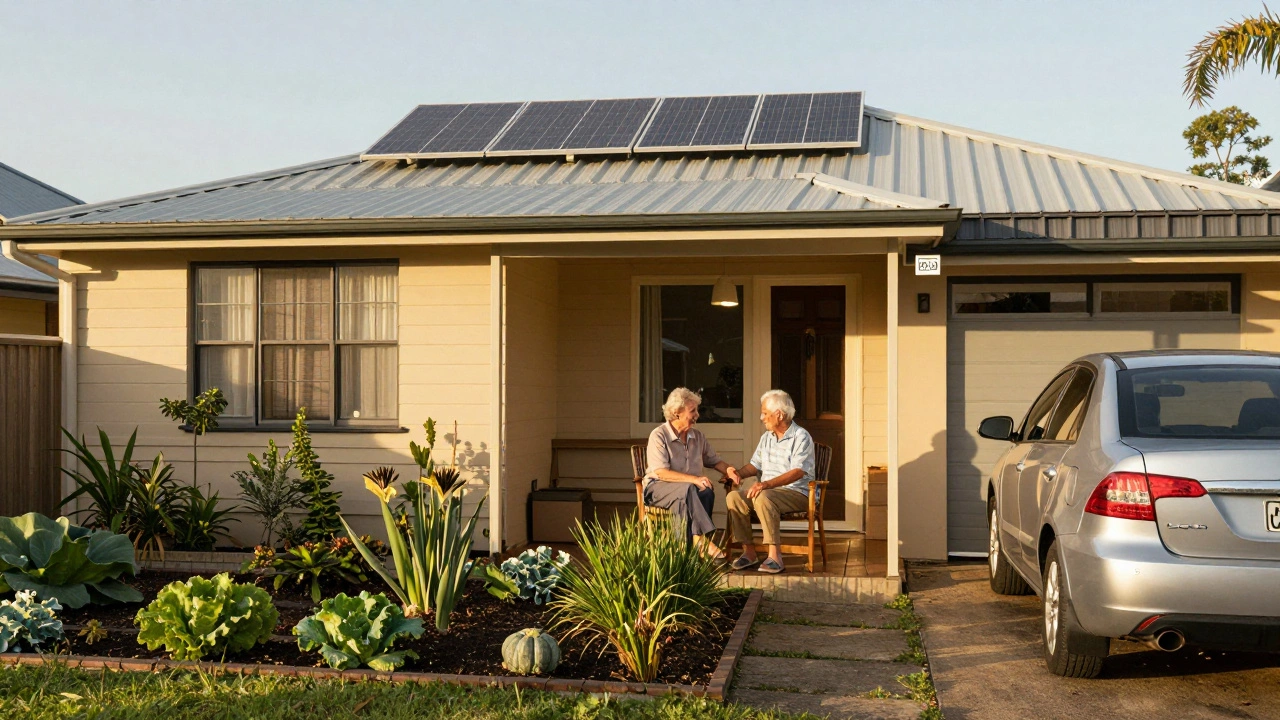
- Housing: If you own your home outright, your biggest cost is council rates ($1,800-$2,500/year) and home insurance ($800). No rent, no mortgage. That’s huge.
- Utilities: Electricity, gas, water, and internet total around $4,500 a year. Solar panels cut that by half for many retirees.
- Food: Groceries for one person: $6,000-$7,500. For a couple: $10,000-$12,000. Eating out once a week adds $2,000-$3,000.
- Healthcare: Medicare covers basics, but dental, glasses, and hearing aids don’t. Budget $2,000-$4,000 a year for extras. Private health insurance? Add $1,500-$3,000 more.
- Transport: One car, paid off, with fuel and insurance: $5,000/year. Public transport? $1,200 if you use it daily.
- Leisure: Hobbies, travel, subscriptions, gifts-$3,000-$6,000. A domestic trip every second year? That’s doable.
That’s roughly $40,000-$45,000 in fixed costs. That leaves $5,000-$10,000 for emergencies, unexpected repairs, or a little extra comfort. Not lavish. But not struggling.
Where $50,000 Falls Short
Now, here’s where it gets tricky. If you’re living in a capital city like Sydney or Melbourne, your housing costs alone could eat up half your pension. Renting a one-bedroom apartment there costs $30,000-$36,000 a year. That leaves $14,000-$20,000 for everything else-food, health, transport, bills. You’d have to cut back hard.
And if you have ongoing health issues? A single hip replacement or a course of physiotherapy can cost $5,000 out-of-pocket if you don’t have private insurance. Chronic conditions like diabetes or heart disease add $3,000-$8,000 a year in medications and monitoring.
What about inflation? The Reserve Bank of Australia targets 2-3% annually. That means your $50,000 today buys less every year. After 10 years, it’s worth about $41,000 in today’s dollars. That’s why indexed pensions matter.
How the Age Pension Fits In
Most Australians don’t retire on $50,000 from private savings alone. They combine it with the Age Pension. As of 2025, the maximum single Age Pension is $1,031.50 per fortnight ($26,819/year). For couples, it’s $782.80 each per fortnight ($40,705/year combined).
If you get the full Age Pension and add $23,000 from your own super or pension, you’re at $50,000. That’s common. The government’s Centrelink uses an income and assets test. If your super balance is under $300,000 and you own your home, you’ll likely get the full pension plus a small top-up.
But if your super is over $500,000, your Age Pension drops. At $800,000 in assets, you get nothing. So $50,000 a year in retirement often means: Age Pension + some super withdrawals. Not just your own savings.
What You Need to Own
Home ownership is the biggest factor in whether $50,000 works. If you rent, you’re likely in trouble. Even a modest rental in regional Queensland costs $25,000-$30,000 a year. That leaves you with $20,000 for everything else. You’d need to live on instant noodles and skip doctor visits.
But if you own your home, you’ve already solved the biggest expense. You’re not paying rent. You’re not chasing a new lease. You’re not at the mercy of a landlord. That’s worth at least $20,000 a year in savings.
Other assets matter too. Do you have a paid-off car? A small investment property? A share portfolio that pays dividends? Even $10,000 in annual dividends adds flexibility. It’s not income from your pension-it’s extra breathing room.
What You Can’t Ignore
Retirement isn’t just about money. It’s about time. And time costs. If you’re active-traveling, volunteering, taking classes-you’ll spend more. If you’re sedentary, your health might decline faster, and medical bills climb.
Many retirees underestimate how much they spend in the first five years. They’re excited. They take trips. They buy new furniture. They help their kids. Then, by year six, they’re tapped out. That’s called the retirement spending smile: high at the start, low in the middle, high again when health needs spike.
Plan for that. Budget for $5,000-$8,000 in the first three years for big purchases. Then dial it back. Keep a buffer.
Can You Retire Early on $50,000?
If you’re 55 and want to retire now, $50,000 a year is risky. You’ve got 30+ years to fund. Inflation will erode your buying power. Your super might run out by 80.
But if you’re 67 and retiring now? $50,000 is much more realistic. You’ve got 15-20 years to live on it. You’re eligible for the Age Pension. Your kids are independent. Your mortgage is gone. Your body isn’t as active. Your spending drops naturally.
Retiring at 67 with $50,000 a year? That’s doable. Retiring at 55? You need more-like $70,000-$80,000-to make it last.

How to Make ,000 Stretch
Here’s how people actually make it work:
- Downsize: Sell a big house. Move to a unit or a retirement village. Free up $200,000-$500,000 in equity. Put it in super or term deposits. That generates extra income.
- Work part-time: 10 hours a week at $30/hour = $15,600 a year. That’s a 30% boost to your pension. Many retirees do this.
- Use the Pensioner Concession Card: It gives you discounts on prescriptions, public transport, utilities, and rates. Apply the moment you qualify.
- Switch to a cheaper phone plan: Drop the unlimited data. Use Wi-Fi. Save $1,000 a year.
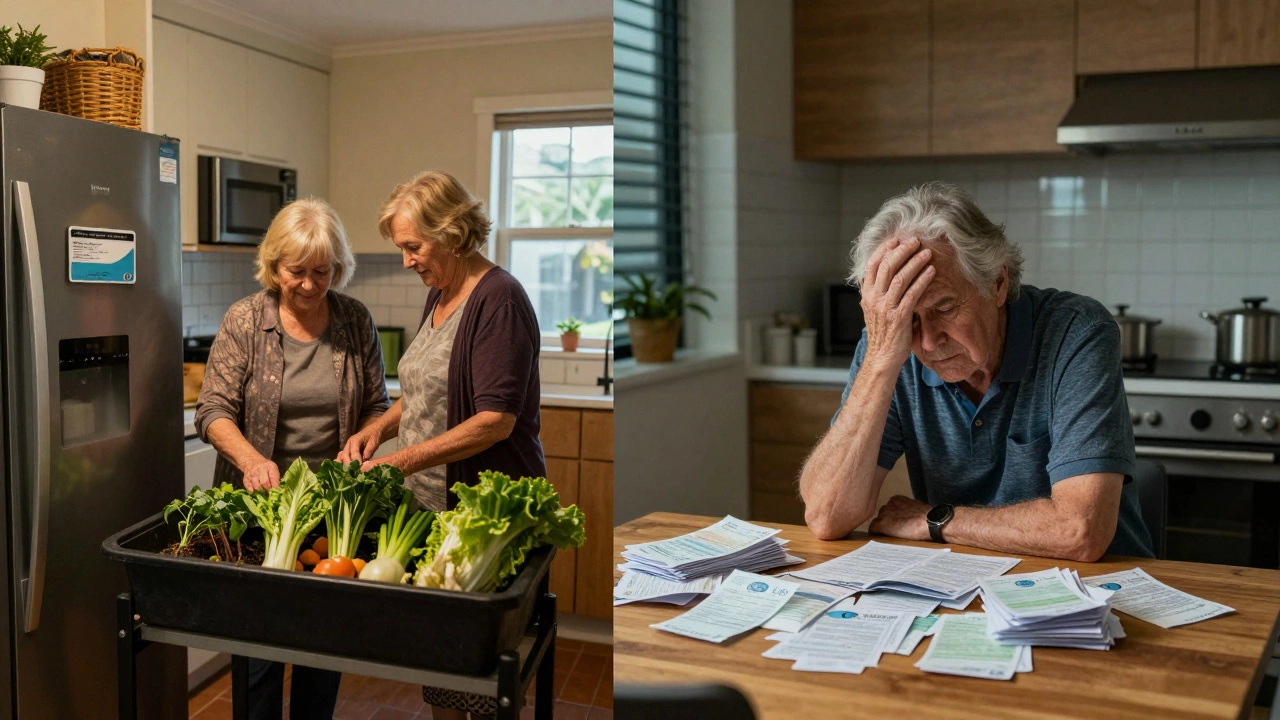
- Grow your own food: A small veggie patch cuts grocery bills by 15-20%. Even one tomato plant saves $50 a year.
These aren’t tricks. They’re habits. People who retire well don’t have more money. They spend less wisely.
What Happens If You Run Out?
If your savings run low, you don’t vanish. Australia has safety nets. The Age Pension is there for you. You can apply even if you’ve spent your super. Centrelink will reassess your assets and income. If you’re below the threshold, you’ll get support.
But you don’t want to rely on that. The pension is designed for basic needs-not comfort. You won’t be able to afford a new pair of glasses, a holiday, or a car repair. That’s why planning matters.
Final Answer: Yes, But With Conditions
Can you retire on $50,000 a year? Yes-if you own your home, live in a low-cost area like Brisbane, avoid debt, and accept a modest lifestyle. You won’t be rich. You won’t be traveling overseas every year. But you’ll be secure. You’ll pay your bills. You’ll eat well. You’ll see your doctor.
And if you don’t own your home? Or you live in Sydney? Or you have serious health issues? Then $50,000 isn’t enough. You need to work longer. Downsize. Or find extra income.
This isn’t about luck. It’s about choices. The people who retire comfortably on $50,000 didn’t win the lottery. They planned. They saved. They lived below their means. And they didn’t wait until 65 to start thinking about it.