
Student Loan Forgiveness Pathway Calculator
| Program | Timeline | Taxable? |
|---|---|---|
| PSLF | 10 Years (120 mo) | No |
| PAYE/REPAYE | 20 Years (240 mo) | Yes* |
| IBR/ICR | 25 Years (300 mo) | Yes* |
Getting your student loans completely wiped out sounds like a dream, but it is actually a legal reality for many borrowers. You do not have to pay off every cent of your balance if you qualify for specific federal programs. The most common path to 100% student loan forgiveness comes from two main avenues: working in public service or sticking with an income-driven repayment plan for two decades.
However, there is no magic button you press to erase debt instantly. The Department of Education does not forgive loans simply because life got hard or interest rates rose. You must fit into a strict set of criteria. If you are on the fence about your career path or your repayment strategy, understanding these rules now can save you thousands of dollars later.
The Public Service Loan Forgiveness (PSLF) Program
The Public Service Loan Forgiveness program is the most direct route to having your remaining balance forgiven after ten years. Launched in 2007, this program rewards people who work full-time for government organizations or non-profit entities that are tax-exempt under section 501(c)(3) of the Internal Revenue Code.
To qualify, you need more than just a job at a city hall or a charity. You must meet three strict conditions simultaneously:
- Qualifying Employment: Your employer must be a U.S. federal, state, local, or tribal government organization, or a qualifying non-profit. This includes teachers in public schools, librarians, emergency medical technicians, and military service members. Private companies generally do not count, even if they do good work.
- Qualifying Repayment Plan: You must be on an income-driven repayment plan. This includes Income-Based Repayment (IBR), Pay As You Earn (PAYE), Revised Pay As You Earn (REPAYE), or Income-Contingent Repayment (ICR). The standard 10-year repayment plan does not count toward forgiveness, even if you make payments on time.
- 120 Qualifying Payments: You must make 120 monthly payments while employed in a qualifying role. These payments do not have to be consecutive, but they must be made after October 1, 2007.
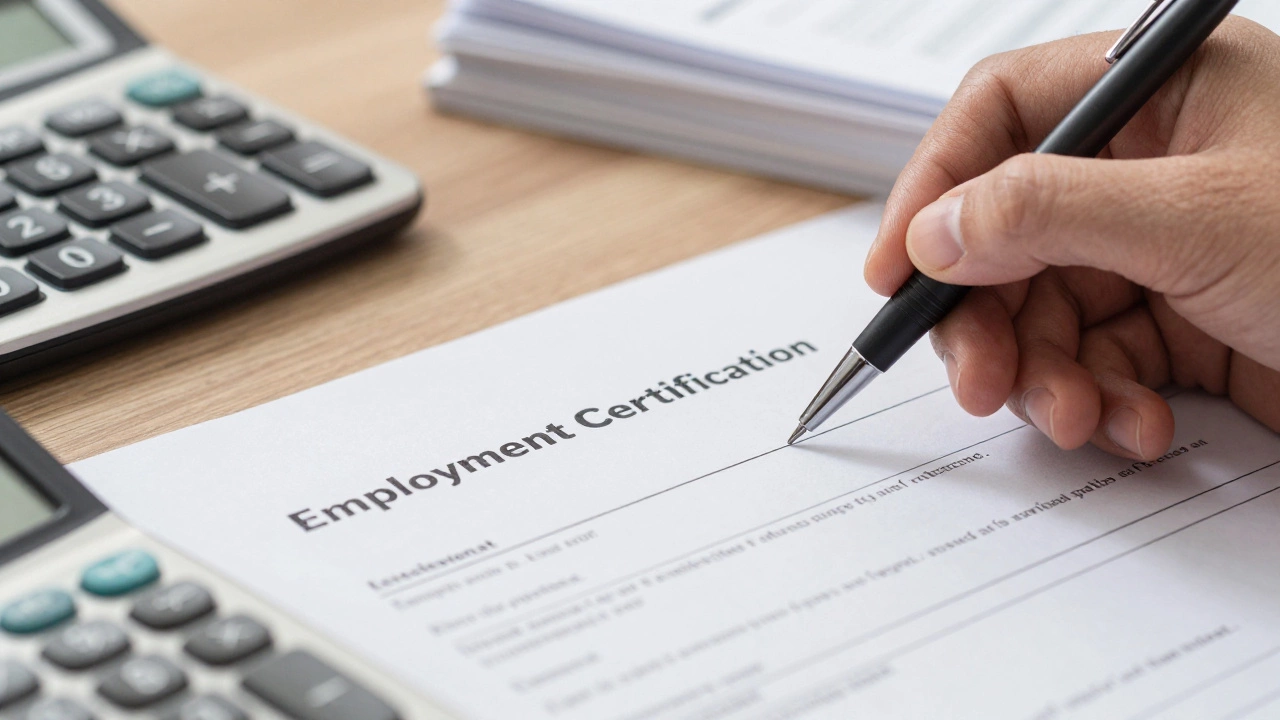
A crucial detail here is that "qualifying payment" means the payment was made on time, for the full amount due, while you were in a qualifying job and on a qualifying plan. If you switched jobs or changed repayment plans mid-year, some months might not count. You should submit the PSLF Employment Certification Form annually to ensure your payments are being tracked correctly by the Federal Student Aid office.
Income-Driven Repayment (IDR) Plans
If you do not work in public service, you can still get 100% forgiveness, but it takes longer. All federal income-driven repayment plans cap your monthly payment at a percentage of your discretionary income-usually 10% to 20%. If your income is low enough that your calculated payment is $0, you can make zero-dollar payments, and those still count toward the timeline.
After making qualifying payments for a set period, any remaining balance is forgiven:
- PAYE and REPAYE: Forgiveness occurs after 20 years of qualifying payments.
- IBR and ICR: Forgiveness occurs after 25 years of qualifying payments.
This method works for anyone with federal Direct Loans, regardless of their profession. However, there is a catch. The forgiven amount is considered taxable income by the IRS. This means you could receive a massive tax bill in the year your loans are discharged. For example, if you have $40,000 left on your loans and it gets forgiven, the IRS may treat that $40,000 as regular income, pushing you into a higher tax bracket.
Note that recent legislative changes have temporarily suspended this taxability. Under current laws, qualified student loan forgiveness is tax-free through December 31, 2025. After that date, the tax rule may revert unless Congress extends the exemption. Always consult a tax professional to understand how this affects your specific situation post-2025.
Total and Permanent Disability Discharge
If you become totally and permanently disabled, you can apply to have your federal student loans discharged. This is not forgiveness based on employment or time, but on medical necessity. The Department of Education defines total and permanent disability as the inability to engage in any substantial gainful activity due to physical or mental impairment.
You can prove this disability through three methods:
- A determination of disability by the Social Security Administration (SSA).
- A statement from a licensed physician (M.D.) or osteopath (D.O.) certifying your condition.
- A discharge from active military duty due to disability.
This process is free. Beware of scams where companies charge you fees to help with this application. You can apply directly through the Department of Education’s website. If approved, your loans are cancelled entirely, and you owe nothing further. Unlike IDR forgiveness, disability discharge is generally not considered taxable income.
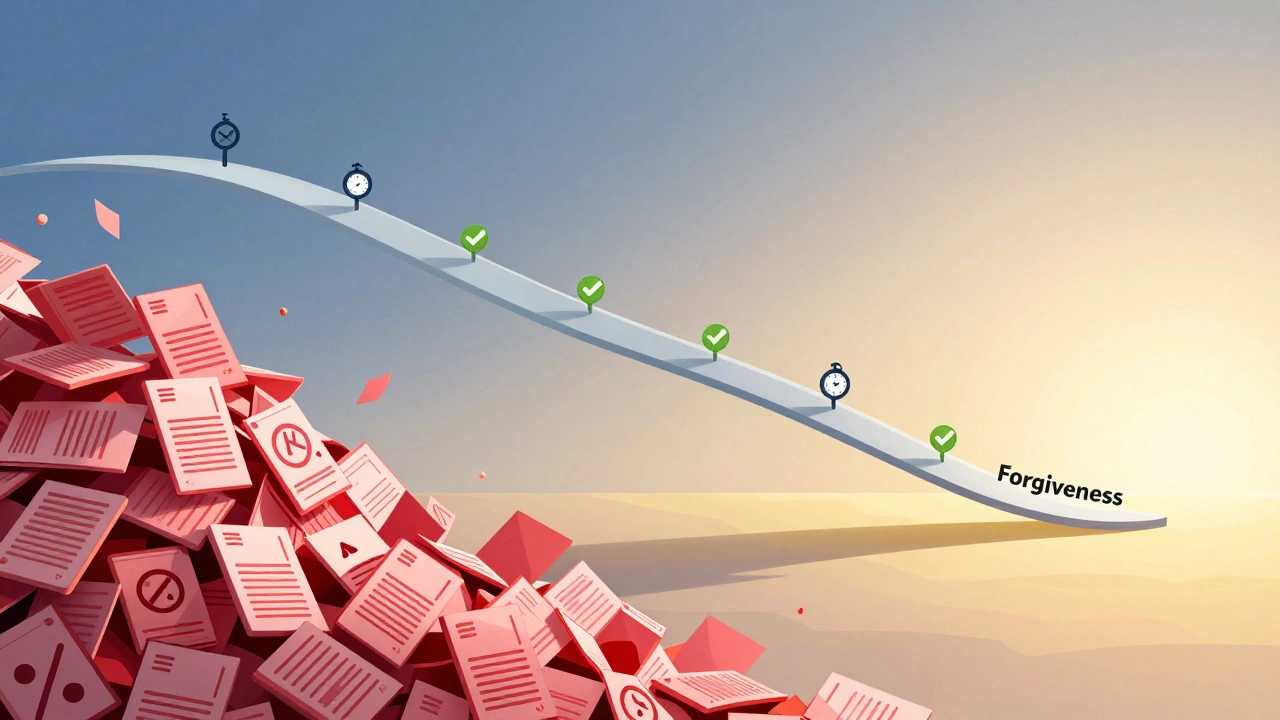
Borrower Defense to Repayment
If your school misled you about its programs, licensing requirements, or financial aid, you may qualify for Borrower Defense to Repayment. This program cancels loans for students who attended institutions that violated state or federal laws. For instance, if a vocational school claimed graduates would get a certain license but failed to provide the necessary curriculum, the Department of Education may forgive those loans.
This has been applied broadly in cases involving large-scale fraud, such as the closure of Corinthian Colleges or ITT Technical Institute. In those instances, eligible borrowers had their loans automatically discharged without needing to file individual claims. For other cases, you must submit evidence showing how your school deceived you regarding the nature of the education or job prospects.
Death and Total School Closure
Student loans are also forgiven in tragic circumstances. If the borrower dies, the estate is typically released from the debt, and the loans are discharged. This applies to all federal Direct Loans, FFEL Program loans, and Perkins Loans. You usually need to provide a death certificate to the loan servicer.
Similarly, if your school closes while you are enrolled or shortly after you withdraw, and you cannot complete a program of study or transfer credits to another institution, you may qualify for a Closed School Discharge. This requires proving that the school closed before you completed your degree and that you did not finish your coursework elsewhere.
| Program | Time to Forgiveness | Key Requirement | Taxable? |
|---|---|---|---|
| Public Service Loan Forgiveness (PSLF) | 10 Years | Work for government/non-profit | No |
| IDR Plans (PAYE/REPAYE) | 20 Years | Income-driven payments | Yes (potentially) |
| IDR Plans (IBR/ICR) | 25 Years | Income-driven payments | Yes (potentially) |
| Disability Discharge | Immediate upon approval | Total/permanent disability proof | No |
| Borrower Defense | Varies | School misconduct/fraud | No |
Common Misconceptions About Loan Forgiveness
Many borrowers believe that private student loans can be forgiven. They cannot. Private lenders are profit-driven businesses. They will pursue collections, sue, and garnish wages if you default. Forgiveness programs discussed here apply only to federal loans held by the U.S. Department of Education.
Another myth is that refinancing helps with forgiveness. It hurts it. If you refinance a federal loan with a private lender, you lose eligibility for PSLF and IDR plans forever. Even refinancing with another federal loan type (like consolidation) can reset your clock for PSLF if not done carefully. Consolidation loans created after October 1, 2007, can qualify for PSLF, but previous payments on the original loans do not count toward the 120-payment requirement.
Finally, do not confuse "loan cancellation" with "loan forbearance." Forbearance pauses payments temporarily, but interest continues to accrue. It does not lead to forgiveness. Only the specific programs listed above result in 100% debt elimination.
Steps to Take Right Now
If you want to pursue forgiveness, start by logging into your account at StudentAid.gov. Check which loans you hold. Only Direct Loans qualify for PSLF and IDR forgiveness. If you have older FFEL or Perkins loans, you may need to consolidate them into a Direct Consolidation Loan to make them eligible.
Next, switch to an income-driven repayment plan if you aren’t already on one. This ensures every payment counts toward both your monthly obligation and your forgiveness timeline. Then, if you work in public service, submit the PSLF Employment Certification Form every year. Do not wait until you have made 119 payments to apply; errors often take months to correct, and you don’t want to miss your window.
Can I get my student loans forgiven if I stop paying?
No. Stopping payments leads to default, not forgiveness. Default damages your credit score, allows wage garnishment, and reduces future borrowing power. Forgiveness requires active participation in specific programs like PSLF or IDR plans.
Do private student loans qualify for forgiveness?
Generally, no. Private student loans are contracts with banks or credit unions. They do not participate in federal forgiveness programs. You must repay private loans in full unless the lender agrees to a settlement, which is rare.
Is forgiven student loan debt taxable?
It depends on the program. PSLF forgiveness is tax-free. Debt relief from IDR plans is currently tax-free through 2025 due to temporary legislation, but may become taxable afterward. Disability discharge and borrower defense cancellations are typically tax-free.
What happens if I change jobs during PSLF?
You can change jobs, but both employers must qualify for PSLF. Gaps in employment where you are not working for a qualifying entity mean those months’ payments do not count. Keep records of your employment dates to verify continuity.
How do I apply for Public Service Loan Forgiveness?
Submit the PSLF Employment Certification Form to your loan servicer annually. Once you have made 120 qualifying payments, submit the final PSLF application form. Ensure all loans are Direct Loans and you are on an IDR plan before applying.