ISA Allowance Calculator
Your ISA Investments
Enter how much you've already invested in other ISA types to see how much you can still add to a cash ISA.
Cash ISA Allowance
Total ISA Allowance: £20,000
Amount already used: £0
Remaining cash ISA allowance: £20,000
You can fully fund your cash ISA with £20,000
You can’t put $20,000 in a cash ISA every year - not because you’re not allowed to save that much, but because the UK government sets a strict annual limit. As of the 2025/2026 tax year, the total ISA allowance is £20,000. That’s not dollars - it’s pounds. If you’re thinking in US currency, you’re already off track. This isn’t about how much money you have; it’s about how much you’re legally allowed to shelter from tax in an ISA.
What’s the ISA allowance in 2025/2026?
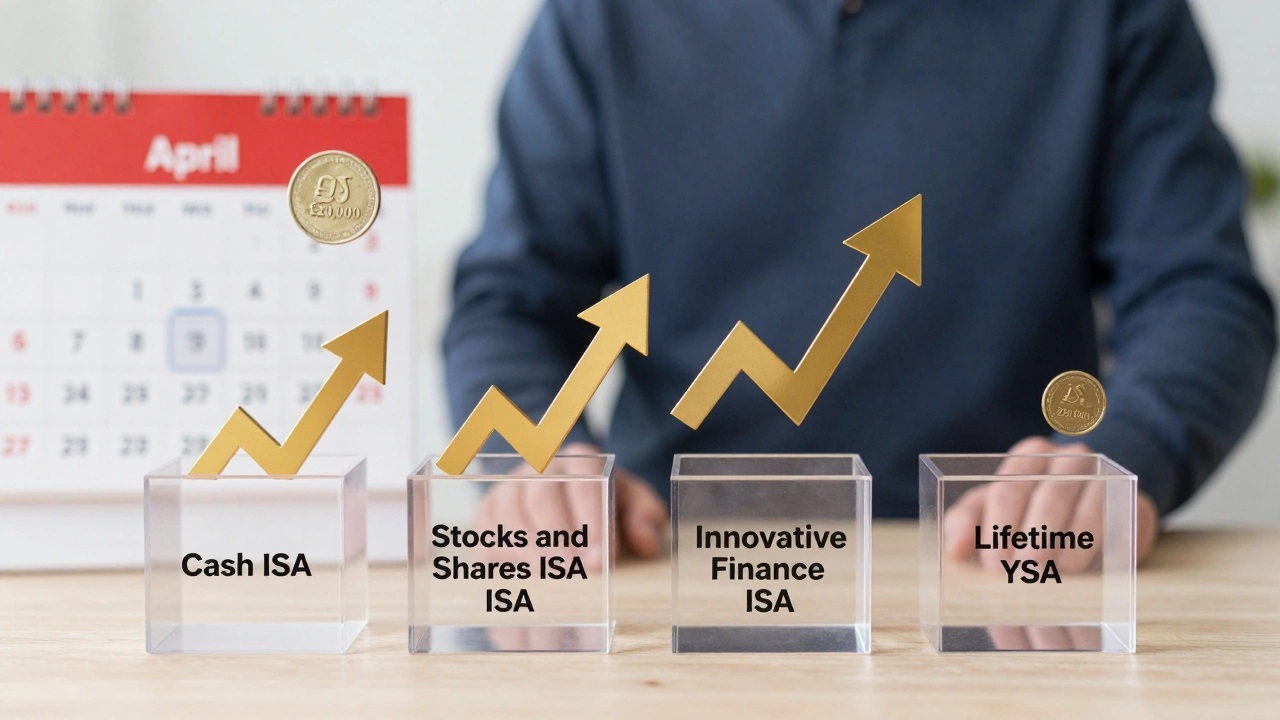
The current ISA allowance is £20,000 per tax year, which runs from April 6 to April 5. You can split this amount across different types of ISAs - cash, stocks and shares, innovative finance, or lifetime ISA - but the total you deposit across all of them can’t exceed £20,000. That’s it. No more. No exceptions.
So if you’re wondering whether you can stuff $20,000 (roughly £15,500) into a cash ISA, the answer is yes - but only if you don’t put anything into other ISAs that year. If you want to use the full £20,000 in cash, go ahead. But if you’ve already put £5,000 into a stocks and shares ISA, you only have £15,000 left for cash.
Cash ISA vs. other ISAs: What’s the difference?
A cash ISA is just a savings account that lets you earn interest without paying tax on it. It’s simple. You deposit money. You earn interest. You don’t pay income tax or capital gains tax. That’s it. There’s no risk of losing your money, unlike with stocks and shares ISAs, where the value can go up or down.
But here’s the catch: cash ISAs rarely beat inflation. In 2025, average cash ISA rates hover around 3.5% to 4.5%. That sounds good - until you remember inflation is running at 2.8%. You’re earning a real return, but barely. Meanwhile, a stocks and shares ISA might give you 6% to 8% over the long term, even if it dips in the short run.
So if your goal is to grow your money over time, putting all £20,000 into a cash ISA might feel safe - but it’s not the smartest move. You’re letting your savings sit still while prices rise.
Can you carry over unused ISA allowance?
No. You can’t save your unused £20,000 for next year. If you only put in £10,000 this year, you lose the other £10,000. It doesn’t roll over. That’s why people who wait until March to start saving end up rushing - and often miss out.
Think of it like a seasonal sale that expires on April 5. If you don’t use it, it’s gone. There’s no make-up day. No refund. No second chance.
Smart savers spread their deposits out. Put in £1,667 a month. Or £400 a week. That way, you avoid the stress of cramming it all in at the last minute, and you might even benefit from pound-cost averaging if you’re using part of your allowance in a stocks and shares ISA.
What happens if you accidentally pay in too much?
It’s easy to mess up. You might open two cash ISAs in the same year - one with your old bank, one with a new provider. Or you might transfer money from last year’s ISA and accidentally add new cash on top.
If you go over the limit, HMRC will find out. They track all ISA contributions through your provider. You’ll get a letter. You’ll have to take out the excess. And if you’ve earned interest on that overpayment, you might owe tax on it. That’s right - the whole point of an ISA is to avoid tax, but if you break the rules, you lose that protection.
Some providers will let you fix it by moving the excess into another ISA type - say, from cash to stocks and shares - if you’re still under the total £20,000 limit. But if you’re over, you’re over. No magic fix.

Can you transfer last year’s ISA to a new provider?
Yes - and you should. If you’ve got an old cash ISA with a low interest rate, don’t close it. Don’t withdraw the money. That would count as a new contribution and could blow your allowance.
Instead, use a formal transfer. Tell your new provider you want to move your ISA. They’ll handle the paperwork. The money moves without touching your hands. And it doesn’t count against your current year’s £20,000 limit.
This is how most people maximize their ISA. They keep their old savings safe inside the ISA wrapper, then add new money on top - up to the limit. You can have dozens of ISAs over your lifetime, but only one new contribution per year per type.
Who can open a cash ISA?
You must be a UK resident. That means you live in the UK and pay UK taxes. If you’re living abroad - even if you’re a British citizen - you can’t open a new ISA. You can keep your old ones, but you can’t add new money.
You also need to be at least 16 to open a cash ISA. For a stocks and shares ISA, you need to be 18. And if you’re under 18, you can only open a Junior ISA - which has its own £9,000 annual limit (2025/2026).
So if you’re a student living in Australia, even if you’re from the UK, you can’t open a cash ISA. Location matters more than nationality.
Is a cash ISA worth it in 2026?
It depends on your goals.
If you’re saving for a house deposit in the next 1-3 years, a cash ISA is perfect. You want safety. You want access. You don’t want to risk losing money. The tax-free interest is a bonus.
If you’re saving for retirement, or you’ve got 10+ years before you need the money, a cash ISA is too slow. You’re leaving money on the table. A stocks and shares ISA, even with some risk, will almost certainly outperform cash over the long term.
And if you’re unsure? Split it. Put £10,000 in cash for safety. Put £10,000 in a low-cost index fund through a stocks and shares ISA. You get both.
What’s the best cash ISA right now?
There’s no single “best” - rates change weekly. But as of January 2026, the top cash ISAs are offering between 4.3% and 4.8% AER. These are usually fixed-rate accounts with 1-year terms. You lock in the rate, but you can’t touch the money without penalty.
Flexible ISAs let you withdraw and replace money without using your allowance - but they usually pay less. If you think you might need to dip into your savings, go flexible. If you don’t, go for the highest rate.
Compare providers like Nationwide, TSB, and Coventry Building Society. Don’t just stick with your bank. They’re not trying to win your business - they’re just holding onto your money.
What if you have more than £20,000 to save?
Great. That means you’re doing well. But you can’t put it all in an ISA. So what do you do?
- Use your £20,000 ISA allowance first - always. It’s the best tax break you’ll get.
- Put extra savings into a regular high-interest savings account. You’ll pay tax on interest, but if you’re a basic-rate taxpayer, you get a £1,000 personal savings allowance. Higher-rate taxpayers get £500. That’s free tax-free interest before you even hit the ISA limit.
- Consider a pension. You get tax relief on contributions - up to £60,000 per year. It’s locked away until 55+ (rising to 57 in 2028), but the tax benefits are huge.
- Invest in a general investment account (GIA). You’ll pay capital gains tax if you sell for profit, but the first £3,000 of gains is tax-free each year.
There’s no magic number. But if you’re saving more than £20,000 a year, you’re already ahead of 90% of the population. The trick is to use the right tools - not just the most convenient ones.
Final answer: Can you put $20,000 in a cash ISA every year?
No. You can’t. Not because you’re not allowed to save that much - but because the UK ISA limit is £20,000, not $20,000. And even then, you can’t put all of it into cash if you’ve used any of your allowance elsewhere.
But if you’re thinking in pounds, and you’re willing to use your full allowance wisely - yes, you can put £20,000 into a cash ISA. Just make sure you’re not missing out on better options.
Don’t let the idea of safety blind you. The best savings strategy isn’t the one with the highest interest rate. It’s the one that matches your goals, your timeline, and your risk tolerance.
Can I put $20,000 in a cash ISA if I’m not a UK resident?
No. Only UK residents can open or contribute to an ISA. If you live outside the UK - even if you’re a British citizen - you can’t open a new cash ISA. You can keep existing ones, but you can’t add new money.
What happens if I accidentally pay more than £20,000 into my ISAs?
HMRC will detect the overpayment and contact you. You’ll need to withdraw the excess amount. If you earned interest on it, you may owe tax on that interest. There’s no penalty beyond that, but you lose the tax-free benefit on the overpaid amount.
Can I transfer money from a stocks and shares ISA to a cash ISA?
Yes, but only through a formal transfer. You can’t withdraw the money and deposit it into a new cash ISA - that would count as a new contribution and could exceed your annual limit. Always use the provider’s official ISA transfer process.
Is there a limit to how many cash ISAs I can have?
You can have as many cash ISAs as you like - but you can only pay into one new cash ISA per tax year. You can keep old ones open and transfer between them, but you can’t make new contributions to more than one cash ISA in the same year.
Can I use my ISA allowance for my child?
Only through a Junior ISA. For 2025/2026, the Junior ISA limit is £9,000 per year. Parents or guardians can contribute, but the money belongs to the child and can’t be accessed until they turn 18. This is separate from your own £20,000 ISA allowance.